Not all entrepreneurship starts with a pitch deck. Sometimes it starts with a problem so complex, so interconnected, that solving it means rethinking how science, policy, industry and community connect.
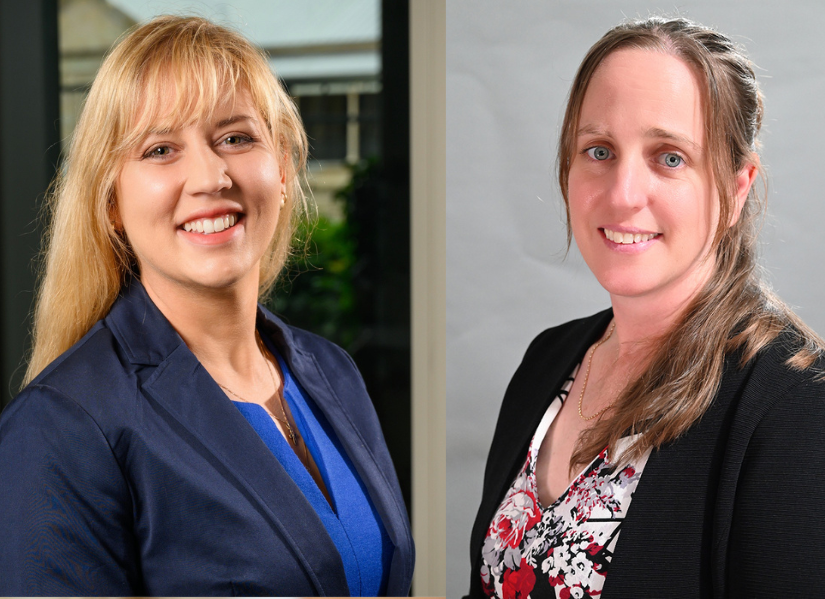
That’s the space Dr Kylie Hewson and Dr Lauren Fell work in every day — one leading Australia’s response to antimicrobial resistance at CSIRO, the other driving ambitious space initiatives at Lunaria One. In different ways, both have built careers around turning scientific expertise into changes that actually matter. We asked them what that really looks like.
Dr Kylie Hewson
Deputy Director, Minimising Antimicrobial Resistance Mission (Animal Health and Environment), CSIRO
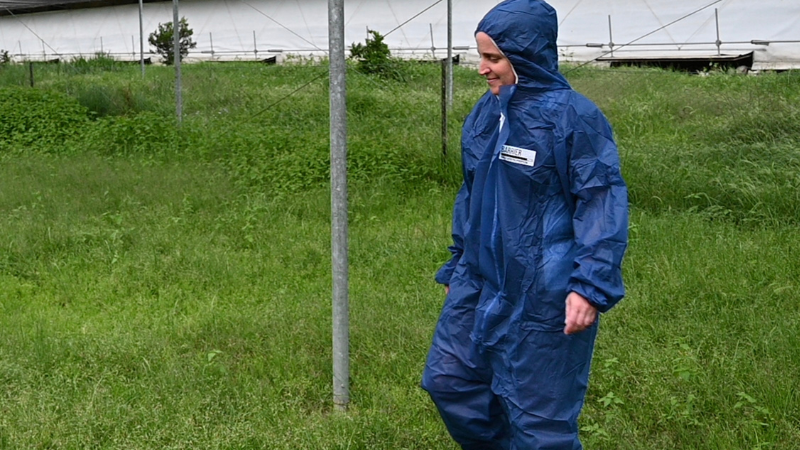
Kylie works at the intersection of science, policy and practice — helping translate complex research on antimicrobial resistance into programs that drive real change across industries and communities.
In your role at CSIRO, how do you translate scientific research into coordinated programs that deliver measurable, real-world impact?
Impact means change, and change means someone somewhere has to do something differently. Facilitating change is hard enough, but the added complexity is that while the science to inform the change might be the same, how it gets applied is completely different depending on contextual factors, and the science needs to be translated into language that makes sense in that context. My role is taking often very complex science, translating it into something people can use, working with them to implement the change, and then identifying where science can solve the next problem and building new programs of science around that cycle.
Entrepreneurship isn’t always about startups — within large, mission-driven environments like CSIRO, what does entrepreneurship look like in practice?
For me, it's about spotting opportunities to do things better and finding new ways the organisation can create value from the work it's already doing. That might mean building the case for a new capability or connecting people with complementary skills and interests to solve a problem together. I'm always interested in the science and skills my colleagues have, and I'm always looking for opportunities to bring different people together to tackle problems in new ways. Often that means building teams around emerging challenges that can grow into new projects, generate new science, and ultimately deliver real-world impact.
How do you bring together research, policy, and diverse stakeholders to drive system-wide change in complex challenges like antimicrobial resistance?
AMR is too complex for any single solution. Real progress comes from lots of small changes made by lots of different people in different contexts over time. This is the really hard part of science but to me, it’s the most important, and work worth doing. My role is to understand those contexts, build trusted relationships across sectors, and connect people with the evidence most relevant to them. System-wide change needs a trusted coordinator (sometimes a person, sometimes an organisation) so people don't need to know everything, just who to call, or trust who will contact them when new information matters.
Find out more about Dr Kylie Hewson by reading her full Alumni Spotlight article.
Dr Lauren Fell
Director at Lunaria One
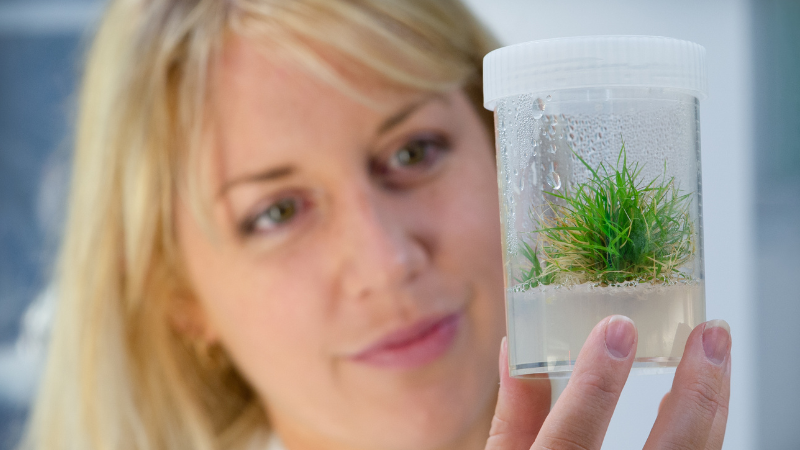
Lauren’s career has taken her from a PhD in quantum cognition at QUT to the space sector, where she works across science communication, partnerships and venture development to help bring ambitious space initiatives to life.
You work across science communication, partnerships and venture delivery. How do you translate complex scientific ideas into initiatives that can attract support and deliver impact?
A lot of people think having a PhD means becoming an absolute expert in a very narrow field, and, to some extent, this is the case. What I've found is that it's actually the skills peripheral to that, which are what you value most as you progress into your career. For me, one of those was being able to speak very different domain languages. My PhD at QUT was using quantum formalisms to explain human cognition, and the meta-skills I developed that enabled that research are essentially what are sometimes called "soft" skills: creative thinking, communication, etc. These ended up being vital not only in running projects that combine disciplines like science and engineering, which speak different languages themselves, but also in translating these complexities to a wider audience.
What does entrepreneurship look like when it’s grounded in scientific expertise — particularly in a field like space with long timeframes and high uncertainty?
Entrepreneurship requires patience, and so does science. In both, you need to be comfortable with failure. In science, if your hypotheses are always reinforced, you're probably asking the wrong questions. Building a venture works the same way, as a run of constant success, in most cases, will put you in a bubble that will eventually burst. Put space into the mix and it's even more stark, as space is one of the highest-risk industries there is. You can spend years on something knowing that there's a real chance it never makes it to its destination in one piece, often for reasons completely outside your control. Accepting that, and treating it as data rather than defeat, is, I think, the scientific mindset's most valuable export to entrepreneurship.
How do partnerships across industry, education and government help turn scientific ambition into something scalable and real world?
Industry-government partnerships are quite common, but integrating education as a priority is something that I think a lot of space programs do really well. Without a focus on building the next generation's talent pipeline, any initiative's momentum will eventually fade. Space is a growing industry with growing government support, and public outreach is core to how it stays that way. Fortunately, space tends to sell itself, especially for school-aged kids. Our project pairs the wonder of space with something completely accessible: plants. Plants are everywhere and watering a seed to watch it grow under different conditions is one of the easiest science experiments to do at home or in the classroom. The combination of the mysteries of space and the Moon with the ubiquitous and accessible practicalities of life on Earth lets us close the loop between government, industry and education through genuine participation.
Find out more about Dr Lauren Fell by reading her full Alumni Spotlight article.
Science and entrepreneurship aren't always obvious partners. But talking to Dr Hewson and Dr Fell, you start to see how much crossover there actually is — the patience both demand, the willingness to get it wrong on the way to getting it right and the focus on what genuinely moves the needle.
Author

Victoria believes that every alumnus has a story worth telling. Naturally curious, she asks the thoughtful questions others often don't — creating stories that connect, inspire and reflect the depth of the QUT Alumni community.