By Cayley Parker, 17 November, 2026
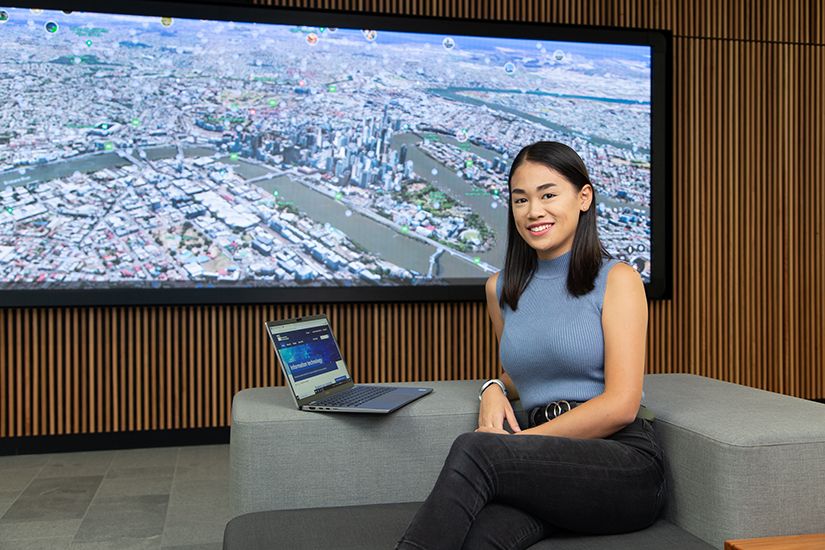
QUT graduate Kimberly Valenny works at the intersection of technology, design and how people interact with digital products.
After graduating in 2021 with a Bachelor of Information Technology (Computer Science) / Bachelor of Creative Industries (Interactive and Visual Design), Kimberly is now a Front-End Developer at Deloitte Digital. She also tutors first-year web design students at QUT, bringing what she has learned in industry back into the classroom.
Why accessibility matters in digital design
For Kimberly, accessible design starts with recognising that people don't all interact with technology in the same way.
She points to something as simple as being left-handed. While it isn't considered a disability, a left-handed person may still need to adjust the way they use a digital product if controls have been designed around right-handed users.
"When technology is designed around a perceived 'common' user, people who don't fit that assumption are often left with the choice of adapting to the technology or being excluded by it," Kimberly said.
These kinds of design assumptions can create much greater barriers for people with disability.
In her work as a front-end developer, Kimberly considers accessibility from the beginning of the design and development process. That means thinking about colour contrast, keyboard navigation, meaningful labels, alternative text and captions, as well as the experience of people using assistive technologies.
"The question is ultimately whether the technology is adapting to the way people use it, or whether people are having to adapt to the technology," she said.
How accessible design can benefit everyone
Accessibility features designed for a particular need can often make everyday experiences easier for everyone.
Kimberly uses the example of kerb ramps. While primarily designed to improve access for wheelchair users, they also make navigating streets easier for parents with prams, travellers with suitcases, cyclists, delivery workers and people with temporary injuries.
The same principle applies online.
"Captions and subtitles are essential for people who are deaf or hard of hearing, but they are also useful when someone is watching a video in a noisy environment, watching without sound or trying to understand someone with a strong accent," Kimberly said.
Bringing industry experience into the classroom
Kimberly now brings this perspective to QUT students through her work as a tutor in Introduction to Web Design, where she teaches user-centred UI design and front-end development.
One classroom activity asks students to close their eyes or shut their laptop screens and attempt to navigate a website without relying on their vision.
"It quickly becomes uncomfortable and difficult, which is exactly the point. It helps students experience how easily a seemingly simple digital task can become difficult when a design assumes everyone interacts with technology in the same way," she said.
Advice for future IT students
"Good technology isn't just about how technically impressive something is; it is about whether it actually works for the people who need to use it," Kimberly said.
Small decisions can have a significant effect on someone's experience, including whether they can complete a digital task independently.
"You don't have to personally experience every barrier to understand that it is your responsibility as a designer or developer to consider the people who might encounter it," Kimberly said.

Read Kimberly's original Pulse+IT opinion piece: Opinion: Digital Health Was Built to Adapt to You - For Nearly 1 in 4 Australians, It Doesn't. - Pulse+IT
Interested in creating digital experiences that work for more people? Explore QUT's Bachelor of Information Technology.