By Victor Nunez Vicente, 24 December, 2025
I was motivated to study engineering in Australia because I could combine my long-standing interest in water engineering with my growing passion for technology and sustainability. During my civil engineering degree in Peru, I was especially drawn to water-related subjects. Later, after nearly eight years working in construction management, I became increasingly interested in using technology and sustainable practices. I was particularly excited by the idea of complementing hydrology studies with data analytics and emerging AI technologies to better understand and predict water behaviour. Australia stood out to me for its strong focus on innovation and environmental solutions, and the Master of Sustainable Infrastructure with Data Analytics felt like the ideal program to help me grow in all these areas.
When I was researching study options, I explored a range of master programs suitable for civil engineers, including both specialised and interdisciplinary courses. I wanted a degree that aligned with the skills I had developed in my career and my commitment to sustainability. The QUT Master of Sustainable Infrastructure with Data Analytics stood out for its focus on water engineering and its integration of data-driven approaches. A couple of my closest friends in Brisbane also recommended QUT, and after reviewing the course structure, I felt confident it matched my goals. With their encouragement, I decided to enrol, and the program has delivered exactly what was promised and has even exceeded my expectations.
Studying at QUT as an international engineer
What stood out about QUT was its strong focus on practical education, technology-driven learning, and an innovative approach that aligns closely with my career goals. From my first semester, I realised that my assignments had a similar purpose to professional tasks in industry. This makes me feel like I’m gaining experience, not just passing subjects.
Through this master degree, I’m strengthening both my technical and professional skills while studying in a very supportive environment. I’m learning more about water and wastewater systems, sustainable infrastructure planning, and how to use data analytics to support decision-making, often through assessments based on realistic datasets, project planning and practical solutions. Studying far from home has been a big step, but the approachable lecturers, clear course structures and grounding in giving my best have helped me build my confidence and engage with the content in a smooth way.
My classmates have also been an important source of support, always sharing advice on how to navigate the university and make the most of the experience. Working with people from different continents and professional backgrounds has helped me improve my teamwork, communication and problem-solving skills.
Real-world learning: projects and site visits
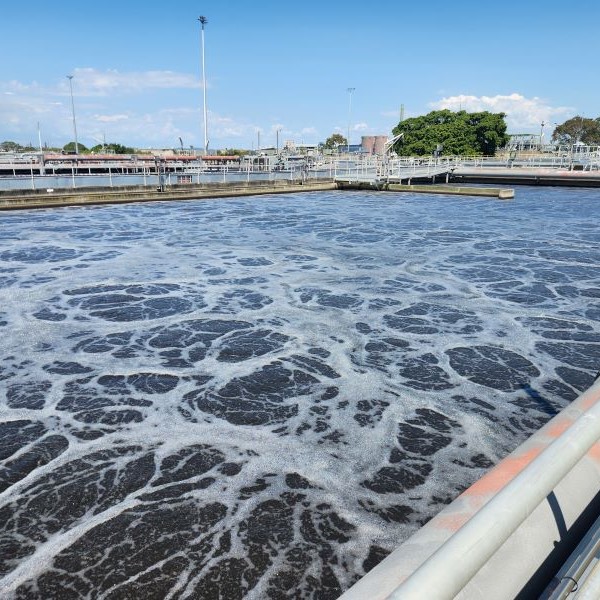 One of my units included a site visit, which added great practical value. It was organised by the university and is a part of my course. We visited the Luggage Point Resource Recovery Centre which is a wastewater treatment facility in Brisbane.
After a safety briefing, we got a plant-wide overview from the deck and then walked the main treatment train. First, we saw tanks called anoxic and selector basins, where bacteria start breaking down waste without much oxygen. Then we saw activated-sludge aeration basins where diffusers supply oxygen to the water to help bacteria remove unwanted nutrients. Next, we viewed the secondary clarifiers where solids settle at the bottom of the tanks and the clarified and treated water overflows. Overall, the site visit showed practical, integrated wastewater treatment—biological processes, clarification, digestion for biogas (a kind of renewable energy), and active piloting for future improvements.
Student life, support and living in Brisbane
Life outside the classroom has also been a very important part of my experience. I’ve joined activities and clubs that help me grow personally and professionally. For example, groups like the Civil Engineering Student Society offer networking events, career talks, and CV or cover letter support, which has been especially valuable for me as an international student taking my first steps in connecting with the professional sector. I also try to keep a healthy balance by continuing my hobbies, such as playing chess and swimming, and I’m keen to explore more clubs and activities at QUT in the coming semesters. Sharing this journey with my wife has also been very meaningful. Her support throughout the semester has helped me feel settled and confident. Together we enjoy exploring Brisbane and nearby places such as Noosa and the Gold Coast, and taking part in events like QUT Cultural Bites, where we can try food from many different cultures and feel more connected to the community. Living in Brisbane has been a positive experience overall. The city offers a good mix of urban life and green spaces that help me feel grounded, and it feels like a safe and friendly place to study and live.
My future goals and advice for future students
Studying at QUT and moving to Australia has meant facing new challenges: adapting to a new country, studying in English, and stepping out of my comfort zone. However, overcoming these fears has helped me build my self-confidence and shown me that I am capable of growing in new environments.
In the future, I hope to work in roles where I can contribute to more sustainable water and infrastructure projects, using both my engineering background and my new data analytics skills.
My advice for future students is to take advantage of practical learning opportunities like site visits and real-world projects, and to get involved in clubs and events, because they are great ways to network and make friends. It’s okay to feel afraid, and you can always ask for help; with the right support, that fear can turn into a new experience that helps you grow.
QUT has given me a solid technical foundation and a supportive environment to develop both as an engineer and as a person, and I’m excited to see where this journey leads.
Study a QUT Master of Sustainable Infrastructure with Data Analytics like Victor