
Faculty/School
Faculty of Science

Topic status
We're looking for students to study this topic.

Primary Supervisor
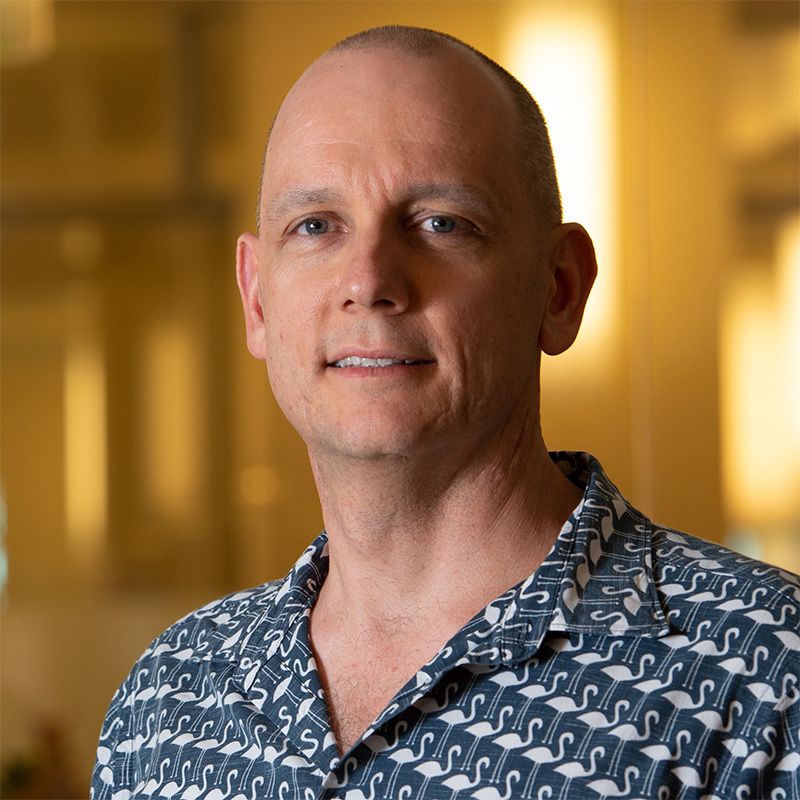
- Position
- Professor
- Division / Faculty
- Faculty of Science
Overview
Research engagement
This project uses mathematical modelling and data science to predict how a researcher’s citations and h-index might change in the future. The student will work with real citation data, build models of citation growth, test how well those models predict future outcomes, and quantify uncertainty in the predictions. The project belongs to the science of science: the quantitative study of how research and academic careers evolve.
Citation counts and h-index values are widely used indicators of academic impact, but their future behaviour is difficult to predict. Some researchers experience steady citation growth, others have rapid increases following influential papers, while others show plateauing or field-dependent patterns. This project will use mathematical modelling, statistical inference, and data science to study whether future citation and h-index trajectories can be predicted from past citation data.
This project is about the science of science: the quantitative study of how research, researchers, collaborations, publications, citations, and academic careers evolve over time. Rather than treating citation metrics as simple scores, this project will ask how these metrics change dynamically and how much uncertainty is involved when making predictions about future academic impact.
Research activities
The student will collect publicly available citation data for a sample of researchers, for example from Google Scholar profiles. The data may include total citations over time, yearly citation counts, paper-level citation histories, and h-index values over time.
The student will then develop computational models to predict future citation trajectories and h-index trajectories. They will begin with simple descriptive models, such as linear, exponential, logistic, or saturating growth models, and then compare these with more flexible statistical or stochastic models. The project will also consider how individual papers contribute to a researcher’s overall citation and h-index growth.
A central part of the project will be uncertainty quantification: rather than producing a single prediction, the student will estimate a range of plausible future outcomes. For example, the project might ask whether a researcher’s h-index is likely to increase by 1, 2, or 5 points over the next five years, and how confident we should be in that prediction.
Research skills
The project will involve coding and computational data analysis using Julia, Python or MATLAB. Methods may include data visualisation, curve fitting, numerical optimisation, statistical modelling, model comparison, bootstrapping, likelihood-based inference, and uncertainty quantification. Depending on the student’s background, the project could also include simple machine-learning or Bayesian approaches.
The project is well suited to students interested in applied mathematics, statistics, data science, scientific careers, research evaluation, or quantitative social science.
Outcomes
By the end of the project, the student is expected to produce:
- A curated dataset of researcher citation and h-index trajectories.
- Codes for fitting models and making predictions.
- Figures showing observed and predicted citation trajectories.
- Figures showing observed and predicted h-index trajectories.
- Quantification of uncertainty in future citation and h-index predictions.
- A short report explaining the models, results, and limitations.
Skills and experience
This project is suitable for second- or third-year students in mathematics, statistics, data science, computer science, or combined degrees. Some coding experience is required. Prior experience with statistical modelling, data analysis, or machine learning would be helpful, but is not essential.
Start date
2 November, 2026End date
19 February, 2027Location
Gardens Point
Keywords
Contact
- Matthew Simpson
0413696607
matthew.simpson@qut.edu.au