
Faculty/School
Faculty of Science

Topic status
We're looking for students to study this topic.

Primary Supervisor
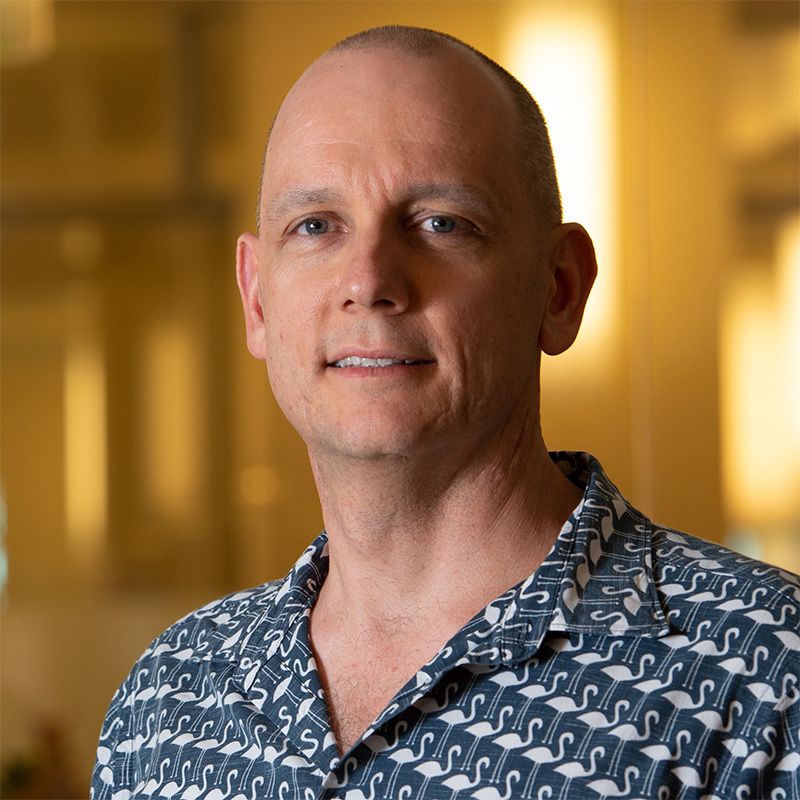
- Position
- Professor
- Division / Faculty
- Faculty of Science
Other QUT supervisors

- Position
- Associate Professor
- Division / Faculty
- Faculty of Science
Overview
Mathematical models are widely used to understand how biological systems change over space and time. This project will focus on mechanobiology: the study of how mechanical forces and biological processes interact. Examples include cells pushing, pulling, moving, growing and responding to their physical environment.
The project will introduce students to mathematical models that describe these processes, beginning with ordinary differential equation models and then exploring how these models can be connected to partial differential equation descriptions. A particular focus will be on understanding how ideas from hyperbolic partial differential equations can provide new insight into parabolic partial differential equation models that arise in biology.
Research engagement
The student will develop, simulate and analyse mathematical models of biological processes involving mechanics. The work will begin with relatively simple ordinary differential equation models describing mechanical interactions between biological components, such as cells or tissues.
The student will then use computational methods to simulate these models and explore how model behaviour depends on key parameters. Depending on progress, the student will also examine how discrete or ordinary differential equation models can be converted into partial differential equation models, and how mathematical ideas from the study of hyperbolic partial differential equations can be used to interpret and analyse parabolic partial differential equation models in mechanobiology.
Research activities
Research activities may include:
- deriving and interpreting simple mathematical models;
- writing and modifying computer code in Julia and/or MATLAB;
- running simulations and visualising model behaviour;
- comparing ordinary differential equation and partial differential equation descriptions;
- producing figures that explain the main mathematical and biological findings;
- discussing results in regular meetings with the supervisor.
Research skills
Advanced computational modelling skills, advanced skills in the analysis of ODE and PDE-based models,
Outcomes
The expected outcomes of the project include new computational codes, simulation results, figures and a brief written report summarising the main findings. The student will gain experience in mathematical modelling, computational simulation and the interpretation of mathematical models in biology.
Depending on progress, the project may also generate preliminary results that could contribute to a future research manuscript.
Skills and experience
This project is suitable for second- or third-year undergraduate students in mathematics, applied mathematics, statistics, engineering, physics, or combined degrees with a strong quantitative component.
Students should have an interest in mathematical modelling and biological applications. Some experience with coding in Julia, MATLAB, Python or a similar language would be helpful, but the project can be adjusted to the student’s background. Prior experience with differential equations would be useful.
Start date
2 November, 2026End date
19 February, 2027Location
Gardens Point
Keywords
Contact
Matthew Simpson
043 696 607
matthew.simpson@qut.edu.au