
Faculty/School
Faculty of Science

Topic status
We're looking for students to study this topic.

Primary Supervisor
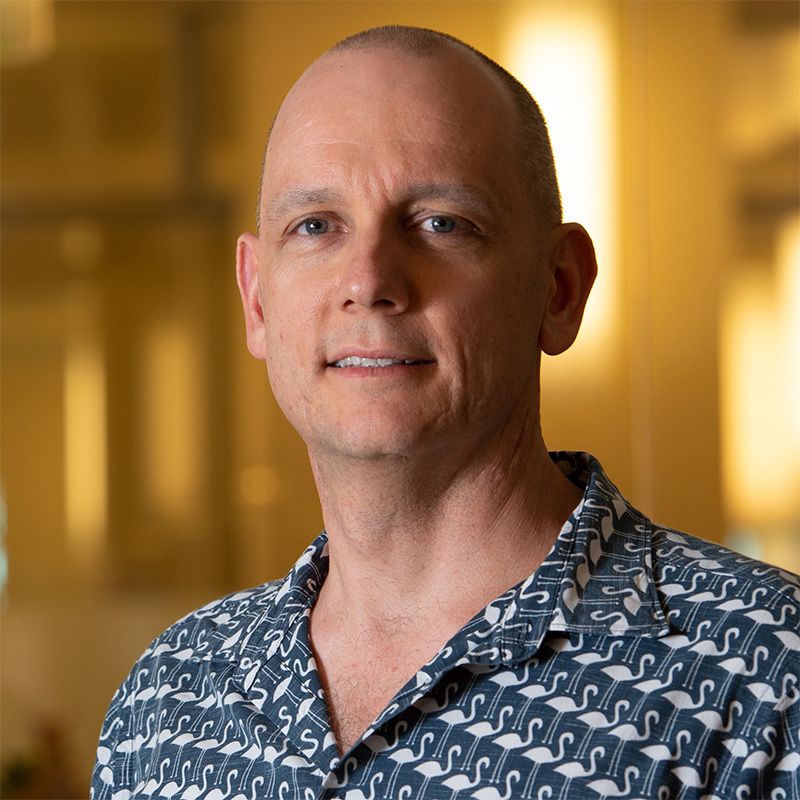
- Position
- Professor
- Division / Faculty
- Faculty of Science
Other QUT supervisors

- Position
- Associate Professor
- Division / Faculty
- Faculty of Science

- Position
- Professor
- Division / Faculty
- Faculty of Science
External supervisors
- Traude Beilharz, Monash University
Overview
Yeast is one of the most important model organisms in biology. Yeast cells are simple enough to study carefully in the laboratory, but complex enough to reveal fundamental principles about how living cells grow, respond to stress and adapt to changing environments. Yeast is also central to many applied settings, including food production, brewing, wine fermentation, biotechnology and industrial biomanufacturing.
This project will use mathematical and computational modelling to study how yeast cells change their growth behaviour over time. Yeast cells do not always grow in the same way. As nutrients are consumed and environmental conditions change, cells can switch between different metabolic states. These switches can affect how quickly cells grow, how efficiently they use nutrients, and how well they survive under stress.
The project is motivated by experiments where yeast populations are grown under different dilution conditions and their growth is measured over time. Although standard growth summaries such as maximum growth rate, lag time and carrying capacity are useful, they may miss important changes in the underlying biological state of the population. The aim of this project is to develop simple mathematical and statistical tools to help identify when yeast cells change their growth behaviour, and to explore whether these changes can be detected from growth data alone.
Research engagement
he student will work on mathematical and computational models of yeast growth. The project will begin with relatively simple ordinary differential equation models for population growth, before exploring how these models can be modified to include switching between different growth or metabolic regimes.
Research activities
Research activities may include:
- reading background material on mathematical models of microbial and yeast growth;
- implementing simple growth models using Julia, MATLAB or a similar coding environment;
- simulating ordinary differential equation models under different parameter values;
- comparing models with and without metabolic switching;
- analysing synthetic or experimental-style growth curves;
- exploring simple statistical or computational methods for detecting changes in growth behaviour;
- producing figures that summarise model behaviour and key findings;
- preparing a brief written report describing the methods, results and interpretation.
Depending on the student’s background and progress, the project may also include parameter estimation, model comparison, uncertainty analysis, or simple change-point detection methods.
Research skills
Advanced skills in computational modelling, advanced skills in parameter estimation and uncertainty quantification, skills in group work and collaborating with external partners
Outcomes
The expected outcomes of the project include working computational code, simulation results, clear figures and a short written report. The student will gain experience in mathematical biology, differential equation modelling, computational simulation and the interpretation of biological data.
The project will also help the student understand why yeast is such a useful system for connecting mathematical models with real biological questions. Because yeast is important in both fundamental biology and industrial biotechnology, even simple models of yeast growth can provide insight into larger questions about cellular behaviour, stress response, fermentation and biomanufacturing.
Depending on progress, the student’s work may generate preliminary results that contribute to a larger research program on predicting yeast behaviour from growth data, and may support future manuscript preparation or follow-on research.
Skills and experience
This project is suitable for second- or third-year undergraduate students in mathematics, applied mathematics, statistics, data science, physics, engineering, or a combined degree with a strong quantitative component.
Students should have an interest in mathematical modelling and biological applications. Some experience with coding in Julia, MATLAB, Python or a similar language would be helpful. Prior exposure to differential equations, numerical simulation or statistics would be useful, but the project can be adjusted to match the student’s background.
No prior knowledge of yeast biology is required.
Start date
2 November, 2026End date
19 February, 2027Location
Gardens Point
Keywords
Contact
Matthew Simpson
0413 696 607
matthew.simpson@qut.edu.au