
Faculty/School
Faculty of Health

Topic status
We're looking for students to study this topic.

Primary Supervisor
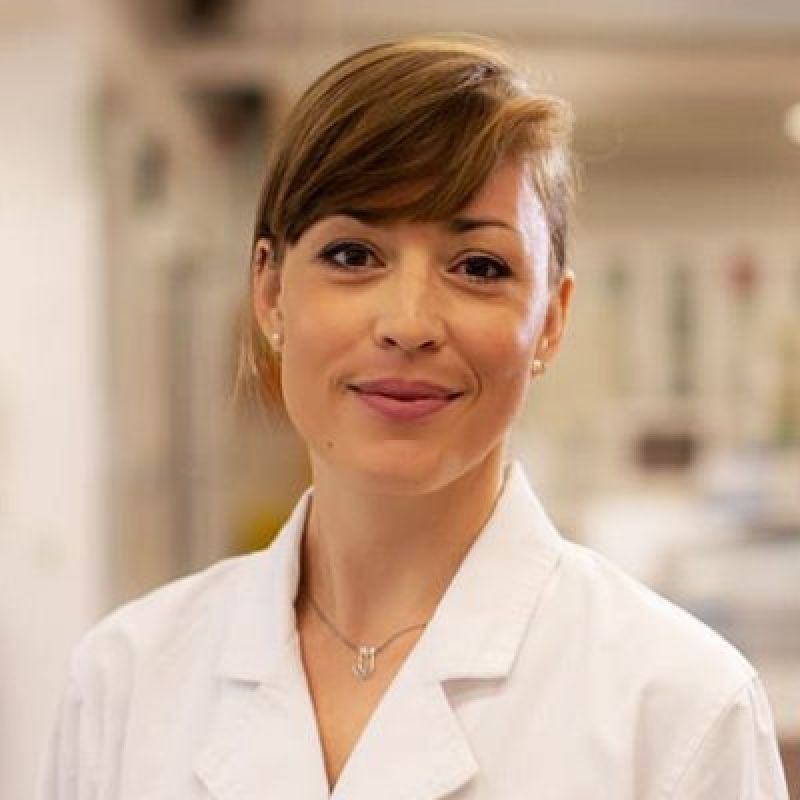
- Position
- Associate Professor
- Division / Faculty
- Faculty of Health
Other QUT supervisors
External supervisors
- Dr Malgorzata Morenc, Postdoctoral Research Fellow, QUT
Overview
Age-related bone loss and osteoporosis are major global health challenges, contributing to increased fracture risk, disability, and healthcare costs. Osteocytes, the most abundant cells in bone, play a critical role in maintaining skeletal health by sensing mechanical forces and coordinating bone remodelling. However, ageing leads to the accumulation of senescent osteocytes, which exhibit altered function and secrete inflammatory factors that may contribute to bone deterioration. Despite their importance, little is known about how cellular senescence affects osteocyte behaviour and mechanosensitivity.
Current research relies heavily on two-dimensional (2D) cell cultures and animal models, both of which have significant limitations. While 2D systems fail to replicate the complex three-dimensional (3D) bone microenvironment, dynamic cellular and molecular changes in animal models are difficult to monitor in real time and are often confounded by systemic and multi-organ factors that obscure cell-intrinsic mechanisms. This project aims to develop a biomimetic 3D hydrogel model of senescent osteocytes that more closely resembles the native bone environment. The student will investigate how senescence influences osteocyte viability, morphology, and cellular function within a 3D culture system.
This is an interdisciplinary project that combines tissue engineering, biomaterials science, cell biology, bone biology, microscopy, and image analysis. The student will gain experience in 3D cell culture, hydrogel fabrication, fluorescence imaging, and quantitative data analysis.
This project is part of the Max Planck Queensland Centre for the Materials Science of Extracellular Matrices within a broader research program funded through the Australian Research Council and the Queensland University of Technology (QUT). The overarching project, "A 3D Hydrogel Mechanosensing Platform for Senescent Osteocytes in Aging Bone", is led by co-supervisor Dr Małgorzata Morenc and aims to develop a biomimetic 3D hydrogel platform to investigate how ageing affects osteocyte function, mechanosensitivity, and bone health.
Research engagement
The student will undertake a combination of literature-based and laboratory-based research activities and be actively engaged in all aspects of the research process. They will conduct a guided literature review on osteocyte biology, cellular senescence, mechanobiology, and 3D cell culture systems to develop an understanding of bone ageing and the scientific rationale behind the project. Throughout the project, the student will participate in regular laboratory and research group meetings, discuss relevant scientific literature, contribute to experimental planning, and assist with data analysis and interpretation. Working closely with the supervisors, the student will gain insight into the research process and how scientific findings are translated into meaningful outcomes.
Research activities
In the laboratory, the student will receive training in mammalian cell culture, 3D hydrogel fabrication, and tissue engineering techniques. They will assist with GelMA hydrogel preparation, osteocyte encapsulation, induction of cellular senescence, and culture of cells under static and mechanically stimulated conditions.
The student will assess cell viability and morphology using fluorescence microscopy and image analysis and gain experience in immunofluorescence staining and quantitative PCR (qPCR) to evaluate senescence-associated and osteocyte-specific markers. They will also be introduced to bioreactor systems used for mechanical stimulation of 3D cell culture models.
Research skills
The student will develop practical skills in mammalian cell culture, 3D hydrogel fabrication, fluorescence microscopy, immunofluorescence staining, quantitative PCR (qPCR), image analysis, and the fundamentals of mechanobiology research. They will also gain experience working with 3D cell culture systems and bioreactor-based mechanical stimulation platforms.
In addition, the student will develop skills in scientific literature review, experimental design, data analysis and interpretation, laboratory record keeping, and scientific communication through a written report and oral presentation.
Outcomes
This project will provide hands-on experience in tissue engineering, molecular biology, and bone biology research while contributing to the development of a novel 3D model for studying mechanosensing in senescent osteocytes. The student will contribute to the optimisation and characterisation of a 3D hydrogel model of senescent osteocytes.
A key outcome of the project will be the establishment and optimisation of a protocol for inducing cellular senescence in osteocyte-like cells cultured within a 3D hydrogel system. The student will evaluate and validate the senescent phenotype using established senescence-associated markers assessed by quantitative PCR (qPCR) and immunofluorescence staining.
The project will also generate preliminary data on osteocyte viability, morphology, and molecular phenotype under both static and dynamic 3D culture conditions, contributing to the optimisation and characterisation of the model. These findings will support ongoing research into the effects of ageing on osteocyte function and provide a foundation for future studies investigating mechanosensitivity and mechanotransduction in senescent osteocytes.
Skills and experience
This project is suitable for students with an interest in biomedical science, cell biology, tissue engineering, biomaterials, regenerative medicine, or related disciplines. No prior laboratory experience is required, as training will be provided. However, students with an interest and skills in cell culture, molecular biology, microscopy, and data analysis are encouraged to apply.
The ideal candidate will be motivated, organised, and eager to develop hands-on research skills in a laboratory environment. Strong attention to detail, willingness to learn new techniques, and an interest in ageing research and bone biology will be highly beneficial.
Start date
2 November, 2026End date
20 December, 2026Location
Translational Research Institute (TRI)
Additional information
The project is embedded within the Max Planck Queensland Centre (MPQC), a prestigious international research collaboration based at Queensland University of Technology. As the first Max Planck Centre established in Australia, MPQC brings together leading researchers from diverse fields, including biology, engineering, materials science, mathematics, physics, and computational modelling, to address fundamental questions in tissue organisation and extracellular matrix biology. Through this unique interdisciplinary environment, students will have the opportunity to engage with world-leading scientists, broaden their scientific perspectives, and gain exposure to innovative research approaches.
The research will be conducted at the Translational Research Institute (TRI), a world-class research facility equipped with state-of-the-art laboratories, advanced imaging platforms, and specialised research infrastructure that support cutting-edge discoveries in human health and disease, providing an outstanding research environment for students interested in biomedical science and translational research. Student will become part of a vibrant and collaborative research community, working alongside researchers, clinicians, postgraduate students, and industry partners from diverse scientific backgrounds. This multidisciplinary environment offers valuable opportunities to participate in seminars and scientific discussions, and gain insight into how fundamental laboratory discoveries are translated into improved patient outcomes.
The project will be conducted within the Bone and Tumour Bioengineering Group, which is part of the Network and Architecture research theme of the Max Planck Queensland Centre (MPQC), providing hands-on experience in tissue engineering, biomaterials, cell biology, and regenerative medicine. This placement offers an excellent opportunity for students considering future Honours, PhD, or research careers to develop practical laboratory skills, build professional networks, and experience research in a leading biomedical institute.
Keywords
Contact
Dr Malgorzata Morenc, Postdoctoral Research Fellow
0461 278 365
malgorzata.morenc@qut.edu.au