
Study level
- PhD
- Master of Philosophy
- Honours

Faculty/School
Faculty of Health

Topic status
We're looking for students to study this topic.

Supervisors
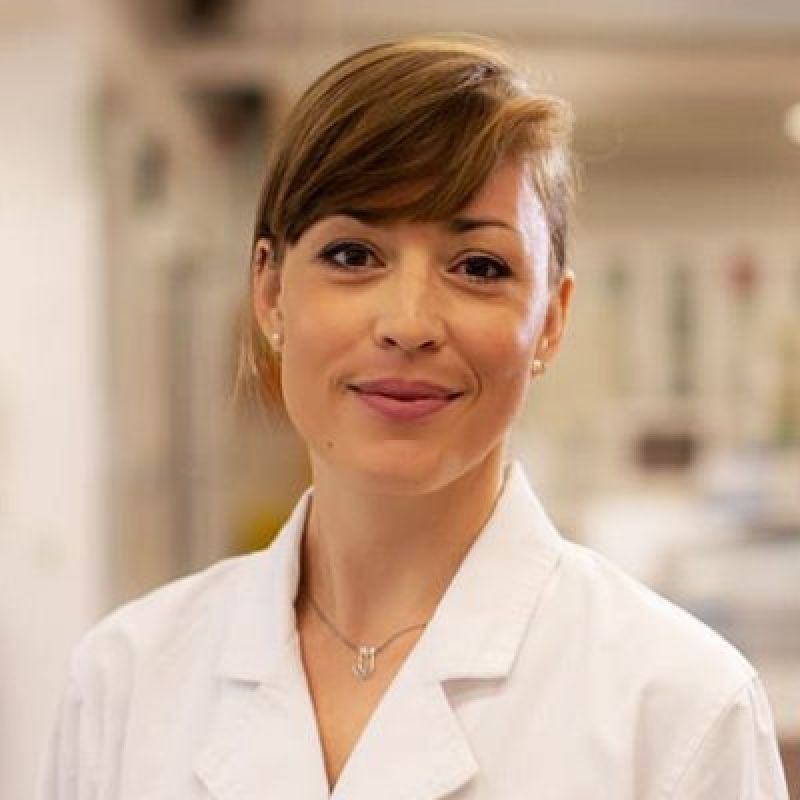
- Position
- Associate Professor
- Division / Faculty
- Faculty of Health

- Position
- Associate Professor (CGRA)
- Division / Faculty
- Faculty of Health
External supervisors
- Professor Amaia Cipitria, Biogipuzkoa Health Research Institute, Spain
Overview
Project Reference: #2MPQC-HuECM1
Preferred Project Start: Late 2026/Early 2027
How do cancer cells communicate with bone cells, and can we recreate these interactions in the laboratory to improve therapy testing?
When cancer spreads to bone, tumour cells enter a highly specialised microenvironment containing multiple cell types and a complex extracellular matrix. Osteocytes are embedded throughout this matrix and form an interconnected cellular network that senses and regulates changes within bone. However, their contribution to cancer progression and treatment response remains poorly understood.
Conventional two-dimensional cell cultures cannot adequately reproduce the three-dimensional organisation, cellular communication and biochemical conditions found within the bone metastatic microenvironment. More advanced and reproducible models are therefore needed to investigate how cancer cells adapt to bone and why they may become resistant to treatment.
This project will develop automated 3D hydrogel-based coculture models that bring osteocytes and breast/prostate cancer cells together within controlled bioengineered microenvironments. Synthetic or semisynthetic hydrogel materials will be used to encapsulate cells and generate the models using automated approaches, potentially including drop-on-demand bioprinting and photocrosslinking-based 3D biofabrication systems.
The models will be used to explore how cellular organisation, extracellular matrix properties and environmental conditions influence tumour–bone interactions and therapeutic responses. The precise cancer models, hydrogel systems, model architectures and biological questions will be refined with the successful student, providing substantial scope for them to contribute ideas and shape the direction of the PhD.
Research activities
This project is part of the Centre for Biomedical Technologies (CBT) and the Max Planck Queensland Centre for the Materials Science of Extracellular Matrices (MPQC), an international research centre connecting QUT researchers with researchers from the Max Planck Institute of Colloids and Interfaces in Potsdam, Germany and the Cipitria Lab in Spain. The student will therefore undertake their project within a highly collaborative, internationally connected and competitively funded research environment.
The student will be based on Level 3 of the Translational Research Institute (TRI) in Woolloongabba, Qld, Australia, and will be part of the Bone & Tumour Bioengineering Research Group led by Associate Professor Nathalie Bock, the Research Lead of QUT at TRI. TRI is an Australian-first initiative of translational medical research located at the Princess Alexandra Hospital (PAH) campus and is a unique facility with a strong focus on translational cancer research that groups top researchers from the University of Queensland, QUT, Mater Medical Research Institute and the PAH. The TRI building houses more than 500 researchers and comprises four floors of laboratories with first-class cell culture/analysis equipment and animal facilities.
The project sits within a broader research program supported by the Australian Research Council, titled ‘Engineered Osteocyte Microenvironments’, led by A/Prof Bock.
The student will have a dedicated workstation and personal laptop.
The student will contribute to activities that may include:
- Developing automated 3D hydrogel coculture models containing osteocytes and cancer cells
- Optimising biofabrication workflows and evaluating model reproducibility
- Investigating cancer cell–osteocyte and cell–matrix interactions
- Examining how selected microenvironmental conditions influence tumour behaviour
- Evaluating therapeutic responses within the bioengineered models
- Integrating quantitative imaging, molecular and materials-characterisation data.
Skills, techniques and other learning opportunities offered
- Synthetic and semisynthetic hydrogel formulation
- Hydrogel crosslinking and characterisation
- Drop-on-demand bioprinting (e.g., using RastrumTM bioprinter from Inventia Life Science)
- Biofabrication (e.g., using LunaXTM AI-powered 3D Tissue Culture System from Gelomics)
- Osteocyte, breast cancer cell and prostate cancer cell culture
- 3D coculture and cell-encapsulation techniques
- Hypoxic 3D cell culture
- Live-cell, confocal and fluorescence microscopy
- Therapeutic response, viability and functional assays
- Molecular biology and biochemical techniques
- Quantitative image and data analysis
- Experimental design for reproducible and scalable 3D culture workflows
- Exposure to multidisciplinary research in cancer biology, bone biology, biomaterials and biofabrication
- Opportunities to interact with multidisciplinary researchers at QUT, TRI and collaborating institutions.
Outcomes
This project aims to establish adaptable, reproducible and scalable 3D coculture models for investigating interactions between cancer cells and osteocytes within a bioengineered bone metastatic microenvironment.
The research will reveal how osteocytes and features of the surrounding extracellular matrix influence cancer cell behaviour, adaptation and therapeutic response. It will also examine how the design and biological complexity of the model affect its ability to reproduce important aspects of bone metastasis.
The project will generate new understanding of tumour–bone communication while providing advanced experimental platforms for investigating cancer progression and testing potential treatments. These models may offer more physiologically relevant alternatives to conventional two-dimensional cultures and help reduce reliance on animal models.
High-quality publications will be expected from this project (Bock et al., Prog Mater Sci). Travel to national and international conferences will be available to the successful candidate, as well as potential opportunities to visit partner labs (Cipitria Lab in Spain).
Skills and experience
We are seeking a full-time, highly motivated PhD candidate to perform cutting-edge research in microphysiological models of bone metastasis. This project would suit a student with a background or strong interest in Biomedical Science, Cancer Biology, Cell Biology, Biomedical Engineering, Tissue Engineering, Biomaterials, Biotechnology or a related discipline. During the course of this PhD, the candidate will drive a highly interdisciplinary project in the field of cancer research, by cross-fertilising with the fields of tissue engineering, materials science and cancer research, ultimately addressing a significant gap in metastatic bone cancer, an incurable condition.
Desirable qualifications and experience
- A Master of Science or equivalent qualification with a significant research component in Biomedical Science, Cancer Biology, Cell Biology, Biomedical Engineering, Biotechnology or a related field
- Relevant laboratory research experience
- Capacity to undertake the PhD on a full-time basis
- At least one publication in a peer-reviewed scientific journal.
The ideal candidate will:
- Be highly motivated to undertake interdisciplinary research spanning cancer biology, biomaterials and biofabrication.
- Be interested in learning and applying a broad range of laboratory-based techniques
- Demonstrate curiosity and creativity when designing experiments and exploring new research directions
- Be self-motivated and able to plan and prioritise experimental work
- Demonstrate initiative and strong problem-solving skills
- Be able to work both independently and as part of a multidisciplinary team
- Have effective written and verbal communication skills.
Research involving biomaterials and biological systems does not always proceed as expected. Curiosity, patience and resilience when experiments require optimisation or troubleshooting are therefore particularly important.
Previous laboratory experience in cell culture, cancer biology, hydrogel fabrication, microscopy, molecular biology or drug-response testing would be beneficial but is not essential for a motivated student with a strong willingness to learn.
Above all, the successful student will bring genuine enthusiasm for contributing to the Bone & Tumour Bioengineering Research Group at QUT and investigating an important challenge in bone metastasis and therapeutic response.
Eligibility details
This is a full-time research scholarship project. Australian and international applicants are eligible to apply. Applicants must meet QUT’s entry requirements for admission to the Doctor of Philosophy including the applicable English-language requirements. Applicants should review the QUT research degree entry requirements before applying.
How to apply
Step 1
Submit your application to n.bock@qut.edu.au with the following subject: ‘PhD–#2MPQC-HuECM1–Your Surname’.
Your application must include:
- A cover letter by the applicant (maximum 1 page)
- An up-to-date CV indicating previous lab experience and skills and the details of two referees (including their email addresses)
- Academic transcript
Shortlisted applicants will be invited to an interview.
Step 2
The preferred candidate will be supported to submit a formal expression of interest through the QUT research degree application process. Applicants should review QUT’s research degree entry requirements and application guidance here before applying.
For the 2027 Annual Scholarship Round, formal expressions of interest must be submitted by:
- 31 July 2026 for international applicants
- 31 August 2026 for domestic (Australian citizens or permanent residents) applicants.
Scholarships are awarded through a competitive process, and there is no guarantee of success. The student’s prior qualifications and experience will strengthen their application.
What you receive
- A full-time, tax-exempt stipend of $37,010 per annum, indexed annually
- Scholarship support for a maximum of 3.5 years for a PhD or 1.75 years for an MPhil, including any approved extension
- A possible $5,000 top-up scholarship for an outstanding candidate, subject to eligibility and funding conditions
- Tuition fee sponsorship for eligible international students
- Single Overseas Student Health Cover for eligible international students
- The opportunity to join QUT, the University for the Real World, and undertake research within the advanced multidisciplinary environment of the Translational Research Institute (TRI)
- A dedicated research environment within the Bone & Tumour Bioengineering Research Group at TRI
- Access to advanced biofabrication, cell culture, microscopy and materials-characterisation facilities
- Opportunities to participate in multidisciplinary research networks through QUT TRI, CBT and MPQC
- Membership of the prestigious international Max Planck Queensland Centre (MPQC), connected to the Max Planck Institute of Colloids and Interfaces (MPICI)
- Possibility of research exchanges at MPICI in Potsdam, Germany
- Membership of the Human ECM Research Theme of MPQC
- Training and international mentorship across biomaterials science, tissue engineering, bone biology and biofabrication
Keywords
- Bioengineering
- Biofabrication
- Biomaterials
- Bone Tissue Engineering
- 3D Cell Culture
- Bone Metastasis
- Bone-Tumour Interavtions
- Hydrogels
- Drug Testing
- Bone Biology
- Cancer Biology
Contact
Contact Associate Professor Nathalie Bock for more information.