
Study level
- PhD

Faculty/School
Faculty of Health

Topic status
We're looking for students to study this topic.

Supervisors
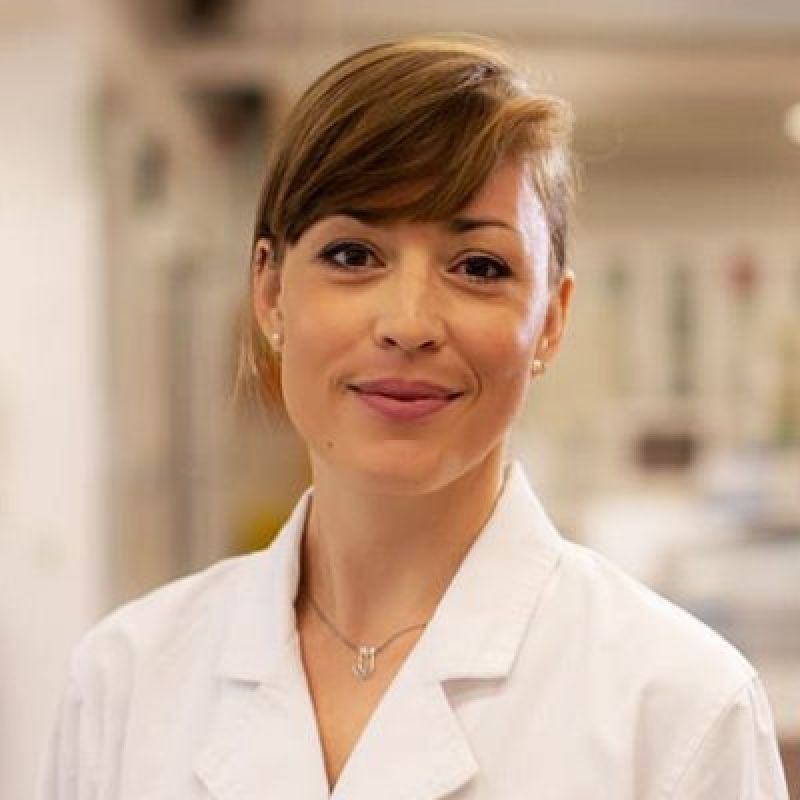
- Position
- Associate Professor
- Division / Faculty
- Faculty of Health
Overview
New approach methodologies (NAMs), including microphysiological systems (MPS), are transforming preclinical cancer research by providing human-relevant alternatives to conventional preclinical models. However, increasing the biological complexity of these models also creates major challenges in reproducibility, scalability and experimental throughput.
Oncology provides a compelling application for addressing these challenges. Tumours are complex tissues in which cancer cells interact dynamically with extracellular matrix, immune cells, vascular cells and other components of the tumour microenvironment. Reproducing these interactions in vitro requires technologies that can precisely organise and maintain different cell populations while remaining sufficiently robust and scalable for experimental testing.
This project will investigate how automation, advanced 3D culture and compartmentalised MPS technologies can be combined to create reproducible multicellular oncology NAMs. Breast and prostate cancer will provide the principal biological applications, initially using established cancer cell and organoid models before extending selected approaches to more complex patient-derived tumour models, including models derived from patient-derived xenograft (PDX) tissues.
A major focus will be the implementation and development of automated cell culture, liquid-handling and microscopy workflows. The student will work with the MO:BOT robotic culture platform from industry partner Mo:RE (Germany), being established at QUT through the ARC Training Centre for Microphysiological System Technology (MiPSET) and investigate its application to the automated handling of cells, organoids, extracellular matrices, culture media and therapeutic compounds.
The project will also explore how tumour models can be combined with immune, vascular, stromal or other relevant cellular components, including through compartmentalised culture approaches that allow different populations to interact while remaining experimentally accessible.
The precise model designs, cellular combinations and biological questions will be refined with the successful student, providing substantial scope for them to contribute ideas and shape the direction of the PhD.
Research activities
This project forms part of the ARC Training Centre for Microphysiological System Technology (MiPSET), a national industry-linked research and training initiative developing technologies to enable the broader adoption of human-relevant MPS and other NAMs.
The student will contribute to activities that may include:
- establishing automated workflows for 3D cancer cell, spheroid and organoid culture
- implementing and optimising the MO:BOT robotic cell-culture platform at QUT
- integrating automated microscopy and longitudinal imaging with robotic culture workflows
- developing multicellular breast and prostate cancer models incorporating immune, vascular, stromal or other relevant cell types
- investigating compartmentalised culture approaches to control spatial interactions between different cellular populations
- integrating cells and organoids with extracellular-matrix-based hydrogels and other engineered microenvironments
- automating processes including cell and organoid handling, hydrogel dispensing, media exchange and treatment application
- investigating tumour–microenvironment interactions and responses to selected therapeutic perturbations
- evaluating model reproducibility, robustness, scalability and compatibility with higher-throughput workflows
- applying quantitative imaging and data analysis approaches to characterise complex 3D cultures.
Skills, techniques and other learning opportunities offered
The project will provide opportunities to develop expertise in:
- mammalian cancer cell culture
- 3D spheroid and organoid culture
- multicellular coculture
- microphysiological systems and NAMs
- automated liquid handling and robotic cell culture
- MO:BOT automation
- hydrogel and extracellular matrix-based 3D culture
- compartmentalised and microfluidic culture systems
- live-cell, confocal and automated microscopy
- high-content and longitudinal imaging
- quantitative image and data analysis
- molecular and biochemical assays
- experimental workflow design, optimisation and standardisation.
The successful candidate will work within a multidisciplinary environment spanning biomedical engineering, cancer biology, tissue engineering, automation and MPS technology. The project will also involve interaction with MiPSET academic and industry partners, including opportunities for industry-based training.
Outcomes
This project aims to establish adaptable and automation-compatible MPS workflows for advanced multicellular cancer models.
The research will determine how automation, spatial organisation and engineered 3D microenvironments can be combined to improve the reproducibility and scalability of biologically complex cancer NAMs. It will also establish approaches for incorporating additional microenvironmental components, such as immune and vascular cells, without sacrificing experimental accessibility or throughput.
The resulting technologies will provide a platform for future applications in preclinical cancer research and drug-response testing and contribute to the development of robust human-relevant models that can complement and, where appropriate, reduce reliance on animal models.
The project will contribute directly to MiPSET's broader goal of advancing Australian capability in the design, automation, translation and deployment of MPS technologies. MiPSET specifically identifies automation-compatible MPS and the ability to increase biological complexity as key requirements for wider industry adoption.
Skills and experience
Skills and experience
We are seeking a full-time, highly motivated PhD candidate interested in working at the interface of bioengineering, automation and cancer biology.
This project would particularly suit a student with a background or strong interest in:
- biomedical engineering
- bioengineering
- biotechnology
- tissue engineering
- biomedical science
- cell biology
- mechatronics or automation applied to biological systems
- or a related discipline.
Previous experience in one or more of the following would be beneficial:
- mammalian cell culture
- 3D cell culture or organoids
- microscopy and image analysis
- robotics, automation or liquid-handling platforms
- Python, MATLAB or other programming environments
- microfluidics
- biomaterials or hydrogels
- cancer biology.
Applicants do not need to have experience across all these areas. The project is deliberately interdisciplinary, and a strong candidate with expertise on either the biological or engineering side and a genuine interest in developing complementary skills would be encouraged to apply.
The ideal candidate will be curious, technically minded and comfortable troubleshooting experimental systems. They should be able to work independently while contributing effectively within a multidisciplinary academic and industry-linked team.
How to apply
Submit your application via email n.bock@qut.edu.au with the subject line 'PhD–MiPSET-AEMS1–Your Surname'.
Your application must include:
- a cover letter by the applicant (maximum one page)
- an up-to-date CV indicating previous lab experience and skills and the details of two referees (including their email addresses)
- your academic transcript.
Shortlisted applicants will be invited to an interview.
Scholarships
You may be eligible to apply for a research scholarship.
Explore our research scholarships
Keywords
- automation
- microphysiological systems
- new approach methodologies (NAMs)
- cancer models
- breast cancer
- prostate cancer
- biofabrication
- tissue engineering
- disease models
- 3D cell culture
- multicellular coculture
- organoids
- spheroids
- tumour microenvironment
- extracellular matrix
- automated microscopy
- high-content imaging
- image analysis
- preclinical models
- non-animal models
- immuno-oncology
Contact
Contact the supervisor via email n.bock@qut.edu.au for more information with the subject 'PhD–MiPSET-AEMS1–Your Surname'.