A new decision-making tool developed by QUT researchers could help governments, businesses and organisations make more reliable decisions for such projects as major infrastructure and public policy development.
The model solves major group decision-making challenges when experts disagree
Model could be applied to major infrastructure projects, risk management or public policy
The model remained stable even when expert responses were deliberately altered during testing to simulate errors in expert judgments.
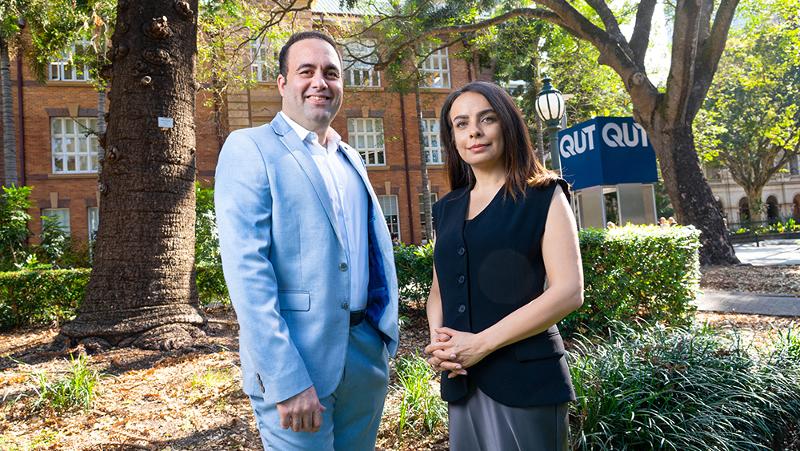
Developed by PhD researchers Omid Motamedisedeh and Faranak Zagia from the QUT School of Architecture and Built Environment, the model addresses a major challenge in group decision-making: small differences in expert judgments that sometimes lead to dramatically different outcomes.
The new method, published in the journal Array and called the Group-Consistency Best-Worst Method (GC-BWM), helps organisations identify the most consistent and aligned expert opinions when making complex decisions involving uncertainty.
Lead author Mr Motamedisedeh said existing approaches could be highly sensitive to minor errors or changes in expert responses, while the new QUT model consistently produced more stable and reliable rankings.
"Organisations increasingly rely on groups of experts to make decisions about everything from major infrastructure projects and sustainability initiatives to risk management and public policy," Mr Motamedisedeh said.
"Many important decisions today involve multiple experts with different perspectives, experiences and priorities.
"The challenge is that even when experts are knowledgeable and acting in good faith, small variations in their responses can sometimes produce very different results.
"Our research shows there is a way to make group decision-making more robust by looking not only at whether an individual's responses are internally consistent, but also how well those responses align with the broader group."
Unlike traditional methods that typically average responses before or after analysis, GC-BWM evaluates all respondents within a single optimisation framework.
The model identifies a subset of respondents whose judgments are both individually consistent and closely aligned with one another, reducing the influence of noisy or conflicting responses.
Mr Motamedisedeh said the approach was inspired by the concept of the "wisdom of crowds", where collective judgments can outperform individual assessments when combined effectively.
"The goal is not to force everyone to agree," he said.
"Instead, the model helps identify where there is genuine consensus while reducing the impact of responses that may have been affected by misunderstanding, fatigue or other forms of decision-making noise."
Co-researcher Faranak Zagia said one of the key findings was the model's ability to remain stable even when expert responses were deliberately altered during testing.
"We conducted extensive simulations and sensitivity testing to see how the model would perform when judgments changed," Ms Zagia said.
"We found the new approach maintained stable rankings significantly more often than conventional methods, even when individual responses were modified.
"That level of robustness is important because real-world decision making is rarely perfect. People can make mistakes, misunderstand questions or simply view issues differently, and organisations need tools that can account for that uncertainty."
Ms Zagia said the model could be applied across a wide range of fields where decisions which often involve multiple stakeholders and competing priorities, including infrastructure planning, transport, energy, sustainability assessment, risk analysis and policy development.
"Our research demonstrated that more reliable group decisions could be achieved without requiring experts to provide additional information or complete more complex assessments," she said.
"Our framework improves the quality and reliability of outcomes without increasing the burden on decision makers.
"Ultimately, it provides organisations with a practical way to make better decisions in situations where uncertainty and differing opinions are unavoidable."
Read the study, A new Group-Consistency Best-Worst Method (GC-BWM) for robust decision making under uncertainty, in Array.
QUT Media
Niki Widdowson
07 3138 2999


