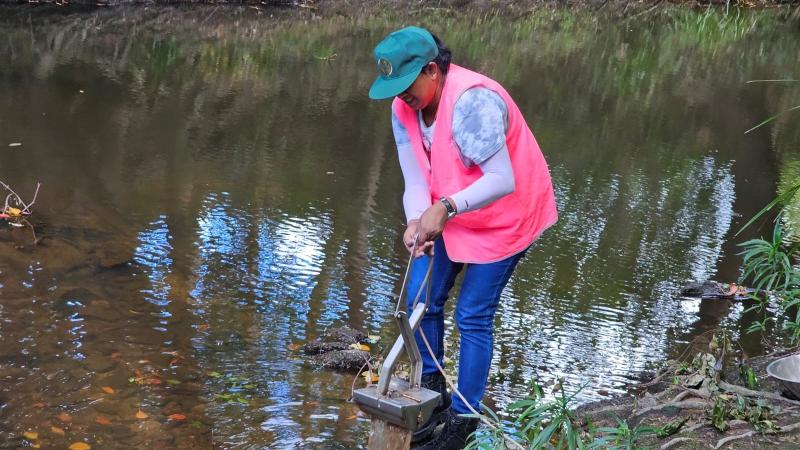
Bulimba Creek was found to have a high load of hazardous microplastics in an investigation of the composition of microplastic types in three Brisbane creeks by QUT researchers.
QUT researchers developed an integrated risk-zoning framework for microplastic pollution in creek sediment
Three major contributors to ecological risk are high hazardous polymers of plastics
Microplastics and their associated toxic chemicals may cause serious health impacts such as human circulatory, immune system and neurodegenerative disorders.
First author PhD candidate Heshani Mudalige, from QUT’s School of Chemistry and Physics, said the team developed an integrated microplastic risk-zoning framework to assess ecological risk of microplastics (MP) based on analyses of Kedron Brook, Bulimba and Enoggera creeks’ sediment.
“Our new risk assessment framework captures the complete risk profile of MPs in aquatic sediments by integrating their abundance (potential load index – PLI), their polymer composition hazard level (PHI) and the risk they pose to the ecology of the creek (PERI)," Ms Mudalige said.
The three plastic polymer types with the highest hazard scores, such as PVC, PMMA, and polyester, were found in sediment at various points on the three creeks and are major contributors to ecological risk.
Ms Mudalige said the biggest ecological threat was not just number of microplastics, but the presence of more hazardous polymer types.
"We identified that PHI and PERI values indicated a strong influence of hazardous polymer composition on toxicity-weighted ecological risk compared to PLI,” she said.
"We found sites with relatively small amounts of microplastics but with a very high ecological risk due to the presence of highly hazardous polymers.
"While Bulimba Creek showed the highest scores for both hazardous MPs and ecological risk, Kedron Brook had the highest PLI.
"When aquatic organisms at the bottom of the food chain consume PVC particles, the toxic chemicals in them affect growth, reproduction and survival of fish as the MPs move through the food chain
“Similarly, PMMA may cause physical stress, reduced feeding efficiency and energy loss in organisms which consume it.
"PVC is on the high hazard list for its ease of being ingested in fibre form and may cause blockages, reduced feeding and physiological stress, while transporting other pollutants attached to the MP surface."
Ms Mudalige said MPs were detrimental to human health because they could absorb pollutants from the surrounding environment and release chemicals already contained within the plastic.
“MP particles and their associated contaminants are toxic and enter the human body primarily through consuming seafood.
"MPs are linked to potential harm to human circulatory, immune systems and neurodegenerative disorders."
The researchers took sediment samples from six sampling sites on each of the three urban creeks to reflect the mix of different land uses that each creek flowed through.
"We sampled the six sites of each creek four times over a year and then analysed them to develop our ecological risk-assessment zoning framework for aquatic sediments.
"The results show that land use, whether it be industrial, commercial or residential, plays an important role in MP risk distribution.
"By integrating the three main risk indices, our framework enables consistent identification of hotspots to help environmental managers focus clean-up and protection efforts where they are needed most."
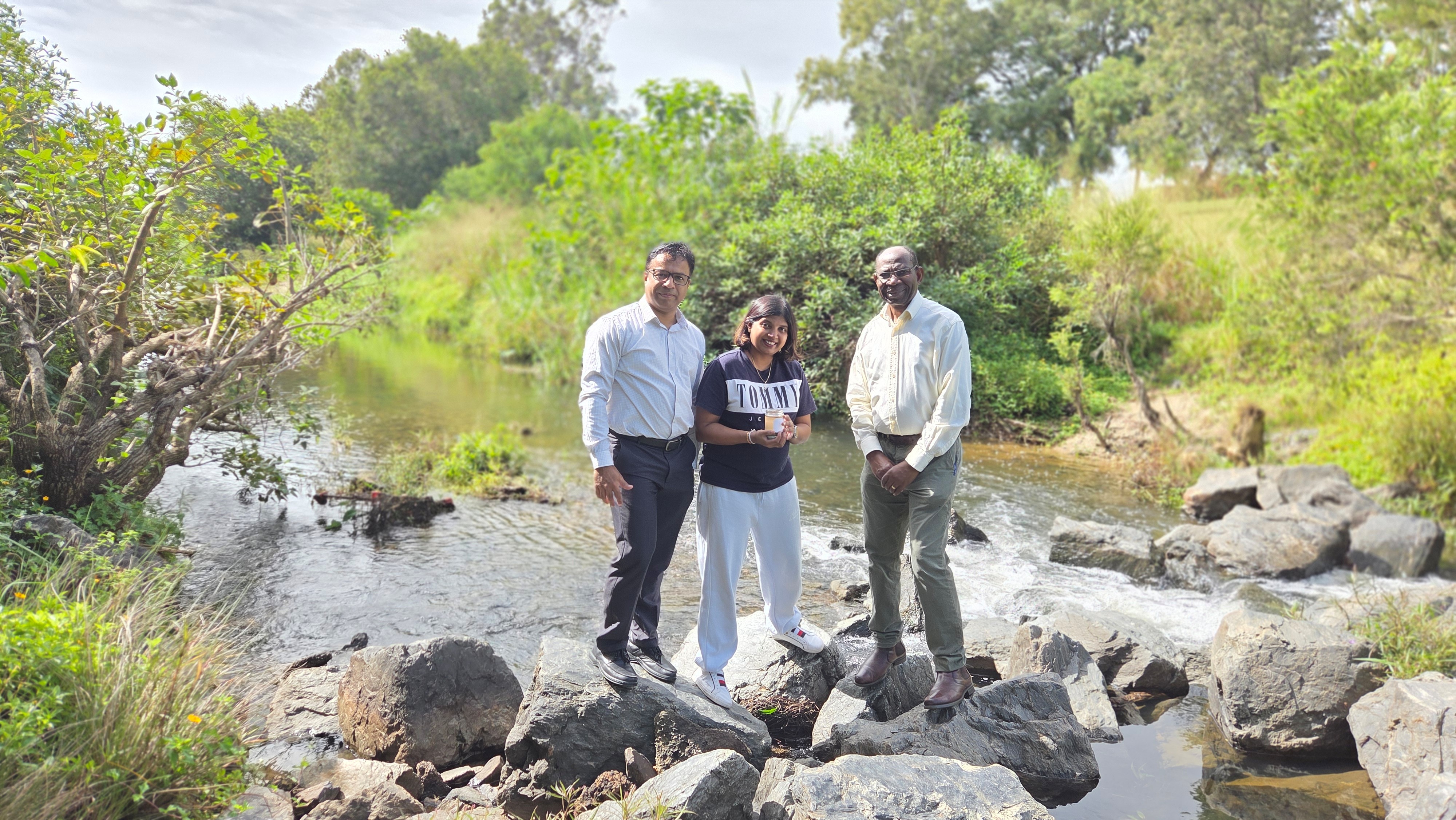
The research team comprised PhD scholar Heshani Mudalige and team leader Adjunct Professor Godwin Ayoko, from QUT’s School of Chemistry and Physics; Associate Professor Prasanna Egodawatta, Adjunct Professor Ashantha Goonetilleke, both from QUT’s School of Civil and Environmental Engineering.
The study, An integrated framework for ecological risk assessment of microplastics in aquatic sediments, was published in the Marine Pollution Bulletin.
(Main image: Ms Mudalige extracting creek sediment for analysis).
QUT Media
Niki Widdowson media@qut.edu.au


