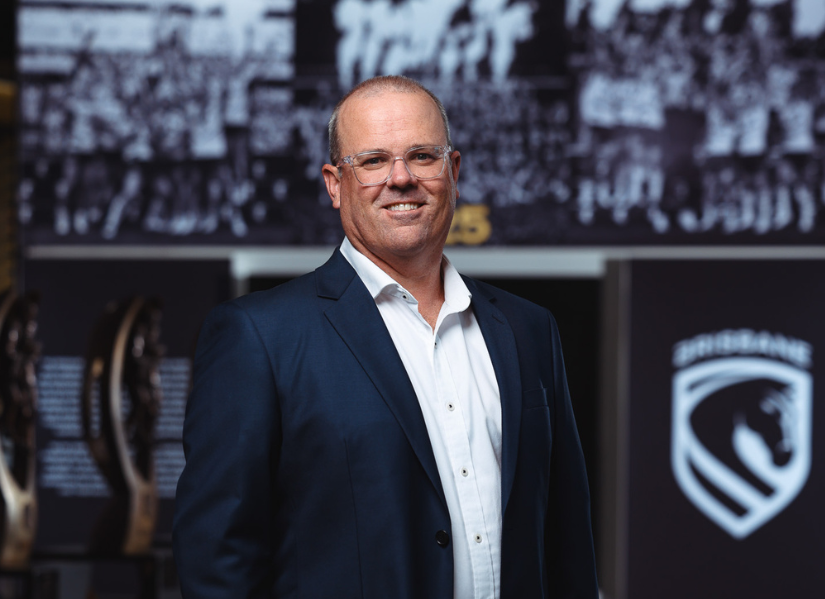
The business of sport is constantly expanding, powered by blockbuster media deals, new-age technology and athletes operating as global brands. We spoke with Daniel Glass, the Chief Commercial Officer of Brisbane Broncos on how the Broncos are using data, technology, and innovation to engage a multi‑generational fan base, what Brisbane 2032 could mean for league sport, and the advice graduates need when starting out.
Can you tell us about your career journey since graduating from QUT?
I was fortunate to commence my MBA at QUT while working at the Brisbane Lions, and I’ve always been grateful for their support. It provided a strong foundation for my career, which has been built across leading sporting organisations.
As Sponsorship Manager at the Brisbane Lions, I developed a strong grounding in partnerships and stakeholder engagement. I then moved to Tennis Australia, where I led the commercial program for the Brisbane International in 2008. This role gave me valuable experience in major events and international sport.
During my time at Tennis Australia, I expanded my skill set across consumer engagement, marketing, media, and PR. I concluded my tenure in 2017 after growing my event portfolio across the Australian Open Series, leading into the first Grand Slam of the calendar.
These experiences shaped my approach before joining the Brisbane Broncos, where I now lead the Club’s commercial program as Chief Commercial Officer.
What are some of your career highlights?
Working with global brands and major sporting rights holders has been a consistent highlight.
At the Lions, I built partnerships and gained a deep understanding of the AFL landscape. Being part of the club’s three-peat premiership success was particularly significant.
At Tennis Australia, the Brisbane International provided exposure to world-class athletes, global broadcast environments, and international sponsors. During this time, we attracted the “Big Four”—Roger Federer, Rafael Nadal, Novak Djokovic, and Andy Murray—to Brisbane, representing some of the biggest names in world sport.
At the Broncos, key highlights include strengthening relationships with global brands such as Kia and ASICS, expanding our consumer program, and driving significant commercial growth. Launching a new club brand in November last year was also a major milestone. Rebranding an iconic sporting club with millions of passionate fans is never easy, but incredibly rewarding. Premiership success in both the NRL and NRLW programs has also been a standout achievement.
What business philosophy guides your leadership approach?
My leadership approach is grounded in clarity, accountability, and strong relationships.
Across the Lions, Tennis Australia, and now the Broncos, I’ve seen that success comes from having a clear plan, aligning the right people to execute it, and connecting with fans and partners to deliver meaningful outcomes.
I focus on building high-performing teams, setting clear direction, executing consistently, and encouraging curiosity. Staying connected to the organisation’s purpose is also critical.
Which trends, business priorities or cultural changes will have the greatest impact on sport in Australia in the next 5-10 years?
Sport is evolving into a broader entertainment and content ecosystem, extending beyond game day.
Fans now expect more personalised, digital-first engagement, and data will play an increasingly important role in shaping these experiences. The continued rise of women’s sport will be a major growth driver, alongside more global and integrated partnerships.
With Brisbane 2032 approaching, there is a significant opportunity for clubs like the Broncos to elevate how we engage fans, partners, and the community. The adoption of AI will also transform how fans interact with sport and brands—an exciting shift for the industry.
How do you engage with your multi-generational fan base and consider their varying needs?
Our fan base spans generations, so our engagement approach reflects that diversity.
Long-standing members value tradition, loyalty, and connection to the Club’s history, while younger fans engage more through digital channels and content.
Our approach is to respect and protect the Broncos’ heritage while evolving how we connect through digital platforms, storytelling, membership, and game-day experiences.
What technologies or innovations are you investing in to enhance fan experience at the Broncos?
A key focus is using data and technology to better understand and engage our fans.
This includes more personalised communication, enhanced digital content, and improvements to the game-day experience at Suncorp Stadium. We also work closely with our partners to deliver innovative, integrated activations that keep fans connected beyond match day.
How do you see the future Olympics in Brisbane affecting league sport particularly in Brisbane?
Brisbane 2032 will be transformative for sport in Queensland. It will drive infrastructure investment, increase participation, and bring global attention to the city.
For rugby league and the Brisbane Broncos, it presents an opportunity to showcase our club on a global stage and benefit from increased momentum and investment.
When people visit cities like Los Angeles or New York, they often buy a Dodgers or Yankees cap. Our aspiration is that visitors to Brisbane for the Olympics will want to buy a Brisbane Broncos cap. The opportunity is significant, and we intend to embrace it fully.
What advice do you have for graduates embarking on their career journey in sport administration?
Be open to where your career starts and focus on building strong relationships early.
Sport is highly competitive, and opportunities are limited, so patience is essential. While you may want to progress quickly, building credibility first is critical.
My time at the Lions and Tennis Australia provided a foundation I’ve carried into every role. Having a clear point of difference—whether in commercial thinking, creativity, or relationship building—is important.
Stay curious, work hard, and take opportunities when they arise.
What is the one skill you couldn’t live without?
Communication.
Across every role I’ve held, success has come down to the ability to bring people together behind a clear vision. Whether working with internal teams, fans, athletes, or global partners, clear and consistent communication drives alignment and results.
Author

Jenni is an innovative communications, marketing and engagement specialist with fifteen years of industry experience. She is also a proud QUT alumnus with a Bachelor of Creative Industries (Interdisciplinary).