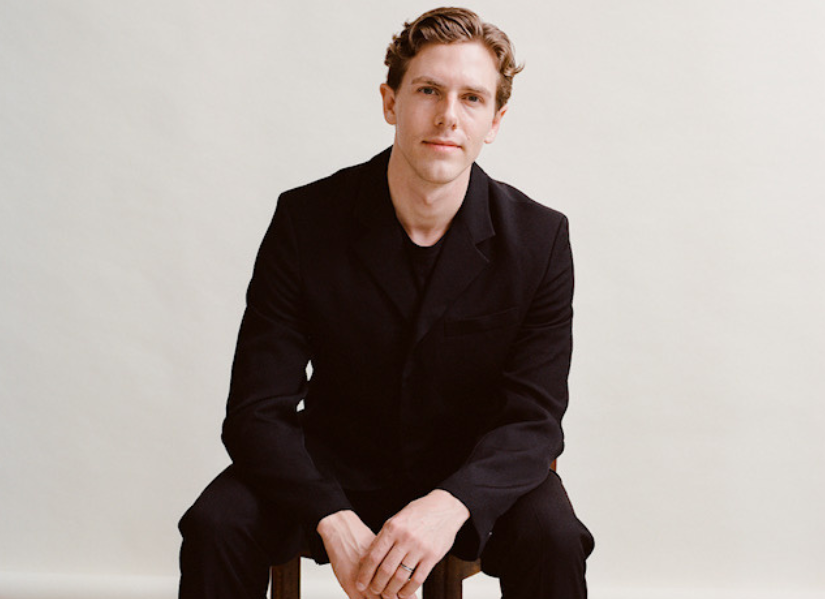
From a part-time role on the shop floor in Brisbane to shaping global marketing strategy from London, Matt Willms’ career is a testament to curiosity, adaptability and seizing opportunity. Since graduating from QUT, he has built an international career with the H&M Group, moving across continents and roles—from visual merchandising to financial controlling—to now working at the centre of COS’ global marketing and communications strategy.
Balancing creativity with commercial insight, Willms operates across everything from campaign performance and budget management to the fast-paced energy of international fashion weeks. His journey offers a behind-the-scenes look at the fast evolving fashion industry and the skills, mindset and resilience needed to succeed within it.
Can you tell us about your career journey since graduating from QUT?
During my final semester at QUT in 2013, I was recruited into the team that launched H&M in Australia, and I’ve been with the H&M Group ever since. I started as a Visual Merchandiser, something I was already doing while studying, and my career grew from there.
I worked as a Merchandise Manager at H&M for four years before moving to COS, where I’ve since held Area, Regional, and Global Financial Controlling roles. I’ve lived in Melbourne, Sydney, Hong Kong, and Singapore, and am now based in London at the COS Head Office. Today I work with the CMO and the CFO on the development and execution of the global marketing strategy.
What does a typical day look like in your role?
No two days are ever the same! I can be anywhere from deep in an Excel spreadsheet at my desk in Holborn, London, to working behind the scenes at a New York Fashion Week runway in Greenpoint, Brooklyn.
Most of my time is spent supporting teams within the Global Marketing and Communications department. This can involve anything from celebrity ambassador contract negotiations to following up on campaign or project KPIs. As I’m responsible for the entire advertising budget, I spend a lot of time analysing performance and ensuring spend remains on track across the three regions and on global initiatives.
What major shifts do you expect in the fashion industry over the next 5 years?
The cost-of-living crisis is a global challenge, and it directly impacts fashion as the industry relies heavily on consumer spending. At the same time, populations are ageing, and this older demographic tends to be more financially secure, with greater discretionary spending power.
We can already see customers who previously shopped luxury trading down to more moderately priced, high-quality items. I expect the accessible luxury segment, which sits between the high street and the high end, will continue to expand with a demand for long-lasting, high-quality craftsmanship without the staggering luxury price point. I’m looking forward to seeing which brands capitalise on this space.
What types of roles do you think will exist in the future that don’t exist now?
Technological advancements often come with inherent dualities. Many entry-level roles are being automated and while this is positive for efficiency, it also creates a smaller talent pool of future leaders. As a result, businesses may need specialists who can advise not only on how technology should be used, but also on when it shouldn’t be used, in order to balance efficiency with individuality and manage the long-term implications of these trade-offs.
What advice would you suggest to recent graduates hoping to break into fashion industry?
Landing that first break in the fashion industry is a very real challenge! For me, it came at Ksubi. In 2012, Ksubi had a store on James Street in New Farm, Brisbane where I was working as a part-time sales assistant while studying. The Visual Merchandiser left and I put myself forward for the role. I said “I have an eye for this, give me a chance, I can do it” and that experience led to my first role with H&M.
A very typical pathway is to lean into your network to secure that first opportunity in the direction you want to go, whether that’s through friends, faculty members, or colleagues. You may need to start on the sales floor or as an intern, but I think the most important thing is to begin working within the fashion industry as quickly as possible so you can start to understand how the business operates. You need to try, test, fail, and learn to figure out what it is you actually want to do.
What is one skill that you couldn’t live without and why?
What I learnt at QUT, and could not live without, is the ability to communicate effectively to different audiences. On any given day I might present to the C-suite, have a casual career development conversation with a colleague in an entry-level role, and present quarterly results to a team of more than 80 people. Understanding your audience and tailoring your communication style to ensure the message lands is crucial.
Author

Jenni is an innovative communications, marketing and engagement specialist with fifteen years of industry experience. She is also a proud QUT alumnus with a Bachelor of Creative Industries (Interdisciplinary).