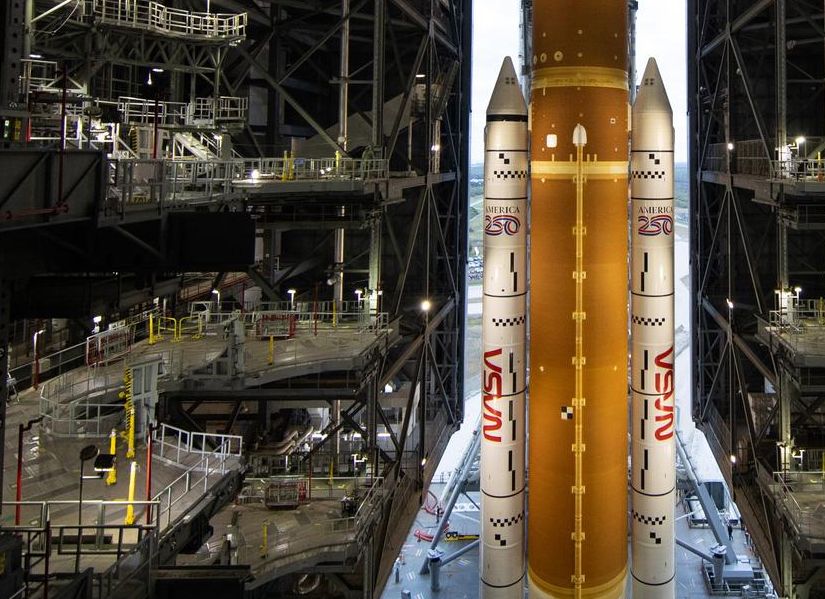
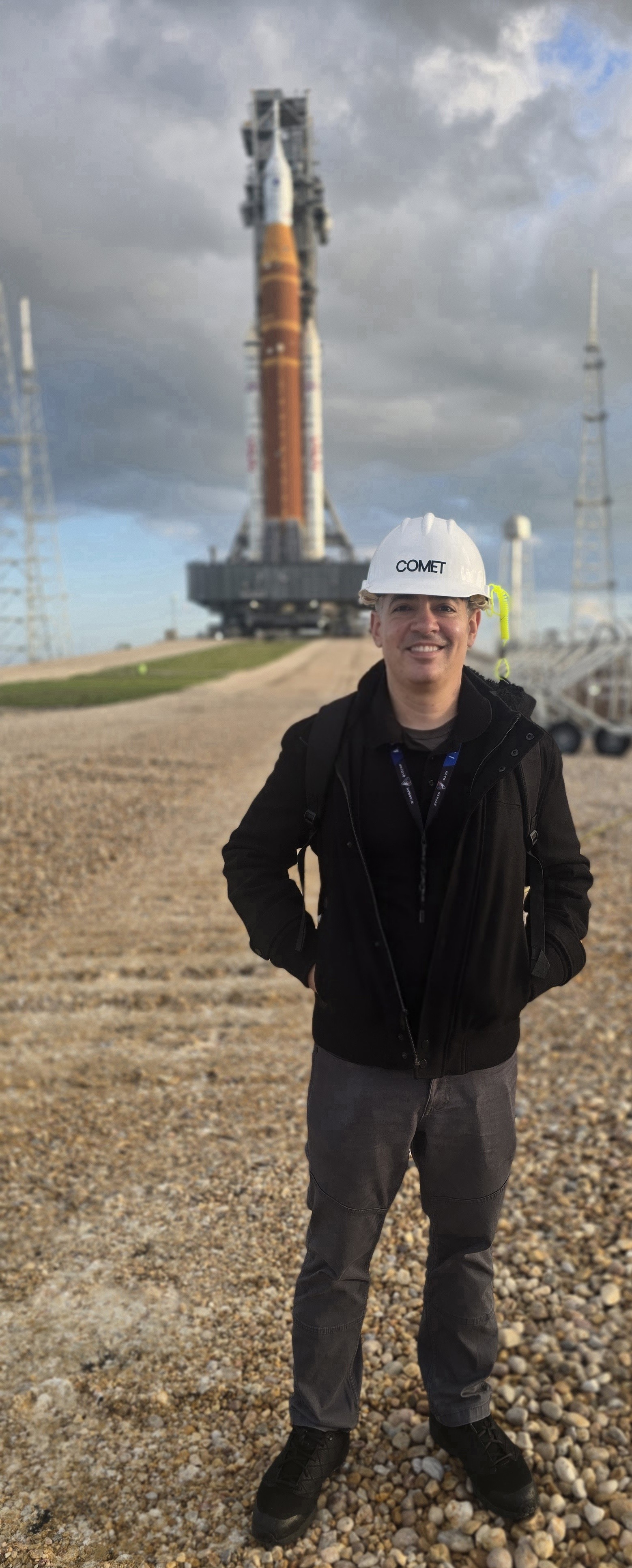
The Kennedy Space Center, SpaceX, and Cape Canaveral are all names that evoke thoughts of space and ignite our imaginations, but for Ryan Nascimento this is his reality. Ryan is the Director of Ground Support Systems at Amentum – the key contractor who manages, develops and executes ground systems capabilities, flight hardware processing, and launch operations at NASA's Kennedy Space Center.
The QUT Alumni Team sat down with Ryan to discuss his career, how he fell in love with the profession and the future of aerospace engineering.
Can you tell us about your journey since graduating from QUT?
After graduating from QUT in 2009, I began my career by designing and testing the parachute system for NASA's Orion capsule, where I developed a new and innovative way to create more robust ribbon parachutes. I was later presented with the opportunity to design and test turbine engines for aircraft, where I set a record for the highest altitude achieved in cold starting a civilian turbine engine. Following that, I joined SpaceX to develop the recovery systems for the human-rated Dragon 2 space capsule. After seven years at SpaceX, during which I was involved in routine recovery operations for astronauts and ISS cargo, I transitioned to a start-up. At the start-up, I directed the launch and recovery department and contributed to building the engineering and operations business. Currently, I am the Director of Ground System Support at Amentum.
What sparked your interest in aerospace engineering?
My passion for human space flight has been a driving force in my life. As a child, I was fortunate enough to attend Space Camp, which ignited my desire to pursue a career in aerospace engineering. I have always been inspired by the altruistic nature of pushing the boundaries of space exploration and the resulting shared knowledge that contributes to the betterment of humanity.
Can you tell us what emerging issue/s will have the greatest impact on aerospace engineering in the next 5–10 years?
The Kessler syndrome may become a serious issue within the next decade. This phenomenon occurs when space debris in low Earth orbit reaches such a high density that collisions between objects generate even more debris. This creates a cascading effect that could ultimately render low Earth orbit unusable and unpassable. Addressing this challenge will be crucial for the aerospace industry in the years to come. Making a strong business case for responsible stewardship of space faces a similar challenge to the tragedy of the commons that environmental issues are facing on Earth.
 What are some of your career highlights?
I served as a system architect and operations engineer for the recovery of NASA/SpaceX's Dragon capsule during Demo Mission 2, which successfully brought home astronauts Bob Behnken and Doug Hurley from the International Space Station. I was also involved in the recovery of many other astronauts, including Victor Glover, who is set to fly to the Moon on the Artemis II mission, and Jared Isaacman, the current NASA administrator. Another significant highlight of my work was leading the design, testing, and launch of 16-foot (5-metre) capsule utilsing an enormous 550-foot (170-metre) high-altitude balloon filled with hydrogen. This launch took place from the back of our custom designed ship at sea. Remarkably, we successfully recovered both the capsule and the balloon on the first attempt after it achieved the target altitude of over 100,000 feet (30,500 metres).
Can you tell us more about the influence of mentoring on an engineer’s career and what is your approach when you’re in the mentoring role?
Mentoring plays a crucial role in an engineer's career. It starts with observations and a conversation identifying the individual goals, strengths, and uncertainties. I lean into an individual's strengths to allow them to excel, while providing opportunities for success and guidance to help build skills and experiences where they are unconfident. This process not only helps the mentee grow professionally but also fosters a sense of ownership and confidence to take on new challenges.
Do you have any advice for graduates embarking on their engineering journey?
First, try different things to find what you like doing, even outside your comfort zone. I know from experience that after a while, I want to get out from behind the desk and go into the field, even if the environment is uncomfortable. Second, constantly learn new emerging tools to give yourself the most significant advantage in doing your job as efficiently and innovatively as possible.
Can you name some of the individuals who inspire you? What qualities in these individuals do you admire and seek to emulate in your own work/life?
Neil deGrasse Tyson's excitement about the physics of our universe is inspirational. Almost every time I listen to him, I either learn something new or my perspective on the topic is widened. Also, I've recently been paying attention to Shadé Zahrai's feed, which offers insightful recommendations on soft business skills that many in the technical field lack.
What is one skill you couldn’t live without and why?
One skill that has been indispensable in my career is perseverance. It's the ability to persistently show up, do the work, and solve the problems, even in the face of adversity. We encounter challenges daily, and it's easy to avoid or procrastinate, but it's through incremental steps forward that we make progress in our careers and personal lives.
Do you have a question for Ryan? Connect with him on Linkedin.
Author

Joanna is an integrated marketing communications specialist with an interest in the Faculties of Health, Business and Law. She holds a Master of Business, Bachelor of Mass Communication and Diploma in Business Information Systems.