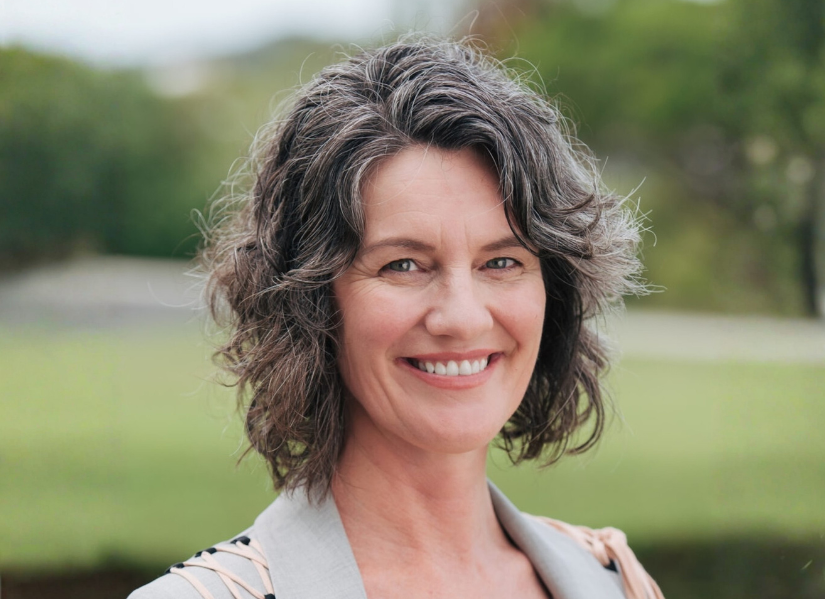
Emma-Kate Rose, Executive Director of Food Connect Foundation, is leading new approaches to addressing food insecurity by reshaping how food moves from farm to table. At the centre of her work is the Food Connect Shed, a community-owned hub designed to reconnect farmers and communities through a fairer, more transparent system. In this Q&A, Emma shares insights on the deeper drivers of food insecurity and what it will take to build a more equitable and resilient food future.
What does your work look like right now, and what is FCF most focused on?
Right now FCF is operating across several interconnected fronts. We're running the Food Connect Shed: Australia's fi rst community-owned local food hub, while simultaneously working to replicate that model across regional Queensland and beyond through our Regenerating the Regions program. We've just launched Good Food Purchasing Australia, pushing institutional buyers like hospitals, schools and aged care facilities to procure food in ways that actually support farmers and communities. We're also preparing for the SEQ Food Summit in July, which brings together hundreds of people working on food systems transformation. It's a lot, but the threads connect: we're always asking how we shift power in the food system, not just keeping farmers farming, and feeding people healthy food.
What drew you specifically to food as your vehicle for change?
I started out as a criminologist, working on community safety, which sounds a long way from food, but it taught me everything I needed to know. Crime and harm aren't random; they cluster where people are under-resourced, under-housed, under-nourished and over-policed. The more I worked in communities, the more I saw that the systems meant to protect people were often the same systems producing the conditions that made them vulnerable. That pushed me into political activism, and eventually into climate activism. And food appeared at the centre of it all, it touches land, labour, health, culture, sovereignty, ecology. When I met my love, Robert Pekin and his wonderful social enterprise, Food Connect, I encountered farmers being squeezed by supermarket duopolies and walking off the land, while people lined up at food banks. I saw the same system producing both problems simultaneously. Food isn't just fuel; it's relationship, identity, economics and politics all on one plate. And unlike a lot of social change work, everyone eats. That gives food a kind of radical accessibility as an entry point into conversations about who holds power and who gets to decide.
How does food insecurity connect to broader issues like housing, employment, and climate change?
Food insecurity is rarely just about food, it's the canary. When someone can't afford groceries, it's usually because rent took 60% of their income, or their casual hours were cut, or their car broke down and they can't reach affordable fresh food. These aren't separate crises; they're the same crisis wearing different faces. Climate and the fuel and fertiliser crisis is compounding everything, hitting farming communities hard and driving up prices, while those on the lowest incomes have least capacity to absorb cost shocks. We won't solve food insecurity without addressing housing precarity, wage stagnation and ecological collapse together.
What does community ownership of food infrastructure actually change?
Everything, and nothing, unless we're intentional. When 512 people invested over $2 million to purchase the Food Connect Shed, they didn't just buy a building. They created a different kind of accountability. Our decisions have to serve farmers, food makers and the community, in addition to shareholders seeking realistic returns. That changes what's possible: we can hold space for small producers who'd never survive in a conventional supply chain, we can cross-subsidise social purposes with commercial activity, and we can be a place of genuine democratic participation in the food system. But community ownership only transforms things if it's matched with genuine governance and long-term stewardship.
Where are the biggest gaps between sustainability goals and genuine food access?
The word "sustainability" has been captured by the wrong conversation. Too often it means compostable packaging and carbon offsets not whether a single mother in Logan can afford vegetables. The biggest gap is that most sustainability frameworks are designed by and for people with economic cushion. They assume people can pay a premium for ethical choices. Genuine food access requires that the most nutritious, ecologically sound food is also the most affordable and convenient, and that requires www.fcf.org.au structural change to supply chains, land use, procurement and income. We can't have a sustainable food system that only works for the already-comfortable.
What should policymakers and advocates take from Food Connect's experience through floods and COVID?
Resilience isn't built in a crisis, it's revealed by one. When the 2011 floods hit, our relationships with farmers meant we could redirect produce, communicate rapidly and hold the supply chain together. During COVID, our community networks became mutual aid infrastructure almost overnight. Governments poured money into emergency food relief without asking why the existing system had failed so comprehensively. The lesson is this: invest in local food infrastructure, short supply chains and community relationships before the disaster, not after. Resilient food systems are built on trust, proximity and diversity not efficiency, consolidation and the lowest possible cost.
How does the food insecurity crisis feel personal — and what future are you determined to leave?
I'm a mother of four, sister to five, and aunty to around 24, which means I have a lot of people whose futures I think about every day. Some of them are in households where food stress is real. All of them will inherit a climate and food system shaped by decisions being made right now. What I want for them isn't food charity, it's food dignity. The right to eat well, grown from healthy soil, connected to place and culture, without having to perform poverty to access it. But that future doesn't arrive through goodwill alone. It requires building what we call the missing middle: the regional food hubs, aggregation infrastructure, shared logistics and values-based supply chains that sit between the farmer and the family table. Right now that infrastructure barely exists, and its absence is why ethical, nutritious food stays expensive and inaccessible for the people who need it most. The future I'm determined to leave is one where that middle has been built, not as charity, but as commons.
What do graduates need to understand about food justice work that doesn't show up in textbooks?
That this work will ask more of you than a job description. Food systems change is slow, relational and deeply political. The people and farmers most affected by food insecurity often have the most sophisticated understanding of what needs to change — your role is to listen first, theorise second. You'll need to tolerate uncertainty, hold complexity, and accept that transformation rarely follows a Gantt chart. Learn to work across difference: with farmers, First Nations, chefs, community organisers, government bureaucrats and corporate procurement managers, all in the same week. And take care of yourself. Burnout in purpose-driven work is real, and the movement needs you for the long haul.
If you could change one policy or systemic lever to address food insecurity in Australia, what would it be?
Breaking up the supermarket duopoly. In our current political climate, this is unlikely, so the next best lever is mandatory Good Food Purchasing standards for every institution receiving public funding. Hospitals, schools, prisons, aged care facilities, universities. The Australian government spends billions on food every year, and almost none of it asks: does this food support farmers to farm well? Does it nourish the people eating it? Does it build regional economies? If we required public institutions to apply social, environmental and economic criteria to how they buy food, we'd redirect billions of dollars toward a more equitable food system without a single new subsidy or program. The lever already exists; we just haven't had the political will to pull it.
After 30+ years — what still gives you genuine hope?
I’ve moved beyond hope. I instead focus on staying in the chaos and put my energy into the people who are doing great things. Everywhere I go I fi nd farmers who have stayed on the land because they believe it matters, community members who choose to buy ethically because they want to be part of something different, young people who have chosen regenerative agriculture or food policy or community development when they could have chosen something far more lucrative. Change happens at the speed of trust. www.fcf.org.au It's choosing, day after day, to act as though the future we're working toward is possible, because the alternative is to cede the fi eld to the systems that are actively making things worse.
QUT degree - Bachelor of Justice
You can connect with Emma-Kate on LinkedIn
Author

Victoria believes that every alumnus has a story worth telling. Naturally curious, she asks the thoughtful questions others often don't — creating stories that connect, inspire and reflect the depth of the QUT Alumni community.