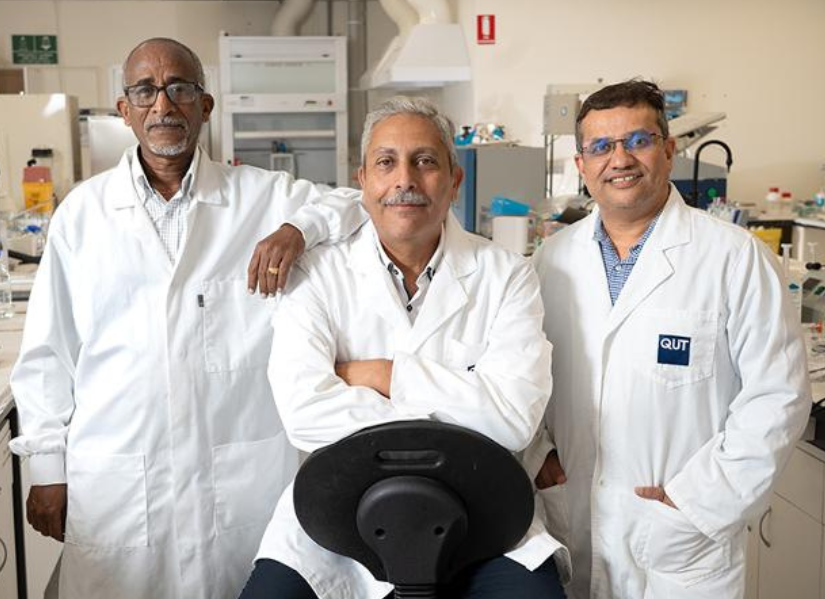
See the most recent research updates from QUT in April 2026 including a rapid, low-cost saliva diagnostic tool for common cancers; a gel turning body heat into power; the importance of herbivores for Australian grassy woodlands and the deceptive tactics used by popular paid and free apps. Two QUT students have also been awarded prestigious Westpac Australia-Asia fellowships.
QUT students awarded prestigious Westpac Australia-Asia Fellowships
Two QUT students have been awarded highly competitive Westpac Australia-Asia Fellowships, recognising their leadership potential and commitment to strengthening ties between Australia and the Asia-Pacific. Read more.
Rapid, low-cost, saliva diagnostic tool for common cancers
QUT researchers have developed a low-cost and portable diagnostic tool that can test saliva within one-hour for a protein biomarker that has been linked with oral, colon and pancreatic cancers. Read more.
Flexible gel can turn body heat into power for next-generation wearables
A soft material developed by researchers at QUT can convert body heat into electricity, opening the door to self-powered wearable devices and more sustainable energy technologies. Read more.
All herbivores, great and small, needed to maintain health of endangered grassy woodlands
A new QUT-led study has found both grazing mammals and plant-eating insects together play a major role in maintaining the health of Australia’s endangered grassy woodlands. Read more.
Popular kids’ apps use deceptive tactics to draw them to paid content
A QUT study of 20 popular paid and free apps for children aged 5 to 8 years found that most contained deceptive design patterns aimed at attracting children to paid content, increasing their time spent using the app, or encouraging them to watch advertisements for other products. Read more.
Call for doctors to partner with Australia’s Indigenous people to demand climate action
A call to the medical profession to address the rising health inequity of Indigenous peoples due to climate change and ally with them to bring climate litigation for action on emissions reduction, has come from Torres Strait Islander and QUT public health academic Francis Nona. Read more.
$2.1M Queensland study on genetic links to chronic conditions in Pasifika cohort
Distinguished Professor Lyn Griffiths is leading a $2.1 million study to better understand genetic links to conditions such as type 2 diabetes, obesity, heart disease, gout, and kidney disease in a Pasifika cohort based in Queensland. Read more.
Author

Jenni is an innovative communications, marketing and engagement specialist with fifteen years of industry experience. She is also a proud QUT alumnus with a Bachelor of Creative Industries (Interdisciplinary).