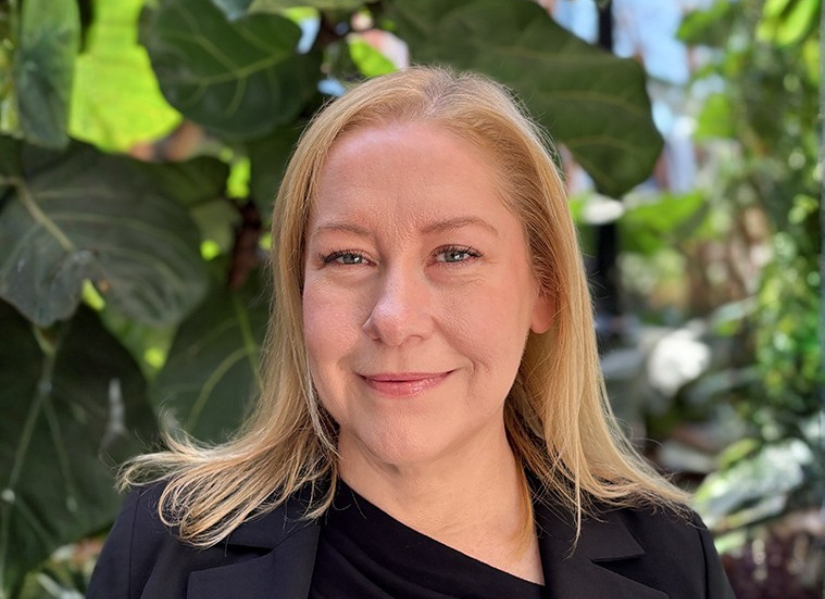
Nyssa Henry has dedicated her career to protecting the Great Barrier Reef through data-driven solutions. As the Reef Lead at Truii, she develops innovative web applications that help guide multi-million-dollar investments in reef conservation. In this Q&A, Nyssa shares how her passion for environmental science began and the role of technology in conservation.
What sparked your passion for reef conservation?
Growing up in Far North Queensland, we were spoilt having the Great Barrier Reef on our doorstep as well as the beautiful catchments that are part of the connected ecosystems. My dad was an innovative farmer, so I had an early interest in science and won the North Queensland Award for Excellence in Natural Sciences that included a bursary that led me to pursue a Bachelor of Applied Science with QUT.
Can you explain your role at Truii and how your work supports reef conservation?
As the Reef Lead at Truii I oversee the ongoing development of science-based web applications to assist the Reef preservation effort through supporting investment prioritisation, public reporting of outcomes and data management. These decision-support tools guide millions of dollars annually in Queensland and Australian government investments to improve water quality for the Reef.
How do data-driven tools help protect the Great Barrier Reef, and what makes them so valuable?
Truii has been working with its partners in the Queensland and Australian governments to support water quality improvement programs aimed at reducing pollution flowing into the Great Barrier Reef. We have developed data-driven web applications that support on-ground investment planning, project design, reporting and communication of outcomes. The decision-support tools couple environmental modelling and costings data to evaluate the likely investment outcomes as part of program and project design and are then used to capture and report the environmental outcomes and co-benefits. This data-driven approach ensures the effective use of resources towards projects that have the most impact for the Reef.
What are some of the biggest environmental challenges facing the reef today?
The Great Barrier Reef faces key threats from climate change and land-based runoff with poor water quality a major contributor to the poor state of many inshore marine ecosystems. Improving water quality is one of the most locally manageable threats to the Reef.
Can you share an example of how data has influenced real-world decisions for reef protection?
One of our key data-driven web applications, P2R Projector, estimates the water quality improvement of farm-scale agricultural practice change and environmental remediation projects based on modelling. The tool is used for project capture and prioritisation to support groups who are working with farmers to improve water quality. It currently has over 500 users across 85 organisations and informs the roll-out of over $50 million dollars for land management improvement projects each year.
What’s been the most rewarding or impactful project you’ve worked on?
As Chief Scientist with the Office of the Great Barrier Reef, I led the award-winning Paddock to Reef program. The program integrated monitoring and modelling from the farm paddock to the Reef to evaluate the success of on-ground actions and guide investment priorities for the Queensland and Australian governments in addressing land-based impacts on the Reef. A lot of the data produced by the Paddock to Reef program now underpins the decision support tools that Truii collaborates on.
How do you see technology shaping the future of environmental conservation?
Combining science with data visualisation expertise, user experience design and engineering to make fit-for-purpose data-driven decisions support tools can help solve complex conservation problems. This multidisciplinary approach is helping to address key environmental issues such as those impacting on the Great Barrier Reef. This approach is being looked at by other conservation areas within Australia and internationally.
What advice do you have for aspiring environmental data scientists?
As an environmental scientist, it is highly beneficial to round out your expertise across other disciplines. QUT gave me the flexibility to study environmental law and engineering subjects as well as spatial sciences in addition to environmental science and ecology. The job market straight out of university is highly competitive and I was told a key reason I was selected for my first role was this varied range of expertise. Oh, and study hard! Good grades help.
What innovations in conservation excite you most?
The role of web applications harnessing environmental data and modelling to create decision support tools has a real opportunity to progress a range of conservation issues. Traditional approaches of measuring and monitoring everything were often limited by practicalities, time and cost. This meant a lot of environmental decision making was not evidence based. There are a lot of learnings developed from our collaborations in the reef science space that we’re now translating to the broader world of Natural Capital which is an exciting and fast-moving area of conservation
What's one skill you couldn't live without?
The ability to translate complex science into accessible information is a fundamental skill that all who study science should really learn. There is a lot of great science that sits in technical journals and doesn’t have the impact it should as it is inaccessible to time-poor decision-makers.
QUT degree—Bachelor of Applied Science (Environmental Science) (2002). Have a question for Nyssa? Connect with her on LinkedIn.