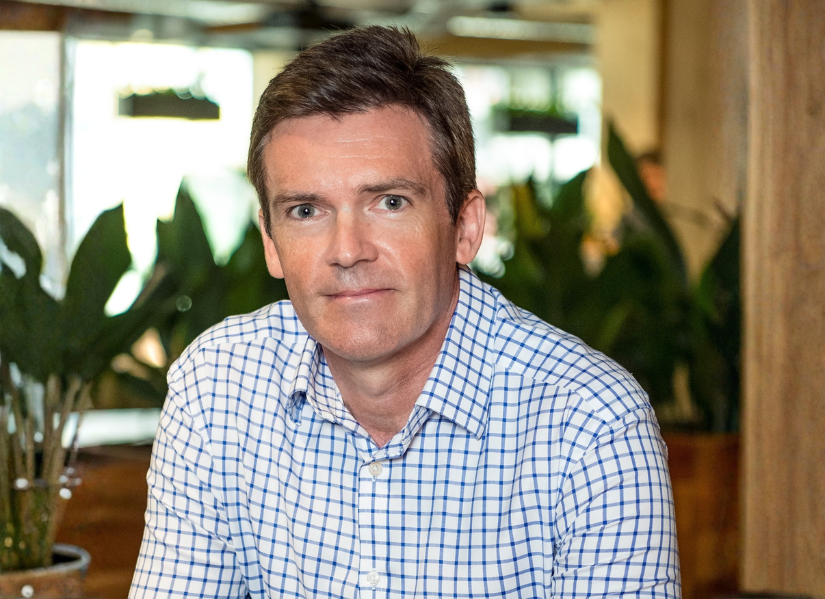
Recognised as the Global Chief Sustainability Officer of the Year in 2022 and with over 27 years’ experience working across the energy sector, including some of the most significant wind, solar, transmission and storage projects in the Australian energy market, Paul Gleeson is an influential voice on sustainable business initiatives.
As the Managing Director, Energy, Paul has led the development of Aurecon’s sustainability and climate change expertise, building a team of 50-plus people from scratch and establishing its corporate sustainability strategy, targets and policies. His approach has helped Aurecon's recognition in the Australian Financial Review’s Top Sustainability Leaders for three years in a row.
This week, the Alumni team sat down with Paul to understand what truly makes a sustainable business and the strategies organisations should implement to instil lasting change.
Looking back, what pivotal moments or decisions most influenced your transition into sustainability leadership?
I chose to work in a sector that was the biggest contributor to climate change - coal-fired power generation. But once I started reading about climate change and how it was going to be a leading issue in the future I quickly moved to flip this to be an opportunity. I changed employers and while I still had to work on coal and gas fired power projects in the near term, my new employer was pursuing projects to develop renewable energy technology, including Australia’s first electricity grid-connected wind farm. This led to me working on many of Australia’s wind, solar and battery projects, some of the first and largest in the world.
How has your engineering or technical background influenced the way you approach sustainability challenges at a strategic level?
While my engineering and technical background gave me the knowledge to speak up and to be involved, a huge amount of the challenge, especially at the strategic level, has been change leadership - understanding where people are at with either their acceptance or need for change. It became a lot more about improving my communication skills and how I engage with people and a lot less about being a subject-matter expert.
What impact has your recognition as Chief Sustainability Officer of the Year in 2022 had for your work at Aurecon?
Having joined Aurecon to lead its energy business, my path toward having a broader sustainability impact began with raising my own hand and asking a question about what more the company could do. The recognition reinforced to me that impact comes from focusing on the broader outcomes that can be achieved and doing the work before any title exists or is associated with it.
Aurecon has positioned itself as a leader in sustainable engineering and advisory — what differentiates its approach from others in the industry?
Most of Aurecon’s clients have large physical asset bases - energy, water, defence, resources, transport, digital infrastructure and health, education and research, so our work helping them with things like decarbonisation, energy transition and improving the resilience of their assets and infrastructure against climate change is where we can have the greatest impact.
Many organisations struggle to become a sustainable business or b-Corp — what are the biggest barriers you see, and what are some practical steps you would recommend to overcome them?
Complexity and cost are the two main barriers I see. How much of your organisations’ emissions are in scope 1, 2 or 3 is one of the biggest barriers. Things become complex when you have to influence both up and down in your supply chain. As the position on sustainability has shifted across politics and jurisdictions a lot of organisations have focused on short-term improvements versus going all the way to getting b-Corp certified.
What role does culture play in achieving sustainability goals, and how can leaders cultivate that culture?
It’s about seeing sustainability as part of the work the organisation is already doing, not as separate. Senior leaders have to lead the way, but they need to avoid being prescriptive. The people in the business who are working every day with clients are best placed to figure out how they can create more sustainable outcomes the same way they are focused on the commercial objectives they need to achieve. The biggest opportunity for leaders is to engage closely with the people who are the least enthusiastic about change.
Where do you see the greatest opportunities for Australian industries to lead globally in sustainability?
Energy transition. Australia’s abundance of renewable energy resources and very large land mass to population ratio provides us with an unparalleled opportunity to transition away from fossil fuels. Decarbonising the National Electricity Market and electrifying transport and industrial assets and infrastructure is the biggest opportunity for Australian industries.
What emerging trends or innovations in sustainability are you most excited about right now?
The incredible cost reductions of solar PV and battery energy storage – they are completely disrupting energy markets because of their cost rather than because of their emissions reduction benefits which we get anyway. Also, the battery cost collapse is starting to accelerate the decarbonisation of transport – which is the next biggest opportunity for emissions reduction.
What advice would you give to emerging leaders who want to build careers across different industries, but aligned with sustainability and impact?
It’s important to build a deep understanding of the fundamentals of those industries, how do those organisations deliver on their outcomes. It might be returns to shareholders, or it might be to deliver essential services. But you’ve got to understand how they achieve their fundamental reason or purpose for existing. You’ve got to understand what they do, how they succeed as an organisation and then bring the sustainability lens to that.
What is one skill that you couldn’t live without and why?
Storytelling, particularly for someone with a technical background, if you cannot engage people and bring them with you then everything else doesn’t matter.
QUT degree - Bachelor of Engineering (Mechanical).
Do you have a question for Paul? Connect with him on LinkedIn.
Author

Jenni is an innovative communications, marketing and engagement specialist with fifteen years of industry experience. She is also a proud QUT alumnus with a Bachelor of Creative Industries (Interdisciplinary).