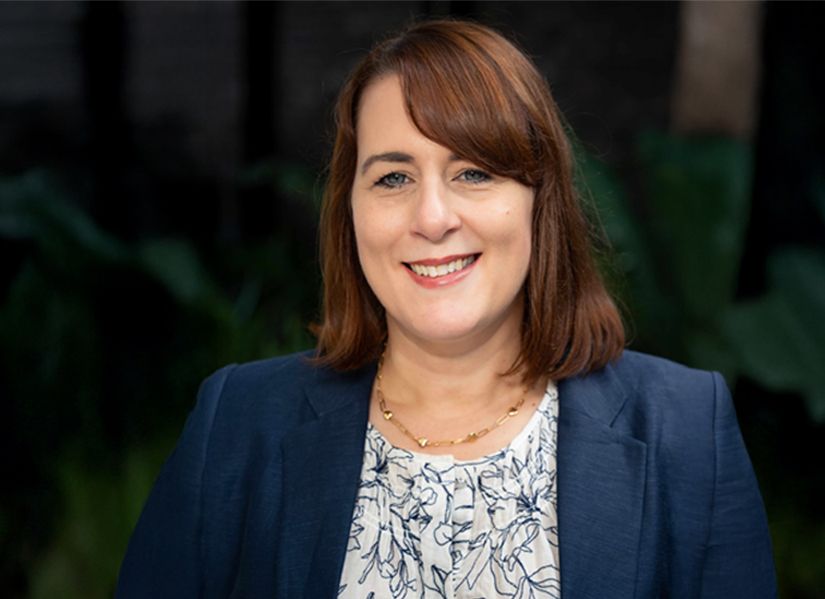
Kellie Williams’ approach to change is grounded in a simple principle: follow through matters more than intent. With a career spanning local and state government, not-for-profit organisations and sustainability leadership across health and environmental sectors, she has built a practice focused on action, collaboration and accountability.
Drawing on experience across Queensland’s diverse communities, Kellie brings a systems lens to complex challenges, from climate risk and circular economy initiatives to stakeholder engagement and public health. We spoke with her about her career journey, building trust through authenticity, and why follow through is essential to creating lasting impact.
Can you tell us about your journey since graduating from QUT?
As a mature-aged student, I’ve never done just one thing at a time. After graduating from QUT, I continued working full-time, raising my sons as a single parent, volunteering, and pursuing further study. I completed two additional degrees while volunteering with several not-for-profit organisations and working in local and state government across conservation, board governance, humanitarian response, disaster management, allied health, environmental and public health, waste and resource recovery, and environmental sustainability.
I lived in Cairns for a decade and have now spent almost as long in Brisbane, with my studies, volunteer work and career taking me to communities across Queensland. Working in environmental and health contexts across such a vast and diverse state has provided invaluable opportunities to understand the different experiences, challenges and strengths of Queensland’s regions and communities. I feel incredibly privileged to have witnessed this diversity firsthand, particularly during times of disaster, when the resilience and needs of geographically dispersed communities become most apparent.
What might a standard week look like for you?
What is a standard week? There really isn’t one. My work ranges from committee meetings covering Safety and Quality, Infrastructure, Capital Projects and Asset Management, to climate risk assessments, carbon emissions reporting and consumer engagement. I present at conferences, guest lecture, write strategies, collaborate with industry and government partners, and develop projects focused on sustainability and food waste reduction.
A typical week may also involve procurement, tender assessments, collaborating with clinical staff, urban greening projects, mentoring students, hosting webinars, contributing to communities of practice, writing reports, reviewing research and policy, conducting site assessments, and developing circular economy initiatives. Throughout it all, I am continually educating and engaging stakeholders on climate change, climate governance and sustainability opportunities within healthcare.
What makes a partnership effective when working toward sustainability outcomes?
Sustainability is multidisciplinary, regardless of the industry and requires engagement with a broad range of stakeholders, including boards, executives, finance teams, engineers, project teams, subject matter experts, frontline staff, consumers, researchers and industry partners. No one can develop and implement sustainability initiatives alone. While there is often a lead driver acting as an advocate, strategist and enabler, meaningful action depends on the input, expertise and involvement of others.
What are the biggest challenges in building trust with communities, and how do you overcome them?
Perhaps it’s the combination of societal overwhelm and competing priorities across the economy, health, technology, safety and equity, coupled with the sometimes negative influence of media. People want a voice, they want action, and they want leaders they can trust to act in their best interests. Yet across different communities and contexts, that balance is rarely achieved and people become fatigued.
The best way to overcome this is through authenticity. Don’t make promises you can’t keep. Explain what you’re going to do, how and why, then follow through. Being honest about challenges and barriers, having open conversations, and inviting people to help shape solutions goes a long way towards building trust. It’s not about perfection; it’s about genuine effort.
What has been the most rewarding (or challenging) aspect of your work in this field?
I’d say the feeling that every day you are contributing to making a positive difference.
What is one skill you couldn’t live without and why?
Oh can I only choose one? I can think of many however the most important are the ability to apply critical thinking, an insatiable hunger for learning and improvement, and above all, people skills – excellent communication, genuine curiosity and care, inspiring and connecting with others.
QUT degree – Graduate Diploma in Environmental Health
Do you have a question for Kellie? Connect with her on LinkedIn.
Author
Joanna is an integrated marketing communications specialist with an interest in the Faculties of Health, Business and Law. She holds a Master of Business, Bachelor of Mass Communication and Diploma in Business Information Systems.