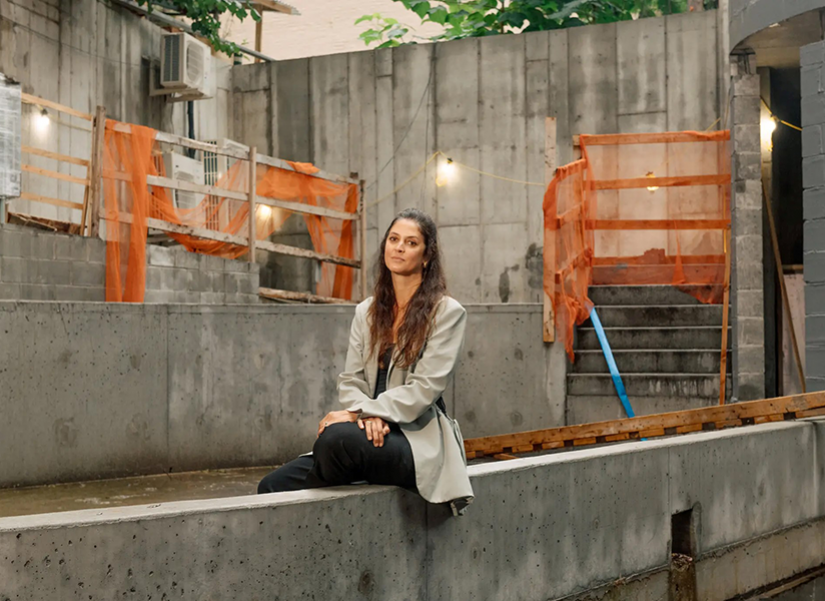
In this profile, Julia Watson shares her groundbreaking work in marrying Indigenous knowledge with contemporary design practices. Through her book Lo-TEK and her innovative teaching, Julia is reshaping how we think about progress, urging us to embrace nature-based solutions that foster a deep connection with the environment. Learn how her career, shaped by global experiences and mentorship, is inspiring a new generation of designers to rethink sustainability through the lens of Indigenous wisdom.
What inspired your focus on Indigenous nature-based technologies, and how has it shaped your career?
My interest began during my undergraduate studies at the University of Queensland, where I took a seminar on Aboriginal environments that explored Indigenous relationships with land, infrastructure, and the environment. At QUT, I was mentored by Dr Helen Armstrong, a leading voice in cultural landscapes, and worked with John Mongard Landscape Architects, where I learned the value of placemaking and participatory design. These experiences—both academic and professional—shaped my approach to design, reinforcing the importance of First Nations engagement and philosophies in my work.
What key message do you hope readers take from your book Lo-TEK: Design by Radical Indigenism?
Our current paradigm frames future progress as something that comes at the expense of the planet, but that is only one way to define progress. Across the world, thousands of communities embrace an alternative view—one rooted in reciprocity with nature. These communities haven’t just survived; they’ve thrived by co-creating abundant ecosystems alongside other species. Through generations, they’ve developed sophisticated knowledge systems that landscape architects and designers can learn from. By looking to Indigenous philosophies and stories from the past, new knowledge systems and technologies can be developed for the future.
Which of your diverse projects has been the most personally or professionally transformative?
Lo-TEK is a continuously evolving project, and without a doubt, my most defining work. What began as a book has expanded into a curriculum, an institute, a Barbican commission, and numerous other projects. More than that, it has grown into a framework and global movement, shaping a new paradigm within the field.
How has teaching at institutions like Harvard and Columbia influenced your design philosophy?
The idea for Lo-TEK was born from my teaching experience. At Columbia, I began teaching Landscape Eco-Technology when “technology” in the profession was largely limited to high-tech solutions like green roofs and facades. To challenge this, I introduced case studies from my work on World Heritage landscapes in Indonesia and Iraq, highlighting traditional knowledge systems. The enthusiastic response from students and faculty inspired me to document these ideas, ultimately leading to Lo-TEK.
What advice would you give graduates looking to combine design with activism and research, and work overseas?
Seek opportunities in countries where reconciliatory movements in design have been acknowledged and formalised through established protocols. Academic institutions and design practices in these locations are actively engaging in this type of work. That said, the field is still in its early stages, and there is so much more to be done.
How can young designers incorporate Indigenous knowledge sustainably and respectfully?
Engage directly with local communities. Whenever you're working on a project, speak with community members, follow their protocols of respect, seek permission, and prioritise relationship-building. Regardless of location, educate yourself on best practices for engaging with local communities to ensure your work is both ethical and meaningful.
What challenges have you faced advocating for nature-based solutions, and how have you overcome them?
There are many challenges—within practice, from clients, and even within regulatory codes. A significant hurdle is the lack of funding and grants that support prototyping and research into ancestral bio-based materials unless they are already market-ready. Another challenge is navigating clients towards working with local communities in an effort to ensure sustainability goals are met. However, these challenges present opportunities for deeper understanding, making them an essential part of the process.
How did your time at QUT prepare you for a global career in design?
QUT provided a strong technical foundation that shaped both my conceptual and practical approach to design. This influence is evident in the hundreds of technical drawings featured in Lo-TEK, which meticulously illustrate how these local technologies function. That technical rigour is something I trace back to my training at QUT.
What future opportunities do you see for integrating Indigenous knowledge into global sustainability?
The rapidly growing field of climate resilience presents a critical opportunity to rethink outdated, neo-colonial approaches to sustainability. The global shift towards a bio-economy and increased interest in bio-based building technologies offer immense potential for collaboration with Indigenous knowledge systems. Additionally, movements focused on circularity, regenerative agriculture, and sustainability are inherently aligned with Indigenous worldviews, meaning their influence extends far beyond urban planning and the built environment.
What is one skill you couldn’t live without and why?
Visualisation—because it transcends language barriers. Whether working with diverse stakeholders, professionals, or community members, everyone speaks a different language—both literally and professionally. As designers, our most powerful tool is visualisation, which helps synthesise complex information, foster understanding, and build consensus.
QUT degree—Graduate Diploma in Landscape Architecture (2001)
Have a question for Julia? Connect with her on LinkedIn.
Author

Victoria believes that every alumnus has a story worth telling. Naturally curious, she asks the thoughtful questions others often don't — creating stories that connect, inspire and reflect the depth of the QUT Alumni community.