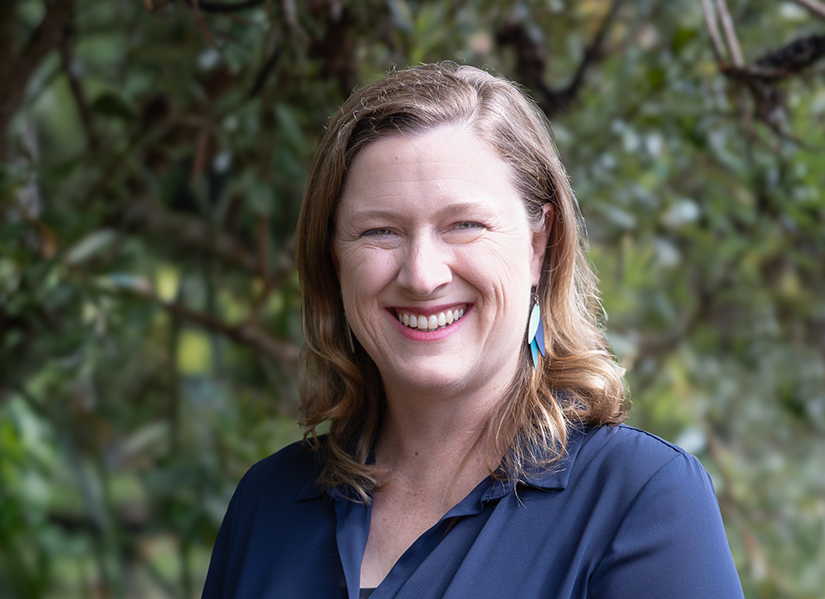
Food insecurity looks different depending on where you stand, and as CEO of The John Villiers Trust and a Board Member at Foodbank Queensland, Fiona Maxwell has stood in a lot of places — from North Queensland communities shaped by distance and supply chains to boardrooms driving statewide food‑relief strategy.
Drawing on a career that spans arts leadership, domestic violence governance and rural philanthropy, she brings a rare, human‑centred understanding of how hidden hunger takes hold and what it will take to shift the system.
As CEO of The John Villiers Trust (JVT) and a Board Member at Foodbank Queensland (FBQ), can you give us a snapshot of your roles and what a typical week looks like?
It’s a great combination of talking with a variety of grant seekers and philanthropic partners at JVT, looking at how we can better support kids and families in country Queensland. FBQ complements that, but is very coal face, with demand for food relief at an all time high. This is even more so in the regions, with fuel and cost of living affecting things.
You grew up across regional areas before settling in Brisbane—how has that shaped your perspective on issues like food insecurity?
Growing up in North Queensland, families are affected by food supply even in the best of times - variety, freshness, use by dates. For those doing it tough, this is heightened when people can't afford to stock up or bulk buy. And sometimes it's suggested that people grow their own food - I struggle to do this in Brisbane, so in outback or desert communities that would be a real challenge.
Your career spans arts, food rescue, domestic violence governance and rural philanthropy. What would you say to a QUT graduate who feels pressure to 'pick a lane'?
When I think back to my original university choice - a double degree in arts and education - things have definitely taken a varied path. But there have been constant themes of leadership, making a difference in the community, and elevating marginalised voices. To the graduate - take every opportunity, you never know which doors will open for you.
How does food insecurity differ between regional and urban communities, and what needs to change to address those differences?
Food insecurity affects regional communities due to isolation and logistics - supply, transport costs, cold storage. There are also less options for food relief charities in smaller communities. Change is required in everything from improving roads in wet season, through to missed opportunities of supply chains, particularly in food bowl areas. The more we talk about it in the city to increase understanding, the better.
What do you see as the biggest systemic barriers to reducing food insecurity—and where can leaders have the most impact?
Often responses to food security is bounced from one government department to the next. Having a centralised approach would be a good start - across communities, agriculture, environment, education, and other departments.
There's visible hunger—and then there are working families or students quietly skipping meals. Which is harder to address, and why does it matter?
That's a hard question. But the impacts on children going without food can be long term - ability to attend or engage in school, nutrition and health issues. This has systems impacts, spreading beyond just missing meals - affecting crime, economic participation and family cohesion.
Food insecurity and domestic violence are rarely discussed together, but often overlap. What do you wish more people understood about that connection?
Absolutely - from economic pressures creating heightened challenges in families, through to people seeking safety and struggling financially to get back on their feet the effects can cross a number of different areas.
For those in crisis and living in hotel accommodation, feeding a family is hard with only a kettle and microwave, especially while also recovering from a recent experience of trauma.
What role can cultural and public institutions play in addressing—or bringing visibility to—food insecurity?
A first useful step is considering food surplus - how food can be rescued from farms, supermarkets, restaurants, or reducing wastage in the home. This can increase donations to community organisations providing food relief.
Where do you see the biggest opportunities for collaboration across sectors to meaningfully reduce food insecurity?
For regional places, collaboration amongst non-profit services is vital. This saves transport and overhead costs, and hopefully people in need can start to see 'one-stop shop' models in their communities. Funders are interested in these models, and keen to see more of them piloted.
When has your human judgment had an impact that AI or technology simply couldn't — and what has that taught you about how you work?
The early days of AI produced some wild results - more fantasy than reality, so judgement and real world experience has been vital. These days, AI is getting pretty clever - more of a project coordinator level, than an executive assistant. The question now is how can we use the time saved to be more impactful, rather than watching cat videos.
What's one skill that you couldn't live without?
I'm a people person - I need to be collaborating and connecting with others. Both the philanthropic sectors and food relief sectors are great to work with in that sense - I'd be lonely working by myself!
QUT degree: Bachelor of Arts (Visual Arts)
You can connect with Fiona on LinkedIn.
Author

Victoria believes that every alumnus has a story worth telling. Naturally curious, she asks the thoughtful questions others often don't — creating stories that connect, inspire and reflect the depth of the QUT Alumni community.