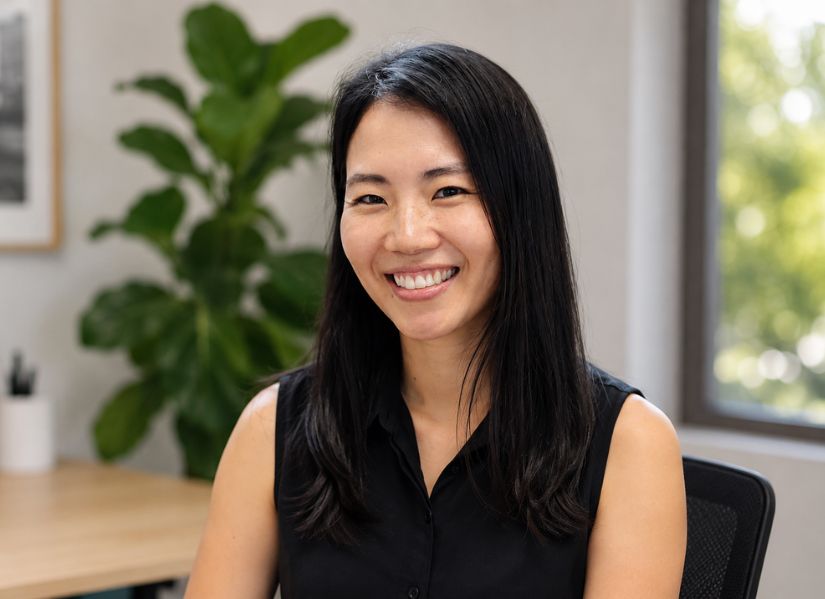
For Helena Uhm improving women's health starts with asking questions others have overlooked. Drawing on a background in nursing and public health, she founded Inoya to challenge the lack of innovation, transparency and sustainability in the period care industry.
Through evidence-based products and open conversations, she is helping break down long-standing stigma around menstrual health while advocating for better outcomes for women. We spoke with Helena about the future of women's health and why meaningful change often begins with curiosity.
Can you tell us about your journey since graduating from QUT?
Since graduating, I've worked across healthcare, public health, government, not-for-profit organisations, and entrepreneurship. These experiences sparked my interest in the broader factors that influence health and wellbeing, and how meaningful change often comes from connecting people, ideas, and systems. Today, alongside founding Inoya, I serve as Director of the Possums/Neuroprotective Development Institute, where we support the translation of evidence-based neuroprotective developmental care into clinical practice.
What inspired you to start Inoya?
One thing that always puzzled me was how little innovation had occurred in the period care industry. The products many women use today haven't changed much in decades, despite rapid advances in technology and healthcare. At the same time, emerging research and growing public discussion about chemicals found in some mainstream period care products have highlighted the need for greater transparency and more open conversations about product safety.
As a nurse and public health practitioner, I saw a gap between the importance of these products in women's lives and the level of innovation, transparency, and attention they were receiving. I started Inoya to help bridge that gap and create period care that is grounded in science, transparency, sustainability and better outcomes for women.
Given the historical stigma around women’s health how do you communicate complex sustainability issues in a way that resonates?
I've learned that people connect with stories and experiences more than statistics.
Rather than starting with sustainability, I start with conversations about the everyday realities of managing periods, whether that's comfort, convenience, cost, or simply finding products that work for them. Once people understand how an issue affects their own lives, conversations about sustainability, product safety, and transparency become much more meaningful.
Menstrual health has long been surrounded by stigma and silence, so creating space for open, judgement-free conversations is incredibly important. When we connect complex issues to people's everyday experiences, I think we make change feel more relevant, achievable, and something everyone can be part of.
Can you tell us what emerging issue/s will have the greatest impact on women’s health in the next 5–10 years?
I think one of the biggest challenges and opportunities over the next decade will be closing the women's health gap. For too long, areas such as menstrual health, menopause, reproductive health, and female-specific conditions have been under-researched and underfunded despite affecting millions of women.
I'm encouraged by the growing investment in research, technology, and innovation in this space. My hope is that we'll see a future where women's health is no longer treated as a niche issue, but as a fundamental part of building healthier communities and societies.
What advice would you give to someone wanting to create change in their own community?
You don't need to have all the answers to make a difference.
Be curious and spend time understanding the people and communities you're trying to serve before jumping to solutions. Start small, learn as you go, and don't underestimate the power of consistent action. I've learned that small, consistent efforts can grow into something much bigger than you ever imagined!
What has been the most rewarding (or challenging) aspect of your work in this field?
The most rewarding part has been helping shine a light on an area of women's health that is often overlooked. Period products may not be the most glamorous category, but they play a significant role in the health, wellbeing, and daily lives of millions of women. Knowing that our work can contribute to better health outcomes while encouraging more sustainable choices is rewarding.
The most challenging part is that menstrual health still doesn't always receive the attention or investment it deserves. But I believe meaningful change starts with brave conversations, and that even a small business from Brisbane can help raise the standard of period care for future generations, both here in Australia and beyond.
QUT degree – Graduate Certificate in Nursing.
Do you have a question for Helena? Connect with her on LinkedIn.
Author
Joanna is an integrated marketing communications specialist with an interest in the Faculties of Health, Business and Law. She holds a Master of Business, Bachelor of Mass Communication and Diploma in Business Information Systems.