
Starting a business takes more than a good idea. It requires resilience, adaptability and the courage to back yourself when the path ahead is anything but certain. Yet for many alumni entrepreneurs, the rewards of building something from the ground up have made the challenges worthwhile.
In this article, we hear from a diverse group of alumni founders and business leaders who have turned ideas into thriving ventures across industries including technology, media, tourism and consumer products. From identifying gaps in the market and learning to trust the process, to understanding the importance of customer feedback, leadership and sustained commitment, their experiences offer valuable insights for anyone considering the entrepreneurial journey.
Whether you're nurturing a side hustle, preparing to launch your first venture or looking for inspiration to take the next step, these alumni share the lessons they've learned, the mistakes they've overcome and the advice they wish they'd received earlier. Their stories prove that success rarely comes from a single breakthrough moment. More often, it comes from starting, staying focused and continuing to learn along the way.
Karen Mitault
Creative Director at Tweetycam
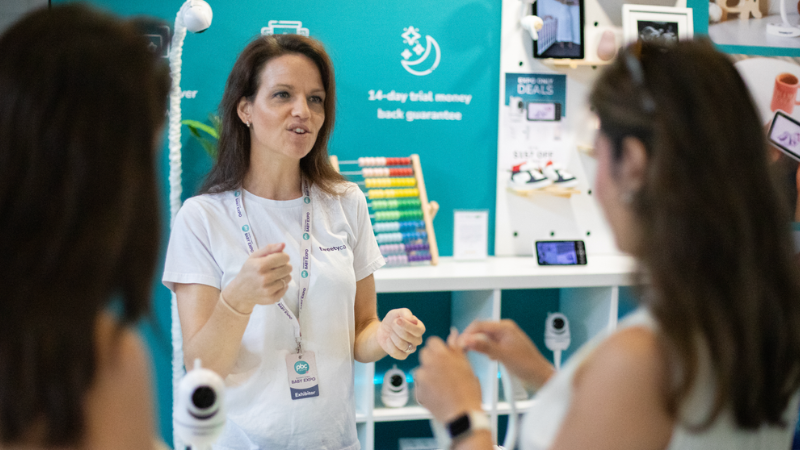
Karen Mitault is the founder and Creative Director of Tweetycam which was awarded the 2026 Mum Central Award for Best Baby Monitor, marking it their third consecutive year of taking home this title.
When you started Tweetycam what problem were you hoping to solve, or what opportunity did you see in the market?
I was a first-time mum after a long IVF journey, and I couldn't find a baby monitor that worked for real family life. Everything on the market either compromised on security, dropped its WiFi connection at 2am, or required a degree in tech to set up. I had a background in UI and UX design, so I understood how technology should feel for the person using it, and what I kept seeing was hardware built by engineers who had never been exhausted parents. That gap between what existed and what parents actually needed was the opportunity. Tweetycam was born from that frustration.
What aspects of running a business do people often underestimate?
How much your audience builds the product with you, if you let them. I used to think the hard part was getting the product right before launch. What I've learned is that the product never stops being built, and your customers are doing half the work if you're paying attention. Every support ticket, every survey, every comment in a mum group at midnight is data. We tag every customer interaction, read every post-purchase survey, and turn the patterns into real improvements. Backlit buttons, a LED-off toggle, a Travel Case; none of those came from a brainstorm. They came from parents telling us what was missing. The brands that genuinely listen have an R&D team they never have to pay for. That's not a hack. It's just respect, returned.
What's one thing you wish you'd known before launching?
Nobody tells you how much of yourself it takes. Not just time, though there's plenty of that, but mental energy, emotional resilience, and the willingness to push through the moments where it would be so much easier to step back. You can't go halfway with a business. The people who make it aren't necessarily the most talented. They're the ones who didn't stop. Today, with AI, there's genuinely no excuse not to figure something out. The resources exist. What's required is the willingness to put in the time, even when you're already tired.
Phil Hayes-St Clair
Founder and CEO Coach, PHILHSC.com
A serial entrepreneur, CEO coach and host of The Partnership Playbook, Phil draws on more than two decades of leadership experience to help founders and executives scale their businesses without sacrificing their health, relationships or sense of purpose.
You've built multiple businesses across different industries. Looking back, what are the most important lessons you've learned about entrepreneurship that still hold true today?
Mission focus makes you formidable.
Objective evidence makes you credible.
Profitable growth makes you sustainable.
What's one common mistake you see founders make in the early stages of building a business?
Not asking for what they (or their product) are worth. Entrepreneurs are too often afraid to make money.
What's the best business advice you've ever received, and how has it shaped the way you operate today?
Be great to follow. This means hiring the best people you can afford, firing quickly when there’s not a fit, consistently fighting to provide clarity to your team and always acknowledging great work.
Find out more about Phil Hayes-St Clair by reading his full Alumni Spotlight article.
Sara Taghaode
Executive Producer, Kiosk Film & Co-Founder, Colab 4010
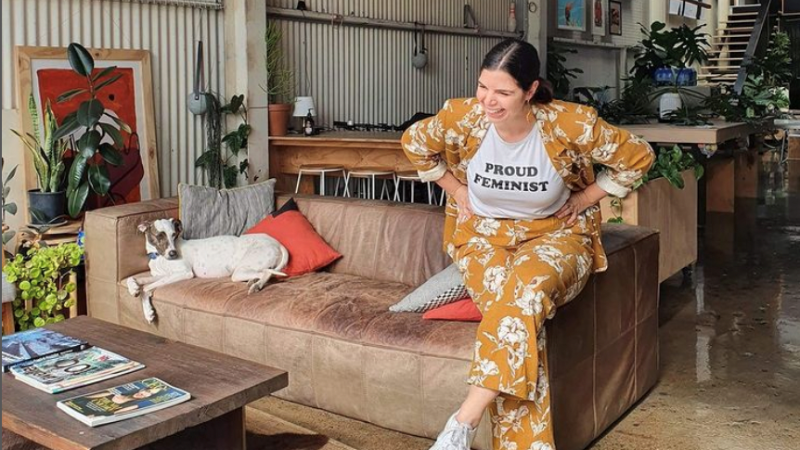
Sara is an Executive Producer at Kiosk Film, Co-Founder of Colab 4010 and has a longstanding commitment to Brisbane's creative industries.
Was there a defining moment when you decided to take the leap into entrepreneurship?
I actually think there's a misconception that there's always one defining moment that turns someone into an entrepreneur. That might be true for some people, but for me it was lots of small decisions that gradually led towards something. Or, in my case, lots of somethings, because apparently starting businesses has become both my hobby and my job.
I don't think people should wait for the big leap. Just start giving things a go. Listen. Respond to what works. Evolve. I realised a while ago that the people who build things aren't necessarily smarter or better than everyone else. They just started, kept going and figured it out as they went.
What aspects of running a business do people often underestimate?
If you love doing something and decide to start a business doing that thing, the reality is you'll probably spend a lot less time actually doing it. Instead you'll be marketing, bookkeeping, chasing invoices, managing people and wearing every hat imaginable.
As the business grows you can, and should, bring in people who are better than you at those things. But at the start it's all on you.
I also think people underestimate the discipline that comes with being accountable to yourself. Are you actually going to get up every day and keep working before anyone else cares? That’s going to be a huge test for a lot of people.
What advice would you give to other QUT alumni considering starting their own business?
Don't wait until you're better than everyone else. Just be different. Walk your own path and recognise the value in bringing something new rather than trying to be the best version of what already exists.
And while I don't think you need to wait for some big defining moment, I also don't think a business becomes successful unless you give it enough energy. If you're hoping to turn a side hustle into a business, there comes a point where you have to let go of the salary and safety of working for someone else. Not just because it gives you the time, but because there's nothing quite like the fear of going hungry to motivate you to actually make the business work. At some point you have to kick out the safety net and really commit.
Author

Jenni is an innovative communications, marketing and engagement specialist with fifteen years of industry experience. She is also a proud QUT alumnus with a Bachelor of Creative Industries (Interdisciplinary).