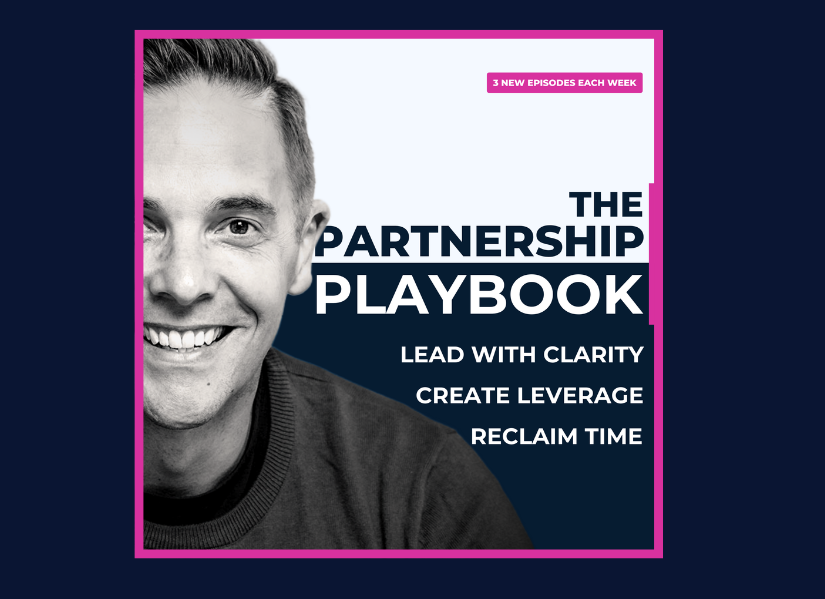
A serial entrepreneur, CEO coach and host of The Partnership Playbook, Phil draws on more than two decades of leadership experience to help founders and executives scale their businesses without sacrificing their health, relationships or sense of purpose.
Throughout his career, Phil has developed a straightforward philosophy for business success: mission focus makes you formidable, objective evidence makes you credible, and profitable growth makes you sustainable. It is a mindset shaped by years of building companies, leading teams and navigating the challenges that come with entrepreneurship. Today, he shares those lessons through coaching, speaking and podcasting, creating what he calls “insanely valuable” content for CEOs, founders and business leaders.
In this alumni profile, Phil reflects on the realities of entrepreneurship, the leadership advice that continues to guide him, and why podcasting has become one of his most powerful tools for learning, professional development and meaningful connection. He also shares practical insights for aspiring podcasters and the systems that help him consistently deliver three episodes each week to a growing audience of business leaders
You've built multiple businesses across different industries. Looking back, what are the most important lessons you've learned about entrepreneurship that still hold true today?
- Mission focus makes you formidable.
- Objective evidence makes you credible.
- Profitable growth makes you sustainable.
What's one common mistake you see founders make in the early stages of building a business?
Not asking for what they (or their product) are worth. Entrepreneurs are too often afraid to make money.
What's the best business advice you've ever received, and how has it shaped the way you operate today?
Be great to follow. This means hiring the best people you can afford, firing quickly when there’s not a fit, consistently fighting to provide clarity to your team and always acknowledging great work.
How has hosting a podcast influenced your own thinking as a leader, entrepreneur and coach?
Podcasting is the ideal medium to hone your craft. From producing scripts to voicing them and to packaging and distributing each episode, it takes a system which, in turn, improves how you show up and service your audience and clients. I also have the great privilege to speak privately with extraordinary leaders, and it just happens that we publish those episodes for the world to enjoy. And when it comes to publishing our leadership tutorial episodes twice a week, it offers people I won’t have the chance to work with the same thinking I use with my clients. There’s a lot of joy for me in knowing that this thinking can help people I may never meet.
You use podcasting as a platform to share leadership insights and CEO conversations. What makes podcasts such an effective tool for learning and professional development?
CEOs and senior leaders are busy and often overwhelmed. To earn their trust and attention it’s important to create insanely valuable content (see below) that is low friction to access. Podcasting helps deliver on that promise and when it’s well integrated with adjacent marketing strategies, like private podcast feeds, newsletters, outdoor and retreats, podcasting becomes the medium that earns us the right to be part of a CEO’s life.
There are countless business podcasts available today. What do you think listeners are really looking for from a great podcast?
A consistent voice of experience, empathy and encouragement. Essentially someone they can rely on who’s been in their shoes and knows that the meaning of building a great company should be deeply connected to enjoying the passage of time with the people who matter in your life.
Producing three episodes a week is a significant commitment. What goes into the planning process behind a successful podcast series and do you have any systems or habits help you maintain consistency and quality?
I have a great producer and we have a system that’s been refined continuously to help us create what we call Insanely Valuable (IV) content. To us, IV content means that each episode must satisfy at least three of the following five criteria:
- Makes you money
- Saves you money
- Saves you time
- Makes you laugh
- Makes you more intelligent at a dinner party.
We developed an AI that helps us know if we’re achieving that standard or not, and if not, the episode doesn’t get published. The volume is also important and when it comes to being relevant stepping up to produce high-quality content and a high volume also helps us stand apart from other shows. Together, this is how we earn the right to be in our audience’s mind.
What metrics or indicators do you pay attention to when evaluating the success of a podcast?
We look at the number of people who reach back out to us to share that an episode has made a difference as well as traditional downloads and stream metrics. Wouldn’t it be nice if we could tell how many people have shared an episode and to whom…?
What's one behind-the-scenes reality about podcasting that would surprise most people?
The number of times I fumble the script when recording the shorter leadership tutorials. Some days it takes a lot longer to record than it should!
If a QUT alumnus came to you with a podcast idea today, what would be the first three things you'd tell them to focus on?
- Geek out and talk to a topic you’re genuinely interested in
- Produce insanely valuable content (shamelessly steal our methodology)
- Create a system that helps you enjoy the process of creating podcasts for the long term
Phil completed a Bachelor of Applied Science (2002) at QUT.
Do you have a question for Phil? Connect with him on LinkedIn or listen to his podcast The Partnership Playbook podcast.
Author

Jenni is an innovative communications, marketing and engagement specialist with fifteen years of industry experience. She is also a proud QUT alumnus with a Bachelor of Creative Industries (Interdisciplinary).