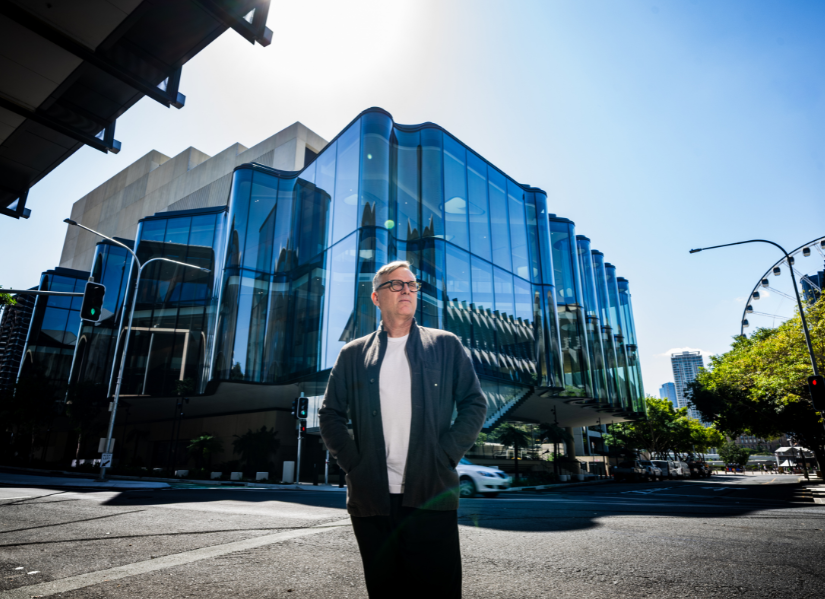
Architecture for Jayson Blight is grounded in lived experience - how spaces feel, not just how they look. Influenced early by time spent on building sites with his father, Jayson developed a lasting sensitivity to material, landscape and light. Across public and private works, his work seeks to create resonant, enduring spaces that deepen human connection to place, such qualities are beautifully reflected in his recent project for QPAC’s new Glasshouse Theatre.
What first drew you to architecture and how has that passion evolved over time?
As the son of a builder my exposure to build form began at an early age on building sites, where I became absorbed by the physical reality of space and its relationship to landscape. I was particularly fascinated by how built form could settle into gardens and terrain, creating places with timber blocks, rocks and foliage that felt resolved rather than imposed. That early exposure and child’s play instilled a sensitivity to atmosphere, material presence, and spatial sequence.
Over time, this interest matured into a deeper pursuit of how spatial composition can inspire people and allow room for imagination. Architecture begins with lived experience; my work is grounded in how space is felt rather than merely seen. Landscape, light, and site continue to play a central role in my approach, whether designing for public or private settings. Architecture, for me, is an act of careful placement, where buildings respond to their environment and quietly intensify the experience of being there.
What continues to excite you about working as an architect today?
What continues to excite me is the latent potential held within structure and material. Architecture remains a discipline where fundamental elements, when composed with restraint and clarity, can produce powerful spatial experiences. The way a structure frames space, how materials absorb or reflect light, and how these choices affect mood and perception are enduring sources of fascination.
This aligns strongly with the emphasis on material honesty and tactile presence. I remain motivated by the possibility that thoughtful architectural decisions can produce spaces that resonate emotionally and endure beyond trends.
What was your vision for the Glasshouse Theatre at QPAC?
The Glasshouse Theatre was conceived as a transparent building that engages directly with the public realm and a counterpoint to the existing cultural fortress fabric of QPAC. The intention was to dissolve traditional boundaries between the performing arts and the community by using transparency, permeability, and clear spatial organisation and accessibility.
The façade and internal planning allow the activity within to be visible and legible, particularly through large, glazed openings that connect rehearsal studios and performer circulation spaces with the public domain, areas usually locked away and hidden from sight. The flexible studios below reinforce this sense of openness and adaptability, supporting a variety of creative uses.
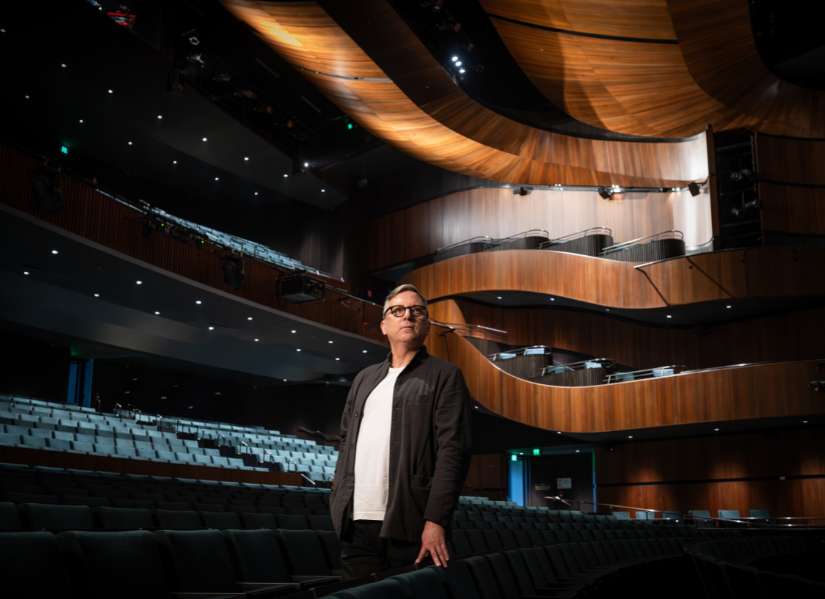
Internally, the auditorium was designed as an intimate and warmly cocooning space, where audience and performers are brought into close relationship. The form gently embraces the room, like a hug reinforcing a shared experience. The notion of architecture as a vessel for collective memory and emotion.
Reflecting on your studies at QUT, what aspects were most influential?
My education at QUT was shaped by two key influences. Paula Whitman played a significant role in deepening my understanding of architecture beyond form making. Through her teaching, I developed a strong critical framework for evaluating architecture, alongside a rigorous appreciation for environmental responsiveness.
The emphasis on passive design strategies and climatic intelligence reinforced the importance of designing with, rather than against, environmental forces. This grounding continues to inform my work, particularly in subtropical contexts where light, shade, and ventilation are fundamental architectural elements.
How did your studies prepare you for professional practice?
Completing the Bachelor of Architecture part time over six years while working almost full time in practice provided a valuable balance between academic inquiry and professional reality. This structure allowed ideas explored in the studio to be tested against the constraints and responsibilities of practice in real time.
The presence of practising architects as tutors strengthened this connection, ensuring that design thinking was consistently aligned with construction, collaboration, and the operational realities of the profession.
How do you see the role of architects evolving?
As technologies advance and sustainability challenges intensify, the architect’s role must remain anchored in human experience. While data and tools continue to evolve, architecture’s primary responsibility is to mediate between environment, emotion, and community.
An understanding of light, shade, material, and climate remains essential to creating spaces that connect people and foster a sense of belonging. When architecture is grounded in human feeling and environmental awareness, it has the capacity to strengthen communities. The Glasshouse Theatre exemplifies this approach, using openness, warmth, and spatial clarity to connect people to performance, place, and each other.
Find out more about Blight Rayner Architecture or connect with Jayson on LinkedIn.
Author

Jenni is an innovative communications, marketing and engagement specialist with fifteen years of industry experience. She is also a proud QUT alumnus with a Bachelor of Creative Industries (Interdisciplinary).