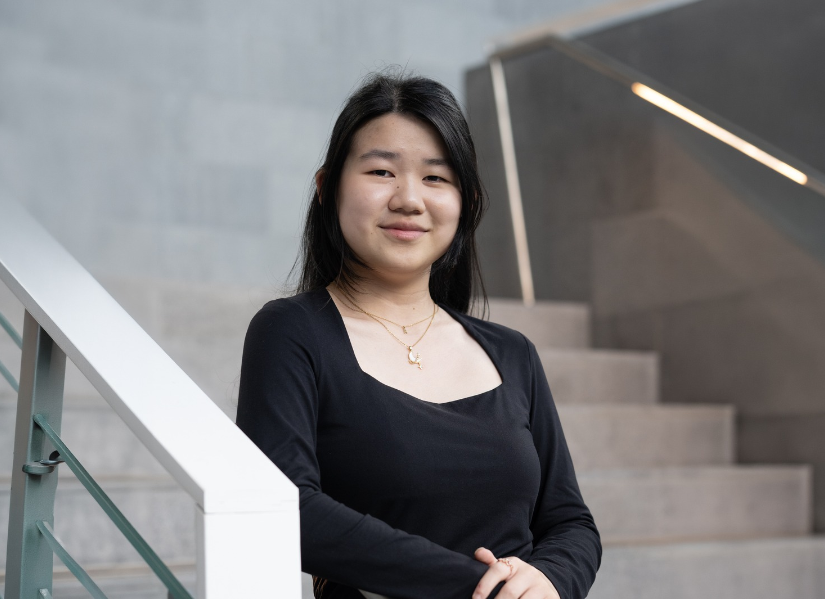
By Annabel Ho- Malaysia, 19 November, 2026
Studying abroad is more than just earning a degree; it’s about testing your boundaries, finding your confidence, and discovering who you want to become in the professional world.
When I decided to pursue my postgraduate studies at QUT, I was looking to specialise and branch out from my undergraduate background in communications, marketing, and advertising. Choosing the Master of Business with a focus on integrated marketing communication (IMC) at QUT felt like the natural next step. I wanted to refine my strategic edge while gaining a deep, holistic understanding of the current and future business market.
Why I chose my study path
Business is a fundamentally people-forward field. While textbooks and lectures teach you the essential frameworks, so much of succeeding in marketing relies on soft skills—adaptability, leadership, visual communication, and emotional intelligence, to say the least.
Because many concepts in business are highly transferable, I realised early on that becoming truly skilled requires hands-on execution. I needed first-hand experience to turn theoretical knowledge into genuine self-confidence. Furthermore, as my degree structure offered limited formal work-integrated learning units, I felt that I needed to take initiative by gaining practical experience and build my professional network in parallel with my academic studies at QUT.
Gaining work experience
Rather than waiting for graduation to step into the workforce, I actively sought roles across non-profits, tech startups, and the university itself throughout my studies. Each experience allowed me to test what I was learning in class under different levels of intensity.
For over a year, I volunteered as a marketing designer with the Project Management Institute (PMI) Queensland Chapter. This role became my proving ground for IMC concepts. I applied content and digital marketing theories directly by drafting communication plans, scheduling social media posts, and producing marketing visuals. Working within existing brand guidelines while pushing visual boundaries to emphasise key brand characteristics taught me the delicate balance of brand consistency. It also sharpened my soft skills—especially visual communication and teamwork under pressure, as I learned to adapt quickly and deliver high-quality assets on last-minute, tight schedules.
Seeking a different pace, I spent six months freelancing for an early-stage startup. Starting as a contributor on the business team, I was soon promoted to Business Lead. This fast-paced, remote environment allowed me to draw on my marketing background while applying core QUT coursework, including modules on consumer behaviour, IMC, and management theory. It was a challenging stint that tested my capacity to balance demanding work alongside full-time study. Beyond sharpening hard skills, it exposed me to legal processes behind entrepreneurial ventures, pitching, and conflict management. Supporting the founder in leading meetings and navigating ambiguity helped me realise what I was capable of achieving when pushed outside my comfort zone.
To tie my student identity directly to my work life, I secured a role as an International Student Ambassador at QUT. Here, theories of customer relationship management (CRM) and digital engagement came alive as I communicated with prospective students from across the globe. This position honed my organisational and written communication skills while allowing me to represent the vibrant community I had joined.
Across all these roles, I collaborated with diverse teams of people from varying educational backgrounds, industries, and career stages. Because I was eager to learn, team members encouraged me to step outside my designated scope, taking on stretch tasks that constantly expanded my perspective.
Expanding my network
Parallel to my work experience, I made a conscious effort to immerse myself in networking. I regularly attended industry events hosted both by QUT and external professional organisations. I also participated in external business competitions that targeted university students, such as an Innovation Challenge by Study Queensland.
These events gave me front-row access to emerging topics discussed by industry experts, but more importantly, they put me in rooms with people I might otherwise never have met. Participating in interactive marketing challenges alongside new peers tested my tolerance for unfamiliar situations, forcing me to rely on teamwork, rapid creativity, and strategic thinking in real time. I got to meet people from various disciplines and all over the world, which exposed me to new perspectives. Over time, walking into a room full of strangers transformed from an intimidating task into an exciting opportunity.
How my studies informed my work experience
The relationship between my degree and my outside roles was cyclical: class lectures informed my work, and my work gave context to my lectures.
For example, understanding consumer behaviour helped me write better copy for QUT student outreach; knowing how to construct an IMC framework helped me keep PMI Queensland’s branding tight; and studying management theory gave me the structure I needed to resolve team conflicts at the startup.
Having the opportunity to apply what I learned in class to real-world scenarios gave me a much stronger discernment of how to adapt abstract concepts to varied contexts. Armed with theory, I could navigate daily challenges with ease.
Looking towards the future
Reflecting on my journey so far, do I feel better prepared for life beyond study? Absolutely.
Gaining experience independently while studying at QUT gave me clarity. Through networking, freelancing, and volunteering, I developed a much clearer sense of direction for my career trajectory and a realistic understanding of modern business processes.
More than anything, combining study with real-world application built my confidence. I know how to navigate high-pressure deadlines, lead remote teams, communicate across cultures, and advocate for my ideas. As I look toward graduation and the next chapter of my career, I feel equipped not just to enter the workforce, but to thrive in it.