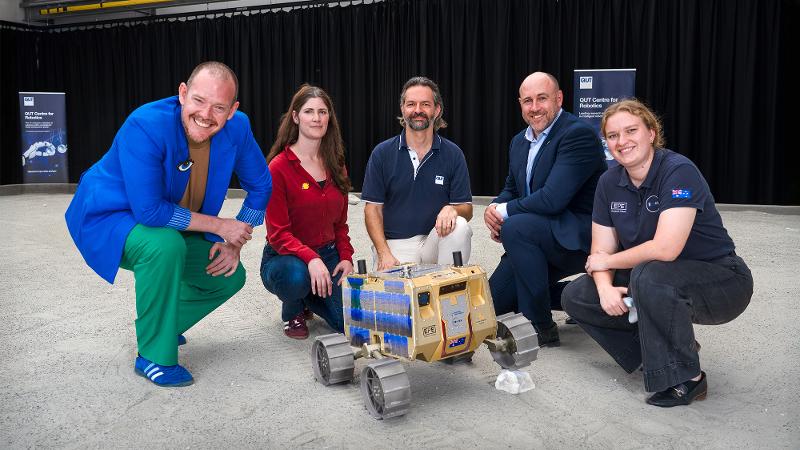
The new model of Australia's first lunar rover, Roo-ver, was unveiled today at the QUT Yandiwanba lunar test facility as part of World Space Week.
As part of the Australian Roo-ver Consortium, QUT experts in robotics and planetary science are developing positioning systems that assist the semi-autonomous rover to safely explore the lunar surface.
The unveiling at the Kelvin Grove campus facility, led by the Australian Space Agency and the Roo-ver team, gave the first close look at the latest design of the Australian-built rover that is set to make history when it travels to the Moon in 2030.
Designed and built in Australia, Roo-ver will be the first time an Australian spacecraft travels to the Moon. The rover will carry a NASA integrated payload intended to demonstrate technology for analysis and exploration purposes.
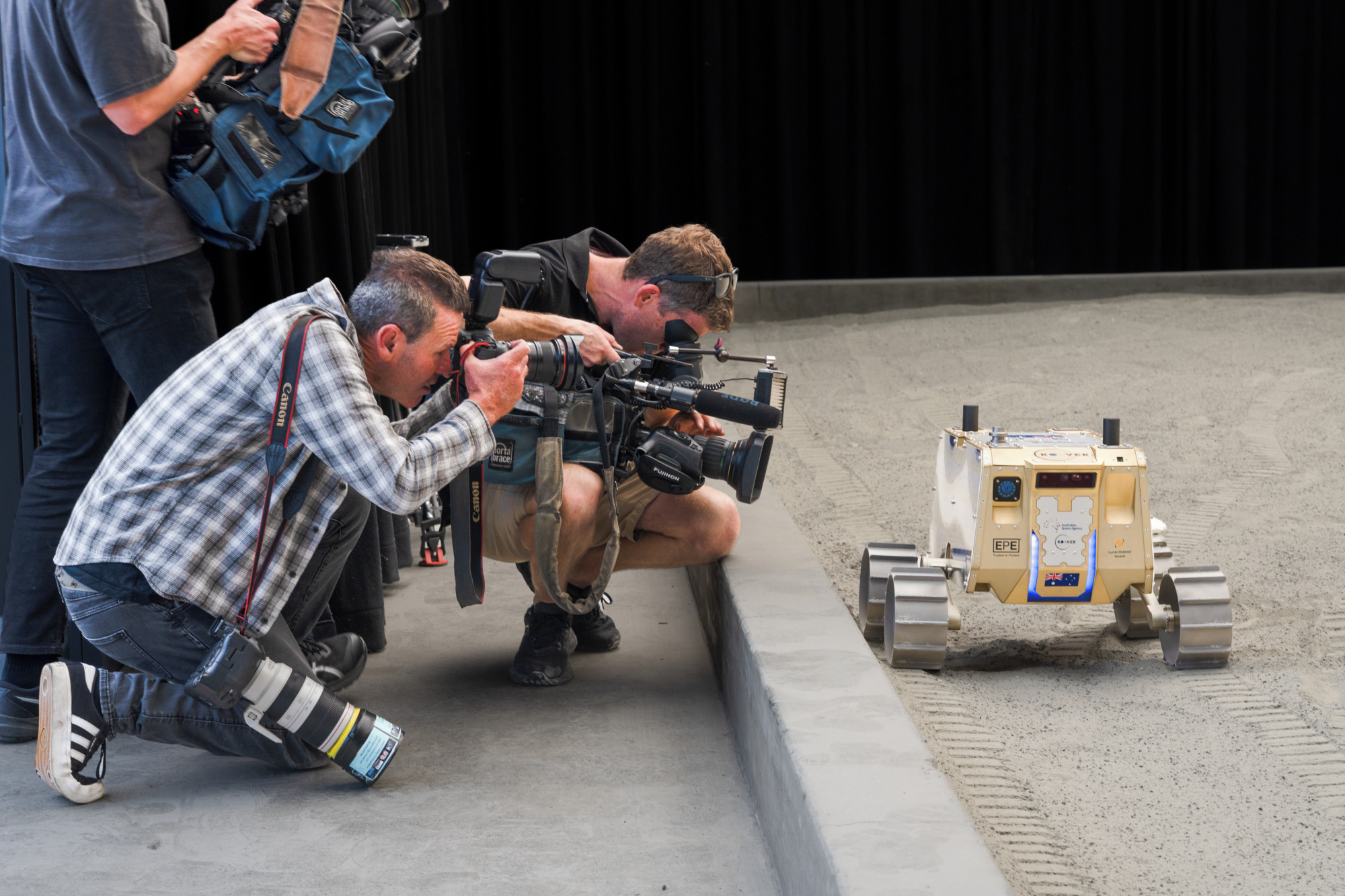
The project brings together 20 Australian organisations including a multidisciplinary research team from QUT, showcasing Australia's growing capability in robotics, engineering and space innovation.
Roo-ver Consortium Director Ben Sorensen said: “The new Roo-ver model brings Australia’s journey to the Moon another step closer. QUT’s expertise and facilities are helping us build and test Roo-ver, while growing the capability Australia needs for its space future.”
Enrico Palermo, Head of the Australian Space Agency, said: “Roo-ver is a representation of Australian ingenuity and innovation.
“As Australia’s first lunar rover, it will showcase our world-leading capabilities in robotics and autonomous systems on the global stage. This program is also pushing the boundaries of our technological capability to deliver benefits to Australia’s space sector and industries across our economy.
“With our sights set on 2030, the countdown is on as we continue testing and refining Roo-ver so it’s ready for historic journey to the Moon."
Associate Professor Thierry Peynot, from the QUT Centre for Robotics, said the project highlighted the strength of Australian robotics research and engineering.
"Roo-ver is a remarkable opportunity to demonstrate that Australian robotics can perform in one of the most challenging environments imaginable," Professor Peynot said.
"QUT is proud to contribute expertise in autonomous navigation and robotic vision that will help the rover operate safely and effectively on the Moon."
Professor Peynot said the project represented an exciting opportunity to translate research into real-world impact beyond Earth.
"Projects such as Roo-ver bring together researchers, industry and government to solve complex challenges and develop technologies that can benefit future space missions as well as applications here on Earth," he said.
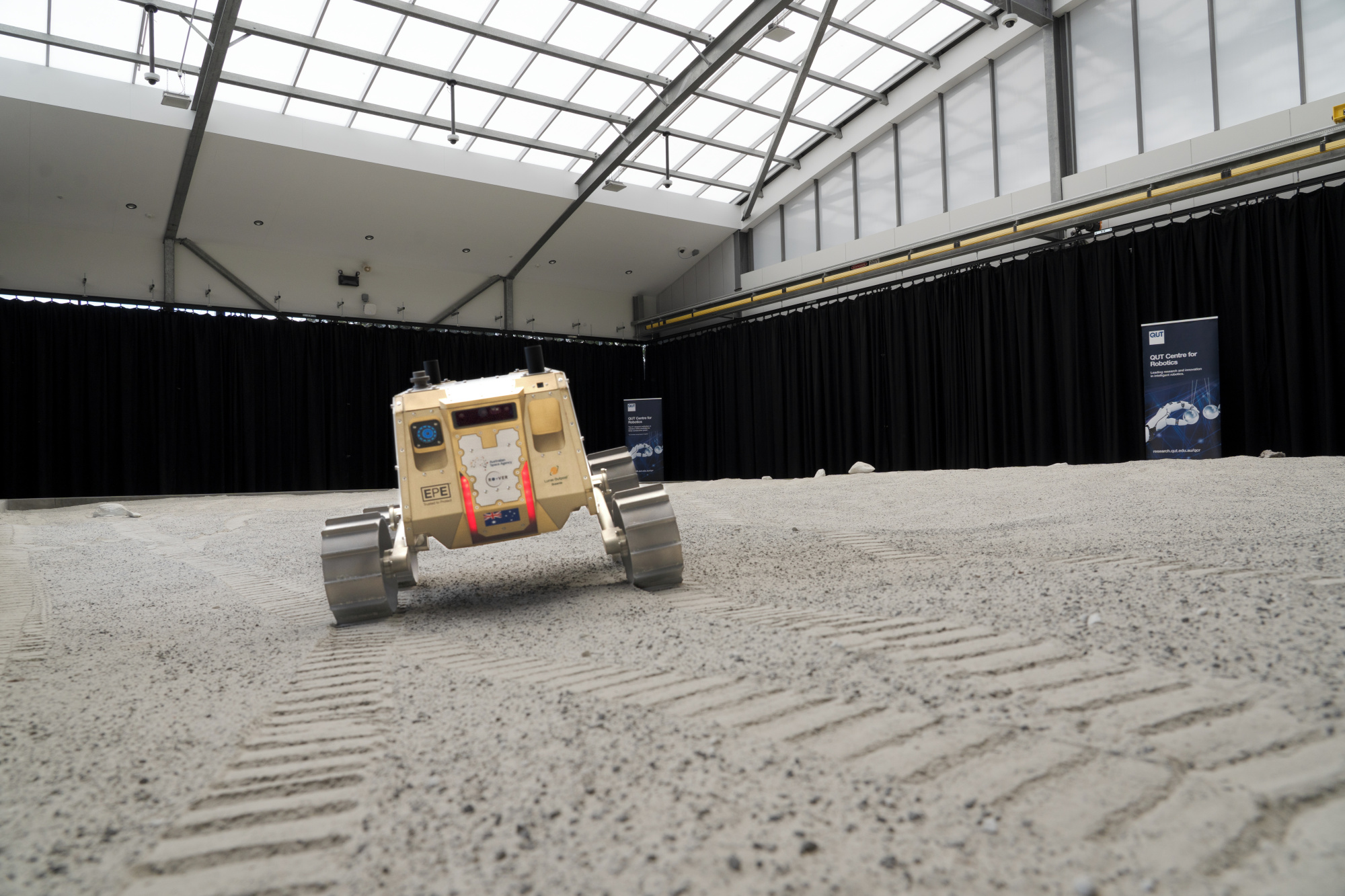
Yandiwanba, Australia's largest covered facility for testing field robotics and equipment in realistic lunar conditions, provides researchers with a unique environment to develop and validate technologies for future space exploration.
The unveiling of Roo-ver in Brisbane during World Space Week highlights Australia's growing capability in space technology and marks another step on Roo-ver's journey to the Moon in 2030.
Main image: Roo-ver media call at Yandiwanba, QUT. From left: Australian Space Agency Director, Community Engagement Keegan Buzza; Roo-ver Consortium Technical Director, Lunar Outpost Oceania Katie Boyle; QUT researcher Associate Professor Thierry Peynot; Roo-ver Consortium Director,EPE Oceania Ben Sorensen; and EPE intern and Roo-ver operator Emily Crabb.
QUT Media


