
An adaptive handcycle trainer that enables people in wheelchairs to use virtual cycling apps has been launched at QUT.
The trainer is still under development but a working prototype was demonstrated at QUT’s Gardens Point campus on Friday during a celebration of inclusive innovation, para-sport achievements, and design work by QUT researchers and students.
Guests at the event included Queensland’s Minister for Sport and Racing and Minister for the Olympic and Paralympic Games, Tim Mander, Sporting Wheelies CEO Dane Cross, QUT Vice-Chancellor Professor Margaret Sheil, and industry visitors.
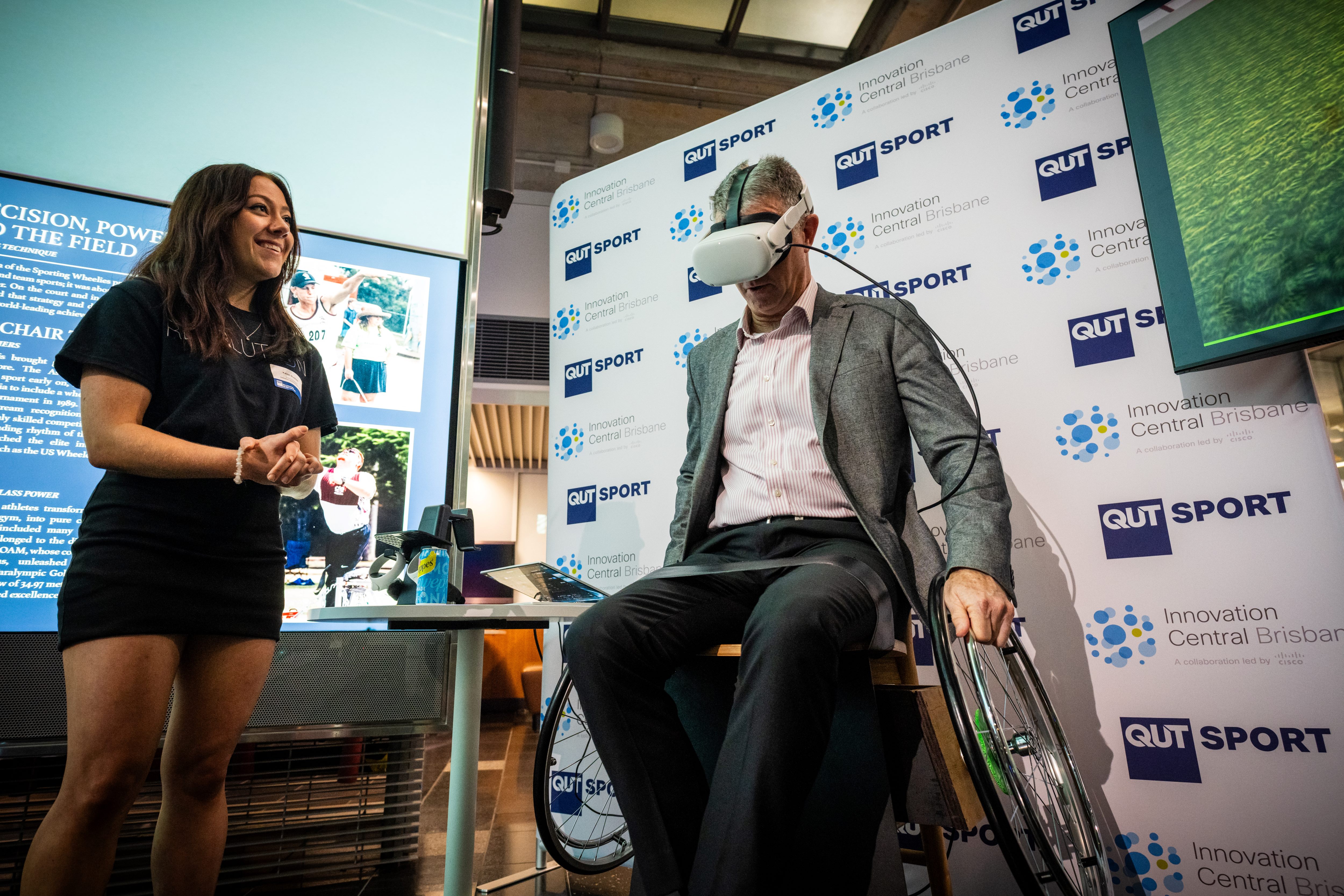
A sport wheelchair simulator console designed by QUT students Long Le and Kailah Rushton and VR game designer Jayce Rushton was also demonstrated on Friday.
The ReVRlution simulator has virtual reality integration and is designed to replicate the feel and movement of real sports wheelchairs.
It was created by the team as part of the 2025 Sport Innovation ProtoComp hackathon and 10-week mentoring program run by QUT, CISCO and Innovation Central Brisbane.
Professor Sheil said the QUT projects showcased the central pillars of inclusivity, innovation, and community impact, which guide the university’s strategy and define how we engage with the real world.
“Projects such as these exemplify how QUT nurtures the next generation of innovators, and strengthen collaboration between our researchers and industry,” she said.
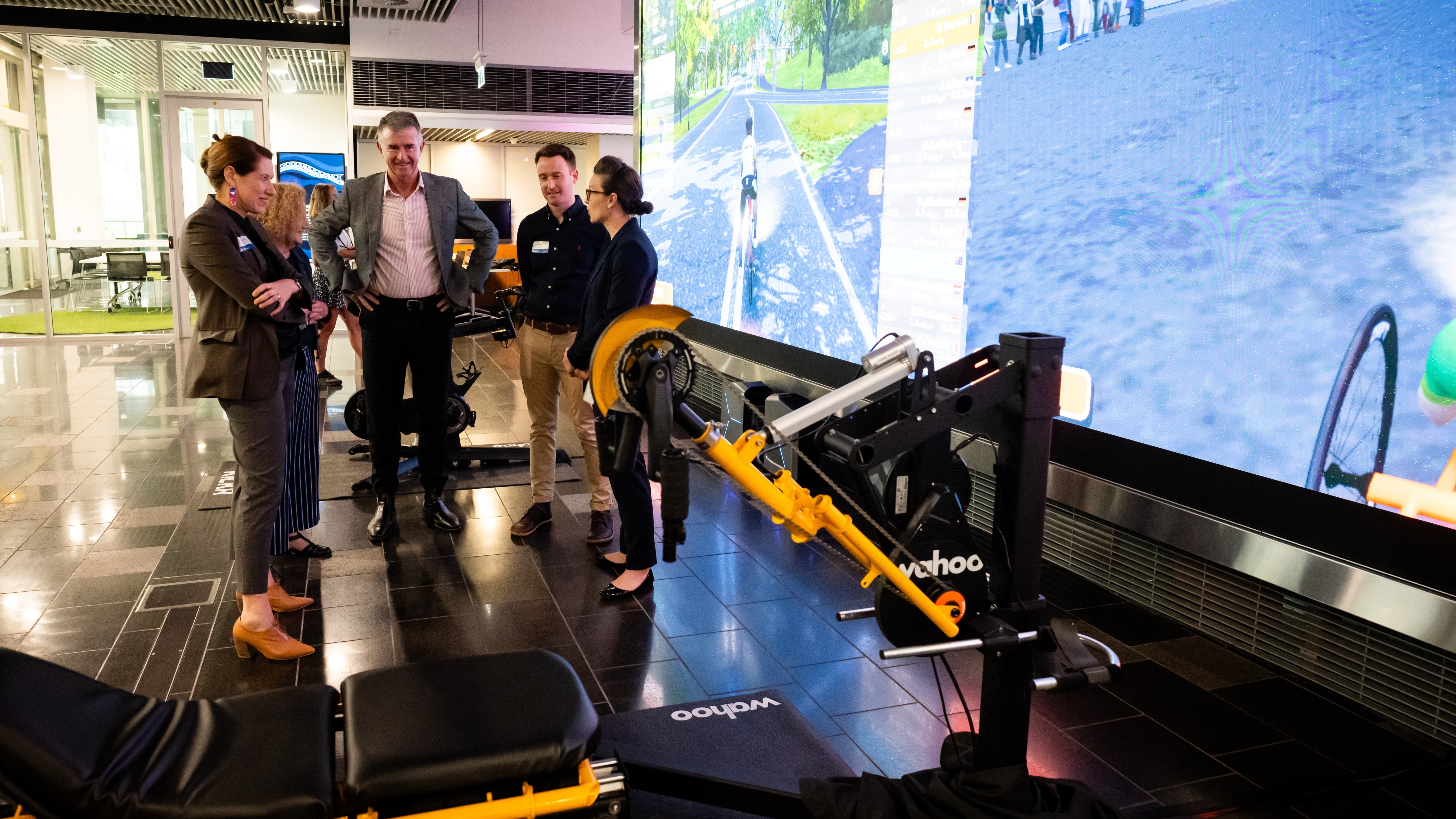
Minister for Sport and Racing and Minister for the Olympic and Paralympic Games Tim Mander said the Crisafulli Government was proud to support initiatives that help all Queenslanders to lead active, healthy lives.
“As we build toward the 2032 Olympic and Paralympic Games, we want to show the world that Queensland is a leader in inclusion, diversity, and accessibility,” he said.
“It’s fantastic to see this [handcycle] prototype in action, and I look forward to seeing its continued development.”
“Every Queenslander deserves the chance to be physically active, regardless of their age, ability, or location, and I thank QUT for their ongoing commitment to adaptive sport and inclusive innovation.”
The handcycle trainer has been developed by a team from the QUT School of Design, QUT Sport and the Sporting Wheelies, with the help of funding from the Queensland Government’s ActiveKIT program, which supports new ways to get more Queenslanders active.
It is one of the many projects that will be discussed at an international Future of Sport Conference at QUT in Brisbane in March 2026.
The conference was announced on Friday and will bring together thought leaders, innovators, researchers, athletes and industry members to explore the trends and technologies shaping sport in the lead-up to the Brisbane 2032 Olympic and Paralympic Games.
Olympian and QUT Sport Director Emily Rosemond said infrastructure and volunteering remaining two of Queensland sport’s biggest challenges, with limited hardware and technology solutions that were truly accessible.
“We’re actively addressing these challenges through leveraging indoor spaces and integrating virtual technologies that reduce reliance on traditional models of delivery,” she said.
“The next step is progressing these innovations into commercially available solutions so they can be accessed and utilised more broadly across the community.
“The handcycle project shows how collaboration between universities, big-tech, government, and community sport can remove barriers to participation and enable genuine social inclusion and open new ways for everyone to engage in sport.”
Handcycle trainer project leader and QUT industrial design researcher Levi Swann said the adaptive trainer aimed to help reduce barriers to participation by providing an accessible platform for people with physical impairments to use virtual cycling apps.
The QUT School of Design research team working on the project includes Dr Swann, Head of School Professor Lisa Scharoun, Dr Leo Rezayan and Sam Stewart.
Dr Swann said the handcycle was made up of two modules: a drivetrain module with handles, chair and forks that connect to an existing smart trainer, and a seat module.
“The drivetrain module allows a user to pedal with their hands to drive the smart trainer, which interfaces with the digital platform, such as Zwift (a virtual cycling app),” he said.
“The seat module has a seat and recumbent backrest, and is mounted on a base that enables an easy transfer from a wheelchair.
“The prototype that was displayed at the launch is our first fully functioning prototype of both the drivetrain module and seat module.
“We now plan to refine the design by engaging end-users (professional para-cyclists, para-athletes) and professionals (human-factors specialist, occupational therapist) to test the prototype.
“We’ll then build a final proof-of-concept prototype and look for opportunities to develop the handcycle further through grants and commercial partners.”
Dr Swann said the research team had taken a participatory design approach to the project.
“End-users and stakeholders have been involved at key stages to define criteria and drive design decisions, including during initial co-design workshops and the testing of several prototypes,” he said.
“These people have included professional para-cyclists and para-athletes, QUT Sport staff, and Sporting Wheelies staff.”
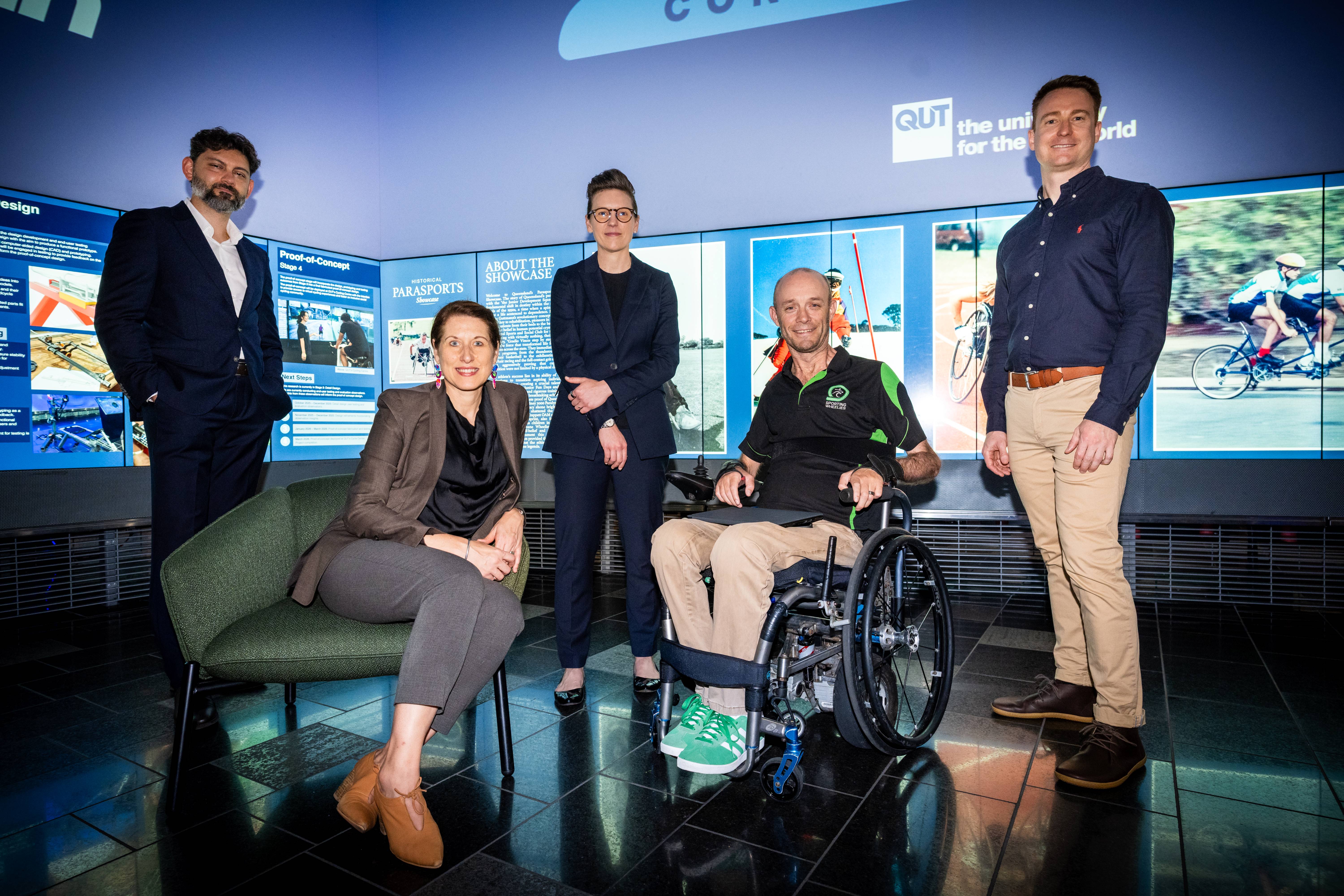
QUT has also released a Para-sport History Showcase, which debuted on the big screens of The Cube at QUT on Friday.
The showcase was created by Professor Scharoun and Mo Faramarzian Borojeni, with the help of collaborators, the Sporting Wheelies.
The exhibition digitises and animates archival images from Queensland’s para-sport history, preserving the legacy of para-athletes while inspiring future generations.
It also illustrates QUT’s commitment to community engagement, storytelling, and inclusion.
“Sporting Wheelies provided us with their amazing physical archives of newspaper clippings and photos dating from as far back as the 1950s,” Professor Scharoun said.
“Over the course of this year, we have digitised and enhanced the quality of over 800 photos in this archive.
“The story of this archive isn't just about an organisation; it’s about a fundamental shift in destiny, a force that transformed life for people with disabilities across Queensland.”
Montage at top of page:
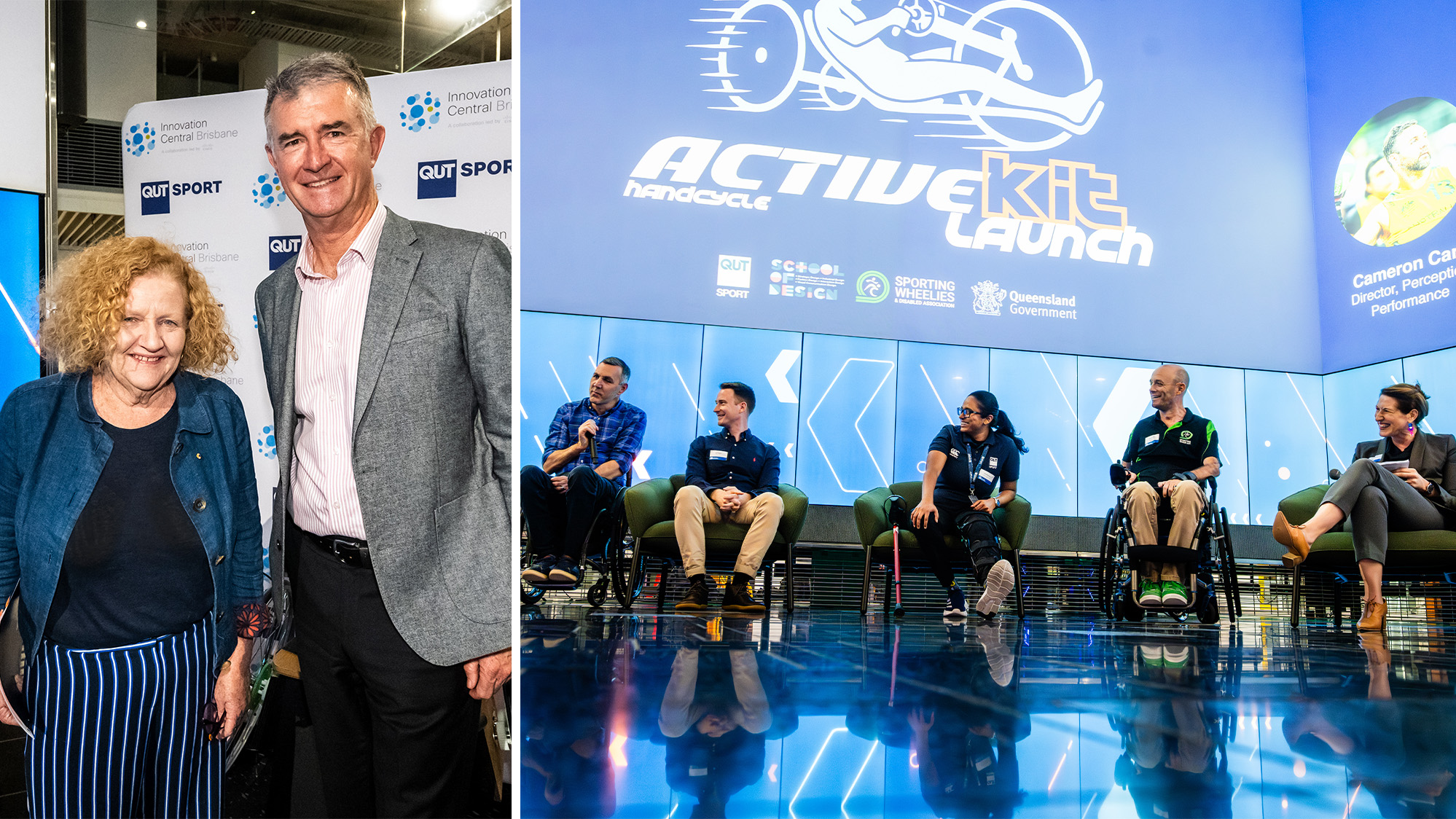
- (on left) QUT research team members Dr Leo Rezayan, Sam Stewart, Dr Levi Swann and Professor Lisa Scharoun, and Cameron Carr (wheelchair rugby Paralympian and director of Perception Performance), with the handcycle.
- (top right) Minister Tim Mander tries out the handcyle, watched by Professor Lisa Scharoun, QUT Vice-Chancellor Professor Margaret Sheil and Dr Levi Swann.
- (lower right) QUT researchers Dr Leo Rezayan and Professor Lisa Scharoun, QUT Director of Sport Emily Rosemond, Sporting Wheelies CEO Dane Cross and QUT researcher Dr Levi Swann, in front of the Para-sport History Showcase.
QUT Media contacts:
- Mechelle McMahon, media@qut.edu.au
- After hours, 0407 585 901 or media@qut.edu.au


