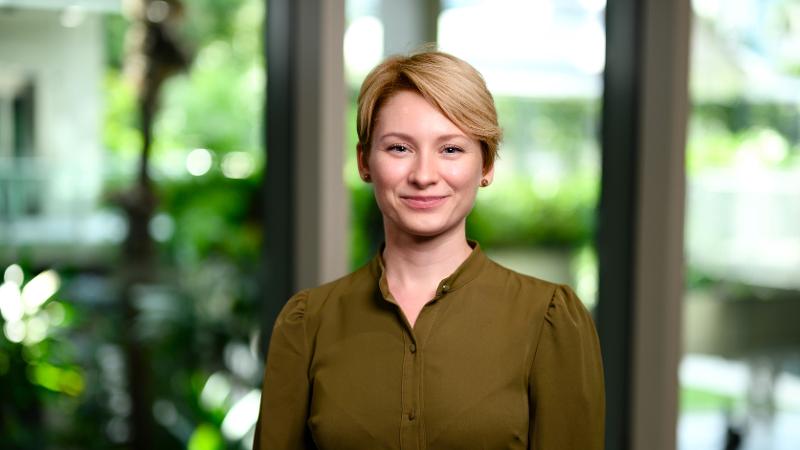
QUT game theorist Dr Maria Kleshnina has been named one of four recipients of the 2025 L’Oréal–UNESCO For Women in Science Fellowships for Australia and New Zealand, recognising her groundbreaking work using mathematics to help solve environmental challenges.
Dr Kleshnina, a lecturer in QUT’s School of Mathematical Sciences and an ARC DECRA Fellow, will be presented with her fellowship at a ceremony in Melbourne on September 17.
Her research uses game theory – a branch of mathematics that studies strategic decision-making – to understand how people, communities, and even ecosystems behave when faced with environmental dilemmas.
“Game theory helps us model how individuals make choices when their outcomes depend on the actions of others,” Dr Kleshnina said.
“It’s like studying the rules of a game where everyone’s decisions affect the final result.
“Environmental decisions are rarely made in isolation.
“Whether it’s individuals choosing to recycle, governments designing climate policy, or scientists managing ecosystems, we need to understand how strategic feedback and adaptation shape outcomes.”
Dr Kleshnina’s fellowship is a first for maths researchers.
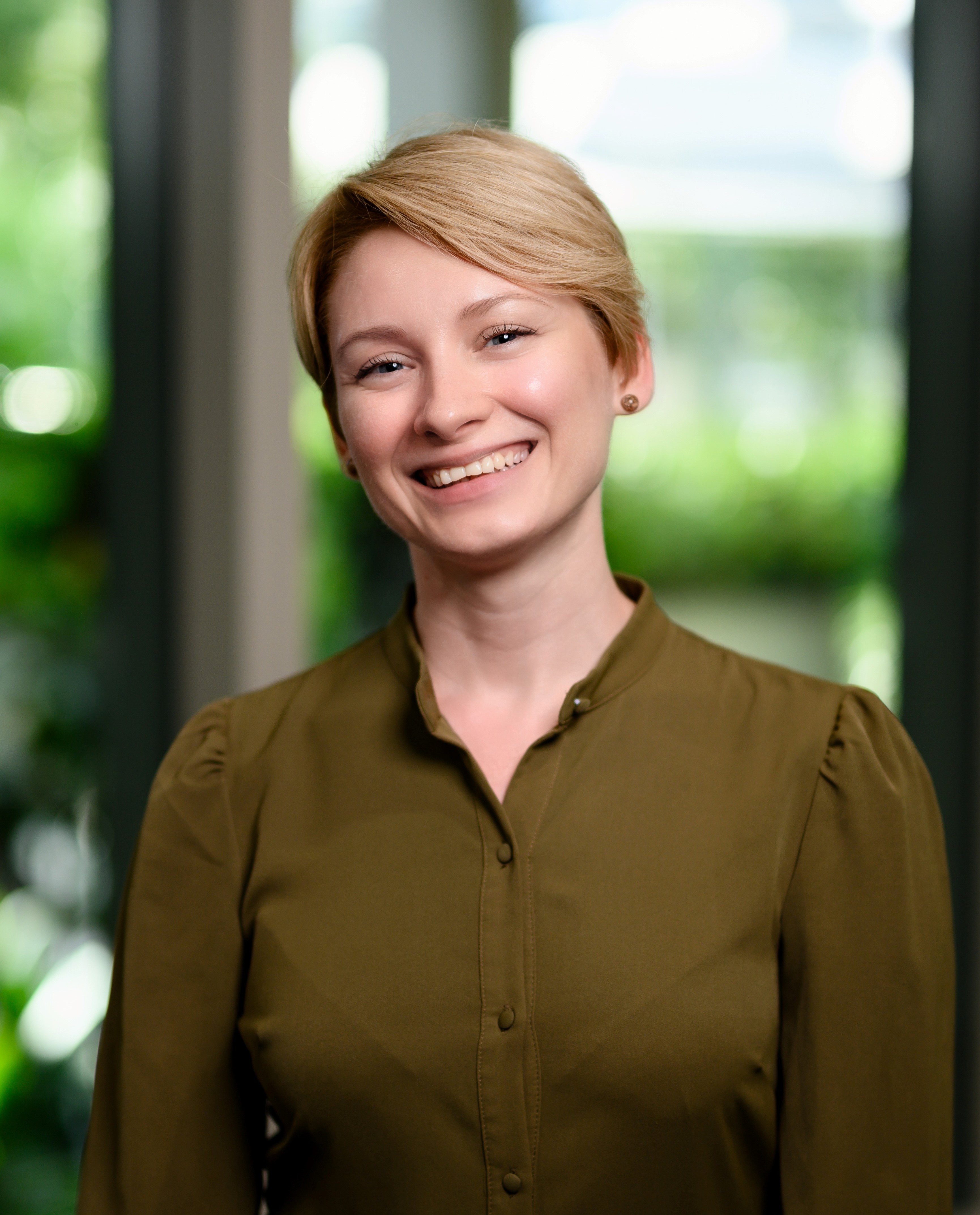
“I am deeply honoured to be the first mathematician in Australia to receive the L’Oréal-UNESCO For Women in Science Fellowship,” she said.
“This recognition is incredibly meaningful to me, not only for my own research, but as an opportunity to inspire and support the next generation of young women pursuing careers in mathematics and STEM.
“I will use the fellowship to support a research assistant, enabling them to contribute directly to our work on evolutionary game theory in policy design.
“The funding will also support their travel to international conferences, providing valuable opportunities for professional development and exposure to leading research in the field.”
Dr Kleshnina’s work focuses on evolutionary game theory, which looks at how strategies evolve over time, especially in changing environments. This approach allows her to explore how cooperation can emerge – or break down – when people face unequal risks, limited information, or conflicting interests.
Her models have been used to study everything from microbial competition to conservation policy, helping predict which strategies are most likely to succeed in encouraging sustainable behaviour.
Originally from Siberia, Dr Kleshnina has held research fellowships in France, Austria, and now Australia.
She is a lecturer with the QUT School of Mathematical Sciences, an ARC DECRA Fellow, chief investigator in QUT’s Applied Mathematical Ecology Group, and a chief investigator with the national Securing Antarctica’s Environmental Future initiative.
The L’Oréal–UNESCO For Women in Science Fellowship program has championed equality and visibility of women in STEMM since 1998, awarding each Fellow $25,000 to further their research.
To date, over $2 million has been invested across 79 female researchers in Australia and New Zealand.
Built on a dynamic and intergenerational mentoring ecosystem, the program’s alumni become mentors to PhD students through a dedicated mentoring scheme, providing ongoing leadership and development for women in STEMM.
The four 2025 Fellows are:
- Dr Maria Kleshnina (QUT)
- Dr Jessica Kretzmann (University of Western Australia)
- Dr Georgina Falster (University of Adelaide)
- Dr Jamie-Lee Rahiri (University of Auckland)
“With the recent international expansion of Foundation L’Oréal’s ‘Girls in Science’ program and the rollout of UNESCO’s ‘Imagine a World with More Women in Science’ campaign, we’re seeing increased global demand for initiatives that elevate female voices in science,” said Alex Davison, Chief Executive Officer at L’Oréal Australia & New Zealand.
“This is echoed through government policy, including Australia’s recent decision to adopt all 11 recommendations from its 2024 Diversity in STEM review.
“These programs work together, recognising young girls inspired by science today who become the Fellows of tomorrow, and we are proud to echo these sentiments through our For Women in Science program.”
QUT Media contacts:
- Mechelle McMahon, media@qut.edu.au
- After hours, 0407 585 901 or media@qut.edu.au


