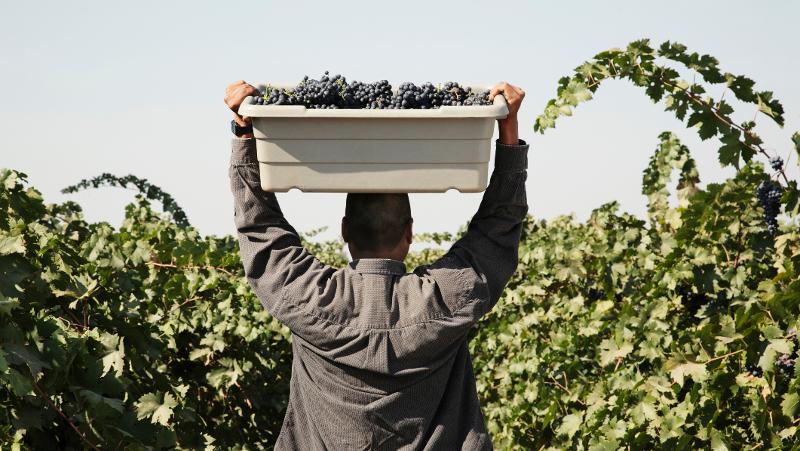
Research on statements made by large organisations during COVID-19 to Australia’s online Modern Slavery Statement Register found more than half of the reporting businesses did not disclose COVID-19-related slavery risks, despite government recommendations.
- Australia’s Modern Slavery Statement Register relies on public disclosure
- Study of 121 statements considering COVID crisis effects
- Supply chain slavery risk increased including child labour when schools closed
Professor Ellie Chapple and Dr Shakoor Ahmed from QUT Business School and members of QUT Centre for Justice Modern Slavery Research Group, studied the Register’s first year of statements and how those statements acknowledged the slavery risks inherent in COVID-19 shutdowns.
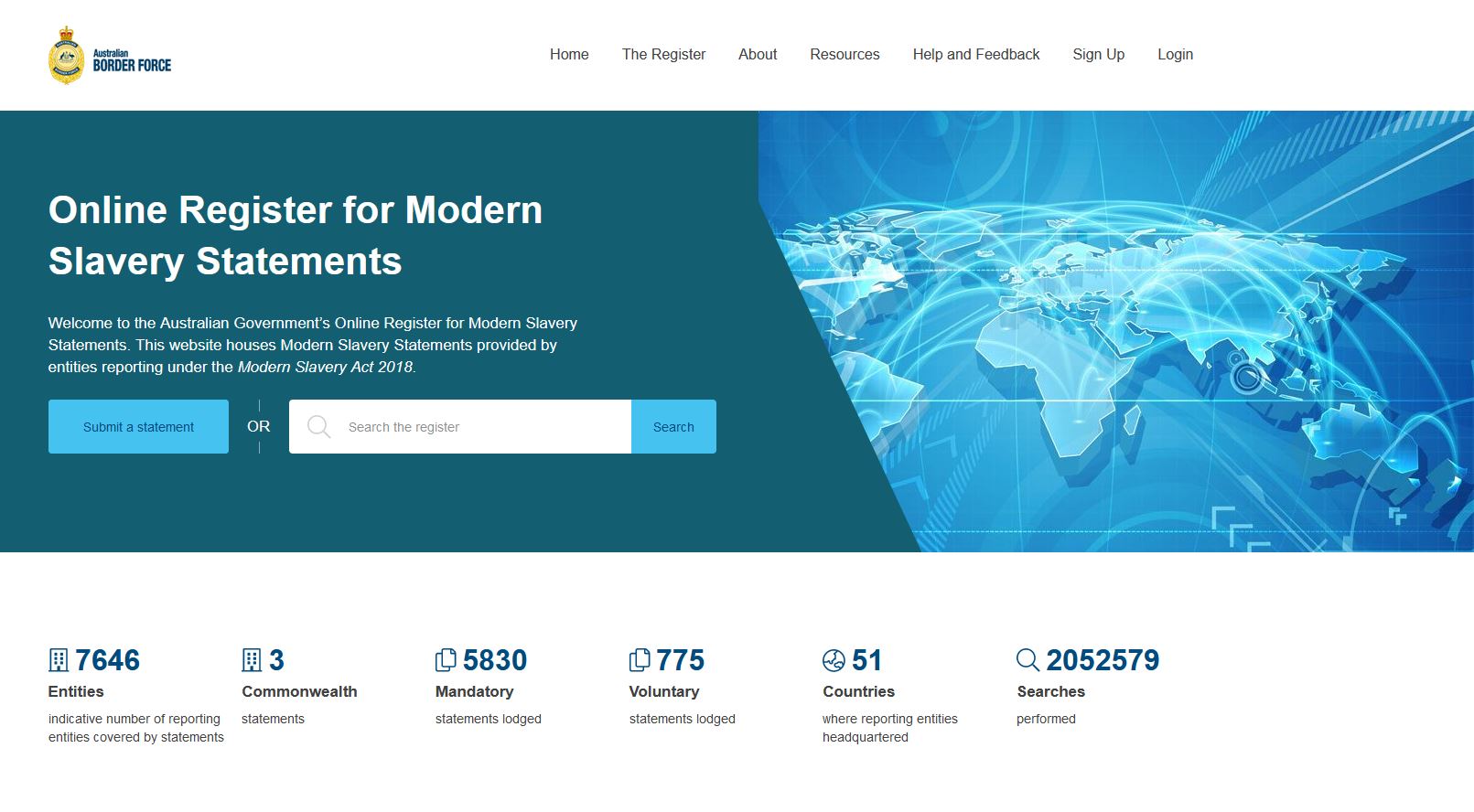
The Register is administered by the Australian Border Force (ABF) but does not have a specific regulator as the ABF “publishes all statements properly submitted to this Register, including compliant and non-compliant statements, in order to maximise transparency and ensure entities are publicly accountable for their actions to address modern slavery risks.”
The Register was set up under the Modern Slavery Act 2018 and came into force on 1 January 2019.
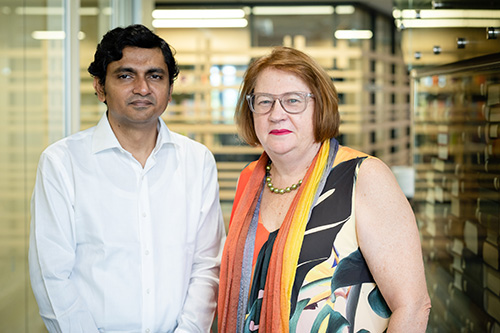
Professor Chapple said Australia’s Modern Slavery Statement Register was just ‘a first step’ towards fighting worker exploitation by mandating companies with more than $100 million revenue disclose their efforts to ensure modern slavery is absent from their supply, via an annual public online statement.
"It was unfortunate that the start of the Modern Slavery Statements Register and the global pandemic had coincided,” Professor Chapple said.
“Our research has measured the extent to which this disruption may have impaired reporting companies’ ability to comply in substance and in spirit with their new disclosure obligations.
“In the first reporting period 2019-2020, the regulated businesses were urged by the ABF to consider modern slavery risks in light of the COVID-19 crisis.
“The number of modern slavery victims skyrocketed from 40.3 million in 2016 to 49.6 million in 2021 while only .2 per cent of victims are rescued annually, according to the ILO (International Labour Organisation).
“COVID-19’s disruption to livelihoods and associated socio-economic challenges exposed vulnerable people and intensified the drivers and root cause of trafficking, forced labour, slavery, servitude and sexual exploitation.
“As an insidious example of supply chain risk, COVID-19-related school closures have increased the number of child labourers available.
“We predicted that the inaugural statements could not be expected to represent best practices in due diligence and disclosure of modern slavery prevention due to global supply chain and manufacturing operations disruptions in all industries.”
Dr Ahmed said their research found that more than half of the reporting businesses did not disclose COVID-19 issues related to modern slavery risk, despite government recommendations.
“Of the 121 businesses that filed disclosure statements on the register, just 31 disclosed four or more items of COVID-19 prevent initiatives,” Dr Ahmed said.
“In terms of health and safety, 31 per cent gave minimal disclosure – one disclosure item – which included repatriating migrant workers.
“Two disclosures mentioned virtual site inspections but site visits to verify working and production conditions were not feasible.
“More than 50 per cent of companies identified the issue of victim support; however, disclosure of actual expenditure on supplier and victim support programs was rare with only 8 per cent of companies mentioning the amount spent on victim support.”
Professor Chapple said the widespread failure to consider COVID-19-related risks in the inaugural statements was disappointing relative to the sophistication of the regulated Australian businesses.
“Slavery risk management processes are part of governance, while not necessarily predicting the COVID-19 pandemic, ought to plan for other scenarios of widespread global supply chain disruption from climate, geopolitical and conflict crises,” she said.
“It should be noted that under Australia’s Modern Slavery Act 2018 (Cth) businesses with more than $100 million in annual consolidate revenue are “regulated entities” but there is no specific regulator to enforce this statutory reporting obligation, with disclosure being the policy to tackle modern slavery practices in supply chains.
“In lieu of direct sanctions, compliance with modern slavery reporting relies predominantly on market sanctions, as consumers, investors and the media are expected to monitor companies’ self-reported efforts.”
The Modern Slavery Statements Register is currently under its three-year review.
Modern Slavery Disclosure Practices: Risks Induced by COVID-19 in Business Operations and Supply Chains is part of a QUT Centre for Justice Briefing Paper Series on modern slavery and exploitative work practices prepared in collaboration with QUT Centre For Decent Work and Industry and QUT Centre for Justice.
Niki Widdowson, QUT Media, 07 3138 2999, n.widdowson@qut.edu.au
After hours: 0407 585 901, media@qut.edu.au


