Our research focuses on distinctive, high-impact strengths where we have deep expertise, strong partnerships, and a proven ability to deliver real-world outcomes.
Our work is collaborative and interdisciplinary, spanning discovery through to translation, and is embedded in the environments where it can have the greatest impact - healthcare, sport, industry, and community.
Research strengths
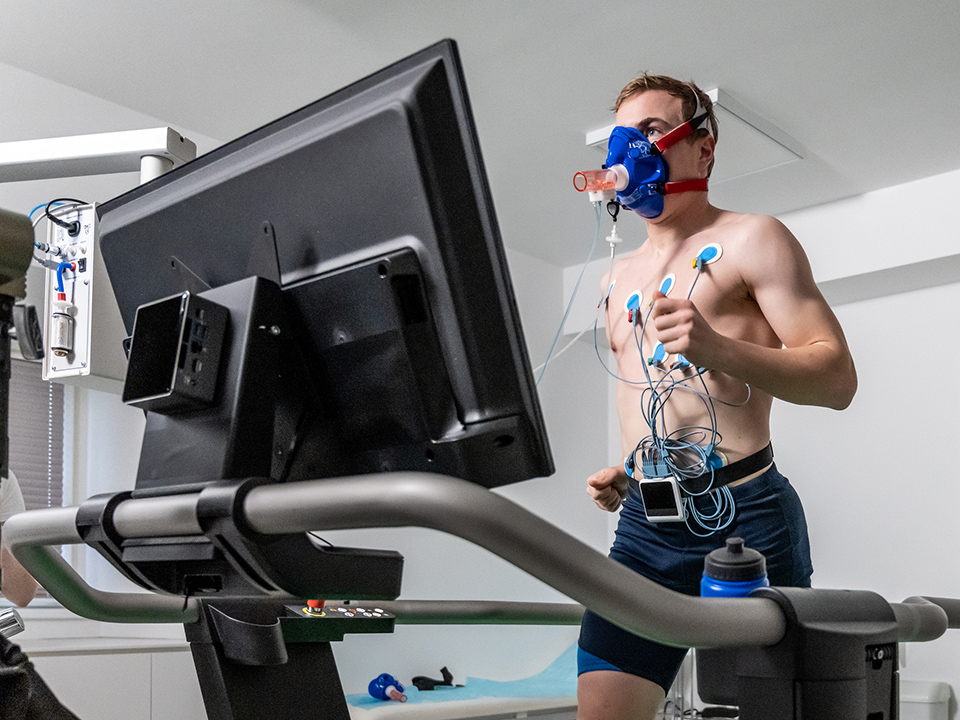
Sports performance, recovery and injury
QUT ranked 11th in the Shanghai Global Ranking of Sport Science Schools and Departments in 2025. We are recognised for our leadership in applied sports science and performance optimisation, with a strong focus on translating research into real-world sporting environments.
Our research integrates expertise across:
- skill acquisition and technique development
- sport performance optimisation, including physiology, strength and conditioning, sport psychology, and coaching practice
- injury prevention and rehabilitation
- environmental and occupational physiology
- esports, sports technology and analytics.
Exercise, nutrition and chronic disease
We have an internationally recognised track record in exercise, nutrition, and lifestyle approaches to health, with a focus on preventing and managing chronic disease across the lifespan.
Our research integrates:
- clinical exercise physiology and rehabilitation
- clinical nutrition and dietetics, including nutrition care across acute and chronic conditions
- interventions targeting cardiovascular, metabolic, neurological, and oncology (cancer) populations
- mental health and wellbeing, including the role of exercise and nutrition in prevention and treatment
- physical activity measurement and behaviour change
- community and population health approaches.
Our research in this area has informed national and international guidelines, policy, and clinical practice, demonstrating a strong track record of translation and impact.
Community and childhood nutrition and health
We are a leading centre for research in community, public health, and childhood nutrition, with a strong focus on prevention, equity, and improving lifelong health trajectories.
Our strengths include:
- maternal, infant, and child nutrition
- obesity prevention and healthy growth
- food security and culturally responsive nutrition
- dietary behaviour and community-based interventions
- population health nutrition and food environments.
Our research places strong emphasis on co-design with communities and stakeholders, ensuring interventions are culturally appropriate, sustainable, and responsive to real-world contexts. It contributes directly to public health policy, programs, and practice, with a clear focus on improving health outcomes at population scale.
Real-world impact through partnerships
A defining feature of our research is deep real-world engagement beyond the university. We partner with healthcare providers, industry, government, and sporting organisations to co-design and deliver research that is relevant, scalable, and impactful.
These collaborations ensure our research not only advances knowledge, but also translates into practice, informs policy, and improves outcomes for individuals and communities.
Our researchers and groups
The School of Exercise and Nutrition Sciences aims to achieve its objectives via strong collaborative research programs, supported by competitive research grants, commissioned research and industry funding.
Our research groups
- Centre for Childhood Nutrition Research
- Sport Performance Recovery Injury Group (SPRING)
- Exercise and environmental ergonomics lab (E3)
- Food and Nutrition Research
- EPOWR
The school has a large number of PhD and master degree by research students, and we encourage multidisciplinary research activity in both pure and applied research. Students interested in producing cutting-edge research that makes significant advancements for clinical exercise physiology, exercise and movement science, health and physical education and sport science are encouraged to apply.
The School of Exercise and Nutrition Sciences aims to achieve its objectives via strong collaborative research programs, supported by competitive research grants, commissioned research and industry funding.
Our research groups
- Centre for Childhood Nutrition Research
- Sport Performance Recovery Injury Group (SPRING)
- Exercise and environmental ergonomics lab (E3)
- Food and Nutrition Research
- EPOWR
The school has a large number of PhD and master degree by research students, and we encourage multidisciplinary research activity in both pure and applied research. Students interested in producing cutting-edge research that makes significant advancements for clinical exercise physiology, exercise and movement science, health and physical education and sport science are encouraged to apply.
Our researchers
Learn about our supervisors, their research areas of interest and current projects.
We recommend you start by finding a supervisor in your area of interest. You should review the research background of our staff to find an appropriate supervisor. We then recommend that you discuss your research interests with your proposed supervisor early in the application process.
Learn more about PhDs at QUT and our Master of Philosophy degree.
