

Professor Cassandra Cross, QUT School of Justice
Australians lost more than A$2 billion to scams in 2024. This year, losses are likely to be similar.
Often, scammers will try to create a sense of urgency, pushing their intended victims to act now. As we prepare our shopping lists and festive lunches, now is also the perfect time to be alert to scams.
Here’s how to prepare yourself – and your loved ones – for a safe and scam-free Christmas and New Year.
The current wave of scams
Online shopping scams are particularly rife at this time of year, with sales season well under way. They can take many forms.
Scammers will create fake online stores, create advertisements for products that don’t exist or send products that are inferior in quality to what was expected.
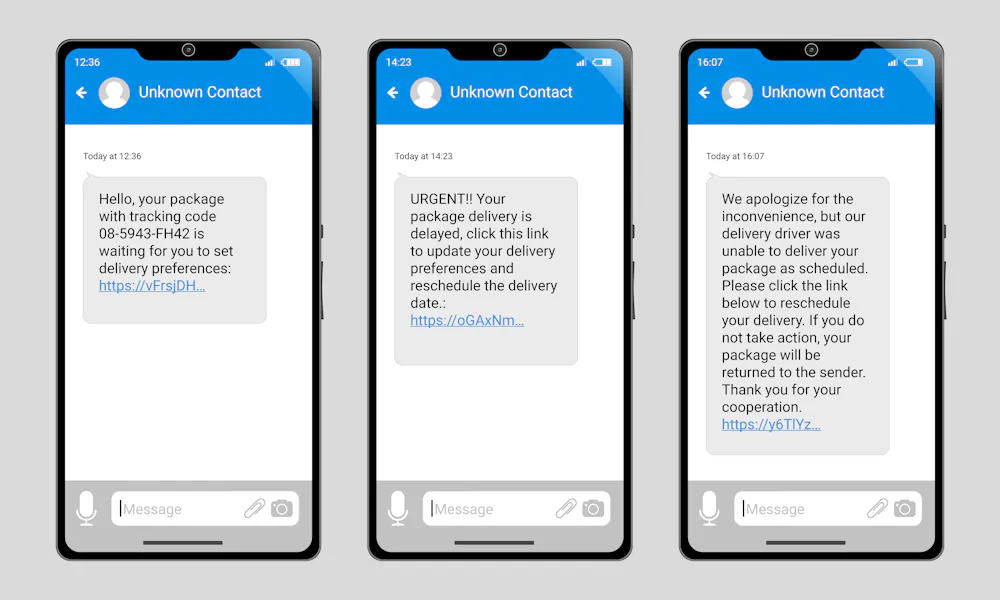
Many people are expecting more packages than usual to arrive at this time of year. Taking advantage of this, scammers send phishing text messages and emails pretending to be from from the postal service and couriers.
Investment scams occur year-round and Christmas is no different. Scammers may target you through phone calls, text messages, emails and social media posts.
Scams involving cryptocurrency are particularly common this year, and any unsolicited “investment opportunities” should raise immediate suspicion.
Romance scams: Christmas can be difficult time of year for many people. Loneliness hits a bit harder for some, and singles may be looking to start the new year in a new relationship.
Romance scams exploit our desire for a relationship. If your “partner” is asking for money under any circumstance, particularly one you have only ever met online, it should be a warning sign.
Seeing and hearing is no longer believing
The evolution of technology is rapidly changing the ways we conduct our personal and professional lives. Scammers have embraced this opportunity.
Fraudsters will use whatever tools possible to persuade and manipulate unsuspecting victims. And artificial intelligence tools have changed the game.
Deep fakes: it is easier than ever to generate high quality and realistic images and videos. Offenders will use these to help support their stories and garner your trust. Just because you have seen something does not mean it is real.
Voice cloning: as with images, scammers can now create realistic impersonations of a person’s voice with relatively small amounts of material. The distressed phone call you receive from a loved one may not be them at all, but just an scammer trying to get your money.
Drafting scripts: while large language models, such as ChatGPT and Claude, may be useful for helping you draft an email or report, scammers are using these tools to help script their fraudulent pitches. It can help offenders tailor specific ways to target potential victims.
The 3-step plan you should make now
While the threat of scams may seem overwhelming, there are three positive steps you can take right now, to reduce your risk of being a victim.
1. Do your own self-assessment
Everyone has a weakness or vulnerability that makes them open to scams. And each one is going to be different. Scammers are ruthless and systematic in their targeting.
Think about your own situation, your personality and your routines. What types of approaches might you be vulnerable to? How might you enact measures to counter these?
2. Conduct a digital audit
Ensure your accounts and devices are secured properly, with strong passwords, updated software, and multi-factor authentication where available.
Make sure you are comfortable with your privacy settings across any social media accounts. While this may seem obvious, it is still important to get the basics right and to have control over your digital footprint.
3. Create a family password
As a family, choose a word or phrase that is not obvious but is significant to you and easy to remember.
Think of it as a family password. Use this family code word or pass phrase to verify any communications that purportedly come from family members.
Staying connected
Also, make it part of your routine to talk to family and friends about the texts and emails you receive, as well as what you have seen in the news. Talking openly about the ways you are being targeted helps others recognise when it happens to them.
Analyse the different approaches you get and try to unpack what the offender is hoping to achieve and why they might be successful.
If you or someone in your family is a victim of a scam, know who you can talk to. If you are unsure of something you receive, feel confident to step back and get advice or talk to someone you trust.
Offenders rely on us acting in the moment and will instil a sense of urgency. Know that it is OK to hang up, not respond or walk away.
If you or someone you know has been a victim of a scam, you can report it to ReportCyber as well as your bank or financial institution. For support, contact iDcare. For further prevention advice, consult Scamwatch.
This article is republished from The Conversation under a Creative Commons license. Read the original article.
Latest stories

3 November 2026
What comes next? The 2026 midterms and the party Trump leaves behind
The 2026 midterms are set to pose the most difficult test faced by the Republican party in generations – can the MAGA movement built around Donald Trump survive without him?
Read more of What comes next? The 2026 midterms and the party Trump leaves behind

2 November 2026
Two new bandicoot species discovered after trawling through museum drawers
QUT evolutionary biologist Professor Matthew Phillips and fellow researchers from the Western Australian Museum and South Australian Museum share their journey to identify two new species of bandicoots: one still with us and the other, sadly, now extinct.
Read more of Two new bandicoot species discovered after trawling through museum drawers

28 October 2026
Humanoid robots are learning to dance. But can we trust them at work?
Humanoid robots could ease workforce shortages, but Professor Jonathan Roberts and Professor Glenda Caldwell say safety and trust must come first.
Read more of Humanoid robots are learning to dance. But can we trust them at work?