
Dr Kenny Travouillon, Western Australian Museum/Curtin University; Professor Matthew Phillips, QUT School of Biology and Environmental Science; Professor Steve Cooper, South Australian Museum/Adelaide University, and Dr Terry Bertozzi, South Australian Museum/Adelaide University
A 10-year scientific investigation of museum specimens has uncovered two previously unrecognised bandicoot species, expanded the known range of the iconic quenda (or southeastern brown bandicoot), and reshaped understanding of one of Australia’s native mammal groups.
Our new study examined hundreds of historical and modern specimens from museum collections around the world. The findings have led to the recognition of two additional species and several new subspecies within the genus Isoodon, commonly known as short-nosed or brown bandicoots.

Mike Lee / South Australian Museum
What you need to know about bandicoots
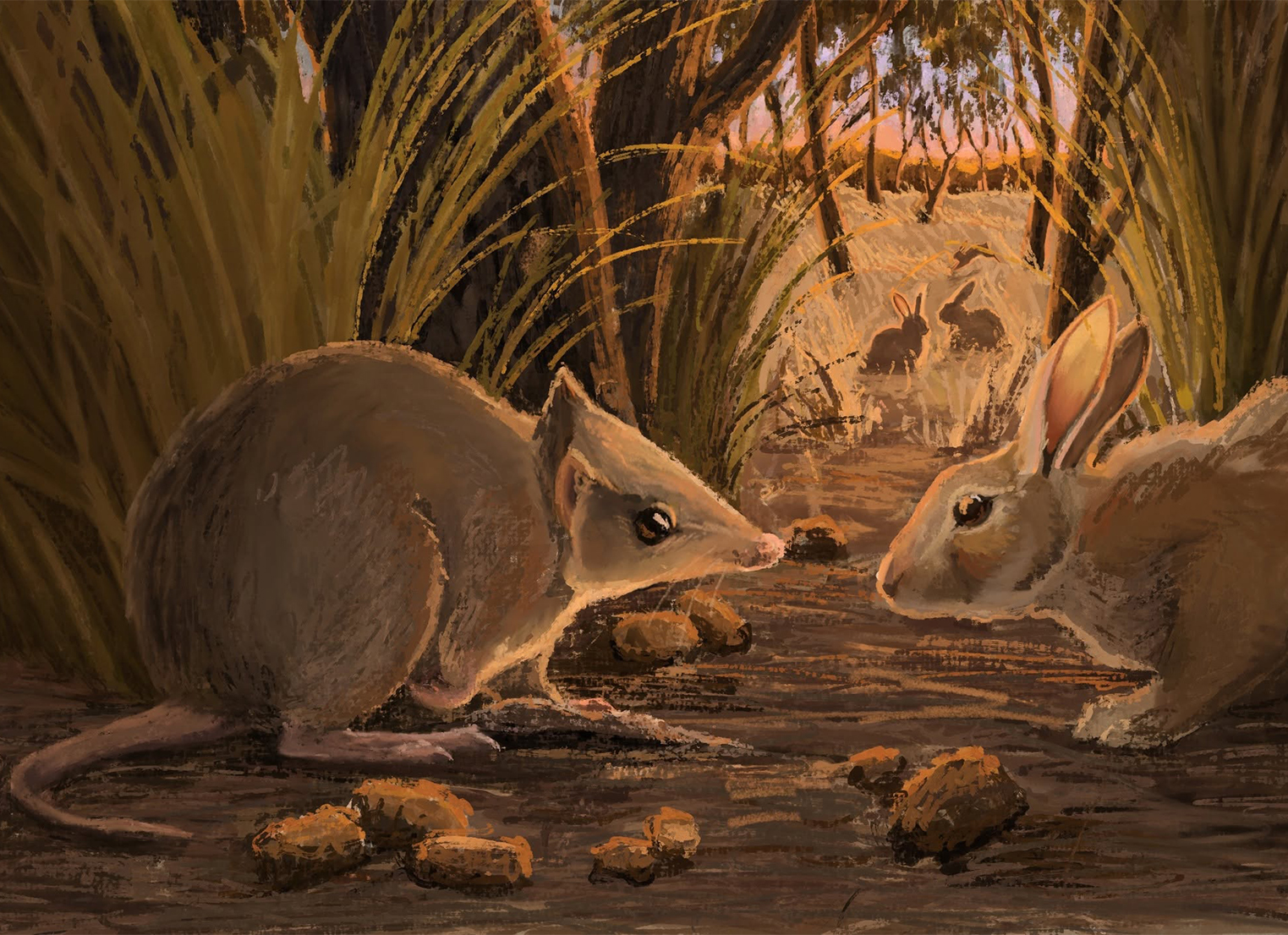
Bandicoots are rabbit-sized marsupials found in Australia and New Guinea. They are distinguishable by their long-pointed snouts, large back legs and short tails. They gather food through digging with their front paws.
Most are omnivores, feeding on fungi, roots, insects and other small invertebrates. There are more than 20 living species of bandicoots, but in Australia, since European colonisation, several species have gone extinct.
The short-nosed or brown bandicoots are in the genus Isoodon. Until now, there were five living species known in Australia and New Guinea.
While some species remain widespread, others have suffered severe decline due to habitat loss, changing fire patterns and introduced predators. These include the golden bandicoot and the southern brown bandicoot, previously listed as vulnerable or endangered.

WA Museum
How we found new species
In 2016, one of us (Travouillon) travelled through Europe and the United States to study bandicoot specimens collected more than 100 years ago. Comparing these specimens with material held in Australian museums showed that existing species classifications might not be quite right.
The discovery prompted three of us (Travouillon, Cooper and Bertozzi) to embark on a larger research project. We went to museums around Australia, collecting measurements and genetic samples from specimens from across the continent and New Guinea. We then found other collaborators via the OZ Mammals Genomics initiative.
Using DNA analysis and detailed skull measurements, we reassessed how different bandicoot populations were related. This let us identify previously overlooked species and subspecies.

Matt Phillips
Among the most significant findings was the recognition of the little brown bandicoot (Isoodon microtis), a newly described species from South Australia. We believe it became extinct around a century ago. Specimens had sat unnoticed in museum collections for generations, and we determined it was distinct enough from other bandicoots to warrant species status.
Our study also found that the New Guinea brown bandicoot (Isoodon moresbyensis), previously regarded as a subspecies of the northern brown bandicoot (Isoodon macrourus), was actually a species in its own right.
While the discovery of a new living species is cause for celebration, the identification of an extinct species carries mixed emotions. It is sobering to realise that a unique Australian mammal disappeared before science even recognised it.
Re-evaluating species boundaries
Our research also dramatically altered understanding of bandicoot diversity in South Australia. Previous classifications suggested that only one species, the southern brown bandicoot, occurred in the state.
However, the revision found that South Australia was once home to three species: the southern brown bandicoot (Isoodon obesulus), the newly recognised little brown bandicoot, and the quenda (Isoodon fusciventer).

WA Museum
The quenda has long been regarded as a Western Australian species. However, we found it once lived around Adelaide, Kangaroo Island and the Nuyts Archipelago. This represents a major eastward extension of the species’ known historical range.
We also identified several new subspecies of already known species. We described two new subspecies of golden bandicoot, four of the quenda, and a new subspecies of the northern brown bandicoot from Cape York in Queensland.
Together, the findings show the continent once supported a richer array of bandicoot forms than scientists had understood.

WA Museum
Conservation and why it matters

Travouillon et al. / Australian Journal of Taxonomy
The discoveries have important implications for conservation management. Taxonomy, the science of naming and classifying species, forms the foundation of conservation planning. Changes in these classifications can affect how we understand extinction risk, and how we allocate conservation resources.
For the quenda, the newly recognised broader range suggests the species may be less threatened overall than previously believed. However, we caution that South Australian populations remain small and require ongoing protection.
Conversely, the revised distribution of the southern brown bandicoot suggests its range is more restricted than once thought. Already listed as endangered, the species may face an even greater conservation risk under the new classification.
What’s next
With our work on short-nosed bandicoots now complete, we are turning our eyes to the next phase of our project: long-nosed bandicoots (the genus Perameles). Five species within that group have already disappeared since European settlement.
Remarkable discoveries are still waiting in museum drawers, in Australia and around the world. As we study them, we will continue to uncover hidden chapters in Australia’s natural history.
This article is republished from The Conversation under a Creative Commons licence. Read the original article.
Latest stories

3 November 2026
What comes next? The 2026 midterms and the party Trump leaves behind
The 2026 midterms are set to pose the most difficult test faced by the Republican party in generations – can the MAGA movement built around Donald Trump survive without him?
Read more of What comes next? The 2026 midterms and the party Trump leaves behind
28 October 2026
Humanoid robots are learning to dance. But can we trust them at work?
Humanoid robots could ease workforce shortages, but Professor Jonathan Roberts and Professor Glenda Caldwell say safety and trust must come first.
Read more of Humanoid robots are learning to dance. But can we trust them at work?

16 October 2026
Some Australian research funding is now a lottery. And that’s actually good news
Professor Adrian Barnett from QUT and Professor Philip Clarke from The University of Melbourne explain why leaving some funding decisions up to luck can save everybody time and effort – and help understand what the funding actually does.
Read more of Some Australian research funding is now a lottery. And that’s actually good news