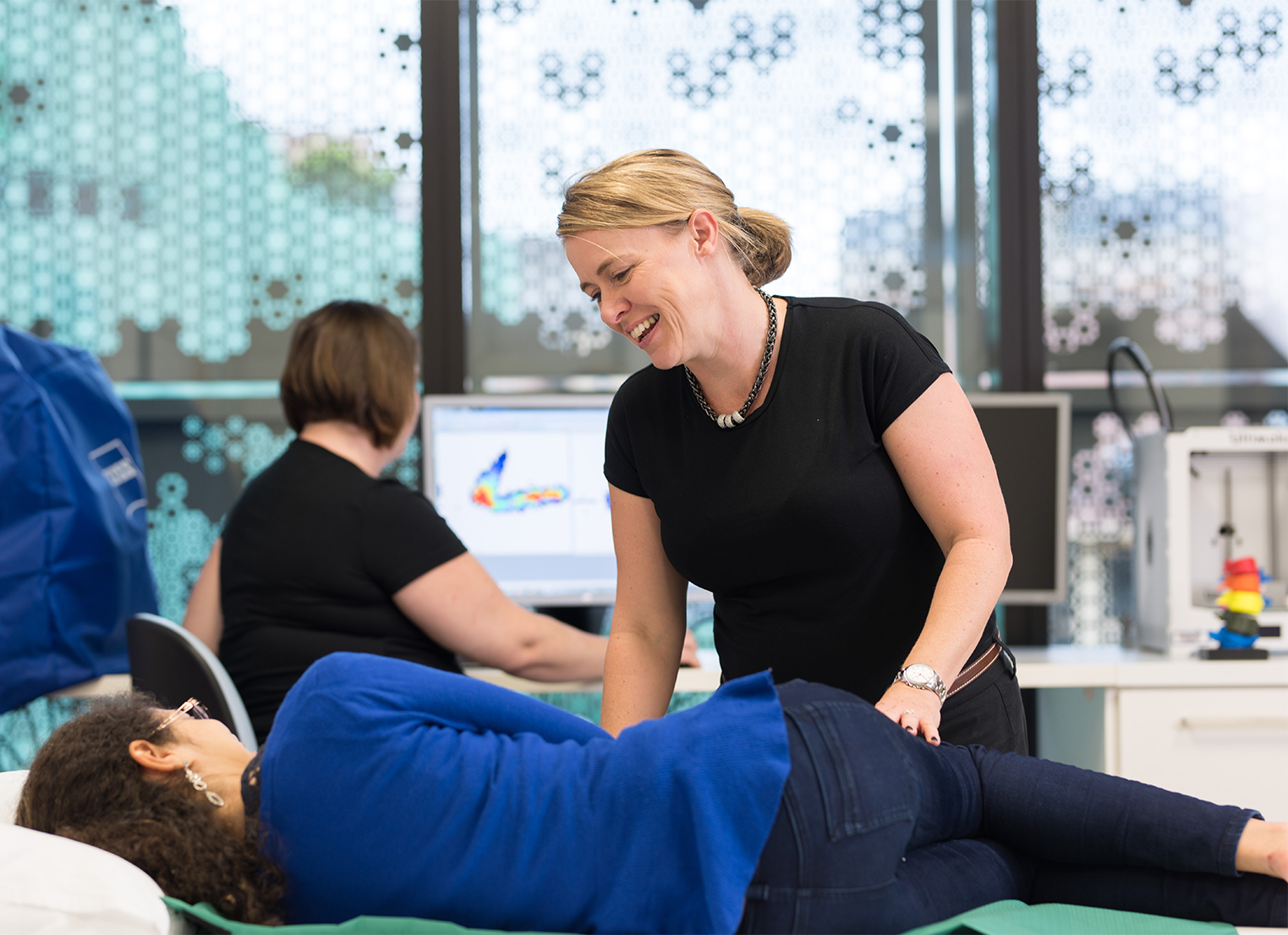
Associate Professor Paige Little, QUT School of Mechanical, Medical and Process Engineering
Going to university sets you on a path of learning and discovery. It’s a great place to find who we want to be and how we want to make our mark on the world, be it big or small.
Some lucky people know straight up what they want to achieve in life and what they want to study. Then there are those of us who think we know … but are really just kids in a candy store trying to choose a single degree when everything looks amazing.
After I finished school, I started a degree in accounting and originally had plans to move into petro-chemistry management. I was offered a scholarship to attend my local regional university in Toowoomba and thought I’d do the business part first and follow it up with postgraduate study in applied chemistry. But once I started the accounting degree I realised how unsuited I was to the topic – I was bored! I hadn’t realised how much of a passion I had for maths and science, so at the end of my first year of accounting I moved over to an engineering degree.
The lightbulb moment
I loved studying engineering. I loved using maths and physics in such a practical way, and I loved designing things for real-world applications. After two summer holiday internships at local industry manufacturers, I was confident my career lay in metal smelting and large equipment design and manufacture.
That was my plan … until I was offered a final-year engineering project to study the cause of fracture in single rooted human molar teeth. The project used what I had learned in stress analysis, finite element modelling, and materials engineering, but applied it to human teeth.
This was a lightbulb moment for me and suddenly opened up the possibility that I could use my engineering skills for something that could have real impact on people – biomechanics and medical devices.
Engineering for the real world
When I finished my mechanical engineering degree, I knew I wanted to use it for health and I also knew I didn’t want to stop learning. That desire to keep learning led me to pursue higher degree education and accept a PhD position at QUT in spinal biomechanics and move to Brisbane.
Completing my PhD is one of the significant achievements in my life – exceptionally hard work, self-taught knowledge in new fields, project management, budget planning, hours and hours spent in the lab (often finishing in early hours of the morning), thesis writing, honing my self-motivation, and developing my self-confidence. I have continued to use and draw on these experiences and skills over my career.
Ever since I completed my PhD, I’ve worked in health engineering. My first area was spine biomechanics for adult lumbar spinal degeneration. Then I moved into hip biomechanics and worked at the University of Oxford with orthopaedic companies to improve designs of hip implants. I then came back to QUT and Children’s Health Queensland, where I’ve worked with spinal orthopaedic surgeons to improve care for children with spinal deformity.
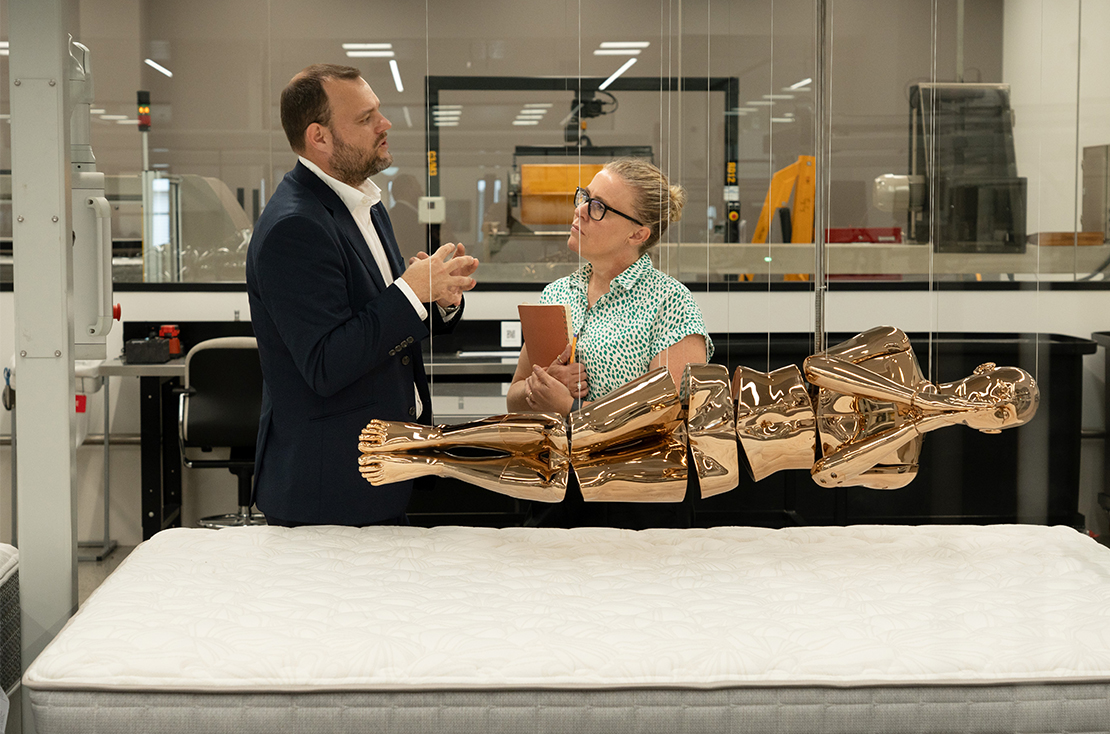
I still work in paediatric scoliosis, and for the past nine years I’ve also worked with Sealy Australia, to assist them in putting human factors and biomechanics into their mattress designs for everyday Australians.
The next generation
Going to university opened the world up to me and I enjoy now seeing students embarking on their own career journeys. In addition to being a research director at QUT, I also lead an engagement programme for school students from backgrounds of social disadvantage and cultural diversity.
It’s important that all students finishing school realise there are paths available to them at uni, if they want to take them. That’s not to say that university is for everyone or that it’s the only pathway to success or career fulfillment. But we should never allow a young person to feel as though a university degree is out of their reach as a result of their socio-economic status or cultural heritage.
When high school students come from a background where family members haven’t attended university or they don’t have role models in their life who have university degrees, it’s easy for them to feel as though university is not for them. But this isn’t true.
I want all students to feel like it’s your right to be here. And if you have a passion, you follow it. There are a lot of really wonderful bridging pathways that students can utilise to gain entry into their chosen degree if their ATAR isn’t quite at the level required for a particular degree. There are always options open to them if they have the passion and motivation to get a university education.
The 2026 QUT Open Day will be held on July 26 to give prospective students the chance to explore the university’s Gardens Point and Kelvin Grove campuses and facilities, talk one-on-one with current QUT staff and students, and learn more about courses, careers, application processes, clubs and societies, study abroad opportunities, student services and financial support and scholarships.
Before the day:
- check out the Open Day program
- create your own personalised itinerary with the Open Day Planner
- do the Match My Skills quiz for career inspiration
Aligned with the United Nations Sustainable Development Goals
In 2015, UN member states agreed to 17 global Sustainable Development Goals (SDGs) to end poverty, protect the planet and ensure prosperity for all.

We believe in the free flow of information
Republish our articles for free, online or in print, under Creative Commons licence.

Republish
You are free to republish the text of this article both online and in print.
We ask you follow some simple guidelines.
Images are not included in this blanket licence as in some cases we are not the copyright owner.
Do not edit the piece, ensure you attribute the author and mention the article was originally published on Real Focus.
By copying the HTML below, you will be adhering to all our guidelines.
Copy this HTML into your CMS.Press ⌘C or CTRL+C to copy.
Latest stories

16 October 2026
Some Australian research funding is now a lottery. And that’s actually good news
Professor Adrian Barnett from QUT and Professor Philip Clarke from The University of Melbourne explain why leaving some funding decisions up to luck can save everybody time and effort – and help understand what the funding actually does.
Read more of Some Australian research funding is now a lottery. And that’s actually good news

7 October 2026
It’s true, Australia won’t ban ‘sock puppet’ accounts on social media. Here’s why
Professor Daniel Angus and Associate Professor Timothy Graham from the QUT Digital Media Research Centre explain how Australia's proposed Digital Duty of Care bill will protect university researchers using fictitious accounts for online safety research.
Read more of It’s true, Australia won’t ban ‘sock puppet’ accounts on social media. Here’s why
25 September 2026
An AI model has found a new ‘CRISPR‑like’ biological system. Here’s what it means for science
AI agents may become another tool for researchers and even transform biological research, but there are also questions around how the technology can be kept safe, writes Associate Professor Dimitri Perrin, Co-Director of the QUT Centre for Data Science.