
Associate Professor Susanna Cramb, QUT School of Public Health and Social Work and Principal Research Fellow, Australian Centre for Health Services Innovation
Every day, our health is influenced by our environment. Yet often studies on people’s health ignore location.
Data is routinely collected whenever we interact with health services, but this data is often locked away and ignored. However, this data contains crucial insights that could be used to improve people’s health.
My research uses statistical models and interactive visualisations to put health back on the map.
Cancer mapping aids early diagnosis
In Australia, cancer rates and survival differ significantly across geographic areas. QUT, in partnership with the Cancer Council Queensland, developed the Australian Cancer Atlas, an online tool that maps disparities in cancer burden across the nation. One key contributor to understanding why differences occur is identifying the stage at which a cancer is diagnosed, but cancer stage is not routinely collected by registries. Using data from a pilot collection to inform the atlas, I mapped cancers by stage across >2000 small areas.
The results? Many areas around Brisbane had more early-stage cancers diagnosed, including breast, prostate cancer and melanomas. In contrast, many parts of the Northern Territory had higher proportions of advanced cancers diagnosed.
But location-based applications go beyond cancer, to any health condition.
Joining the data dots on preventable injuries
Injuries are often preventable, but gaining a comprehensive understanding of their occurrence and the resulting patient journeys has been almost impossible due to siloed datasets – until now.
Using a large linked dataset, the Queensland Injury Atlas considers different aspects of location, in association with Jamieson Trauma Institute (JTI). The data includes ambulance, retrieval services (flights), emergency departments, hospital admissions, compensation schemes and death datasets. Where the injury occurred, where patients are transported to and treated, where they live and their outcomes, can all be considered together, in a very visual format.
By placing data on the map and allowing authorised users to interact with this to answer their questions, we can improve patient outcomes and reduce the burden of injuries.
Another recently completed JTI-affiliated project, the injury Treatment & Rehabilitation Accessibility Queensland Index (iTRAQI), examines the timeliness with which injured patients are transported across the state under ideal conditions. The vast distances of Queensland, together with few high-level hospitals across the state, can require severely injured patients to be transported for over eight hours to get to specialist care, even with our world-class retrieval services. This research has highlighted areas of poor access to emergency care and is directly relevant to determining ways of improving accessibility and ultimately, better health outcomes.
Geospatial health data is the future
With the technology, methods, and software available now, the only restriction to understanding the impact of location on health is the data. We need health datasets to collect data on relevant locations. We need important details – like cancer stage – to be routinely collected. And we need to have timely data available. Investing in health data is an investment in better health.
Effective intervention strategies require evidence that includes ‘where’ as well as ‘what’. Considering location-based aspects of health is crucial to improve health and reduce disparities.
Want more details? Read the paper about cancer stage patterns, check out more information on the Queensland Injury Atlas and iTRAQI projects.
Associate Professor Susanna Cramb received the 2024 Queensland Women in STEM Prize Judges Award.
Aligned with the United Nations Sustainable Development Goals
In 2015, UN member states agreed to 17 global Sustainable Development Goals (SDGs) to end poverty, protect the planet and ensure prosperity for all.

We believe in the free flow of information
Republish our articles for free, online or in print, under Creative Commons licence.

Republish
You are free to republish the text of this article both online and in print.
We ask you follow some simple guidelines.
Images are not included in this blanket licence as in some cases we are not the copyright owner.
Do not edit the piece, ensure you attribute the author and mention the article was originally published on Real Focus.
By copying the HTML below, you will be adhering to all our guidelines.
Copy this HTML into your CMS.Press ⌘C or CTRL+C to copy.
Latest stories

25 September 2026
An AI model has found a new ‘CRISPR‑like’ biological system. Here’s what it means for science
AI agents may become another tool for researchers and even transform biological research, but there are also questions around how the technology can be kept safe, writes Associate Professor Dimitri Perrin, Co-Director of the QUT Centre for Data Science.
18 September 2026
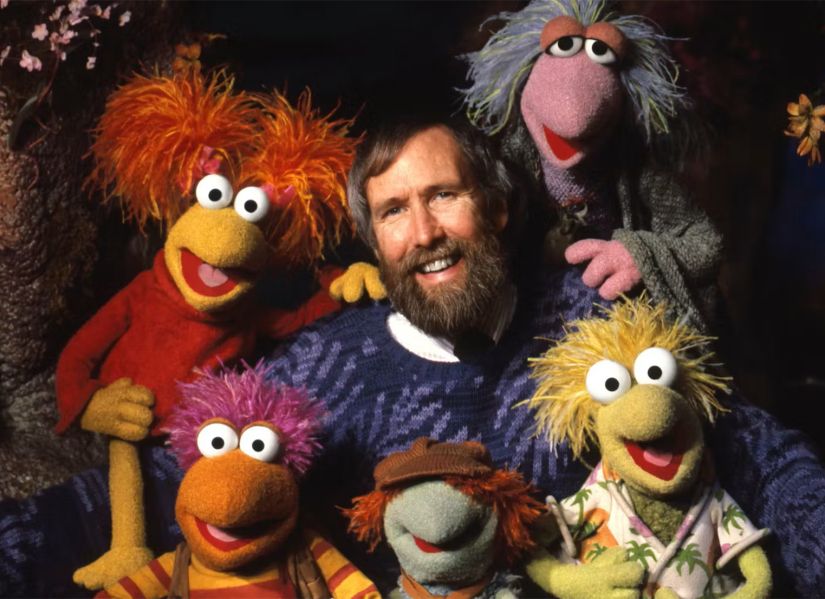
The Jim Henson Company reminds us even the synthetic can be joyous and beautiful and beloved
The creations of Jim Henson are joyous, beautiful and beloved, but QUT robotics researcher James Lachlan Dwyer argues they are also an extension of the puppeteer in the same way robots are an extension of people.

14 September 2026
Why big tech will hate the Australian tax office’s latest ruling
QUT Professor of Taxation Kerrie Sadiq unpacks the ATO’s controversial view that some software subscription payments to big tech should attract Australian royalty tax.
Read more of Why big tech will hate the Australian tax office’s latest ruling