
The science of answering these questions and more - epigenetics - is the research obsession of geneticist and statistician Professor Divya Mehta from the QUT School of Biomedical Sciences.
Years of research across four continents has taught Divya that gene activity can be modified by our environment and through lifestyle changes. The impact can be seen clearly on our physical, social and mental health and she’s determined to find out how and why this happens.
To reveal the secrets of our genes, Professor Mehta is dedicated to investigating the genetic secrets of diverse cohorts, including athletes, first responders, university students, veterans and even unborn babies.
How does stress affects high performance athletes
As the 2032 Brisbane Olympic Games approach, Professor Mehta is researching how the genetic markers of high-performance athletes influence burnout rates and injuries or could even identify the athletes who will succeed.
“Elite athletes have physical stressors, often pushing their bodies to the limit, and psychological stressors about things like not performing well, not making the trials or missing out on a medal.”
“Our research asks, do winners have something in their genes and their lifestyles – is it unique? Is there a competitive gene, is there a winner gene?
“Answers to these questions are our ultimate goal, but firstly we’re conducting a pilot study with QUT’s own elite athletes, some of whom are recent Olympians and Paralympians.”
The pilot study will expand to all of Queensland and then nationwide.
“Athletes have a busy life juggling both academia and sport. We collect surveys and saliva samples at the start of the university semester and after students have participated in a qualifying event or competition.
“Some genes we know are stress response genes, but we’re also looking across the entire genome or epigenome of more than 900,000 sites of each person. It’s done on QUT’s high-performance computing facilities, which allow us to check the association between this and the health outcomes we are testing for.
“With the 2032 Games coming up, we have had a huge boost in the government wanting research on sport.
“Our expanded study will look at longitudinal changes in athletes during the entirety of their athletic careers to learn more about the long-term effects.”
Trauma response in focus
Professor Mehta is currently studying a range of groups who typically experience stress and trauma to compare and shed light on the jigsaw of their epigenetic responses.
This includes occupational fields such as emergency responders – including paramedics, medical despatchers and firefighters – along with veterans and first-year university students.
“We’ve got these different cohorts because we want to understand whether similar or different genes and pathways are changed when people experience different kinds of stressors and trauma.
“For example, emergency responders face different stressors from athletes. We took samples from emergency responders at the beginning of their employment and then a year later and asked about any traumatic experiences and tested them on PTSD, depression and anxiety scales.
“We have also looked at possible post-traumatic growth using resilience scales, the social support scale and the organisational belongingness scale.”
Can we turn back epigenetic changes?
Professor Mehta believes you can reverse epigenetic changes.
“Different things work for different people. Treatment doesn’t have to be pharmaceutical. We are trying to find personalised treatments or therapies that work.
“For example, a person with negative changes in a particular stress response gene but with high social support, might reverse those changes.
“Depending on genetic makeup and lifestyle factors, we could try to find different combinations that work for people but to get to that what we really need is a large sample.
“I have been trying to build a repository of people where we can start asking all these important questions.”
Details about how to participate in this study are available from the QUT Stress Genomics Lab.
Passing trauma markers down the line
Whether trauma can be passed down to children is a matter of great debate, according to Professor Mehta.
“We know from studies in rats some epigenetic marks are passed on. Until recently, it was believed humans were born with a clean slate, that all epigenetic marks are erased, and the child acquires new ones.
“We now know we are born with some pre-existing epigenetic marks but it’s difficult to know which ones and why certain marks and not others because, epigenetics can be altered in-utero, for example, if the mother is smoking, stressed or abused.
“I’m working on this question with economists. We have access to a UK birth cohort with about 800 women and their children and I’ve got their epigenetics, genetics and all kinds of social demographic information and we are trying to understand if there are specific marks passed on from the mother to child.”
Professor Metha said they had also found some evidence in the veterans’ study.
“We looked at their sperm epigenetics to see if it could predict the mental health status of their children and found some changes. We then checked whether these were enriched on the genes we know to be trans-generationally transmitted and we did find some were.
“This gave us some indirect evidence that epigenetic changes could be passed to children.”
Another conundrum posed by epigenetics is the fact that reports of trauma and what the genes say sometimes don’t match.
“We don’t know yet whether the people who show a discrepancy just have different coping mechanisms or if they don’t recognise their own bodily symptoms, and store trauma up and it comes out later.
“The latter are the ones I worry about more.”
Aligned with the United Nations Sustainable Development Goals
In 2015, UN member states agreed to 17 global Sustainable Development Goals (SDGs) to end poverty, protect the planet and ensure prosperity for all.

We believe in the free flow of information
Republish our articles for free, online or in print, under Creative Commons licence.

Republish
You are free to republish the text of this article both online and in print.
We ask you follow some simple guidelines.
Images are not included in this blanket licence as in some cases we are not the copyright owner.
Do not edit the piece, ensure you attribute the author and mention the article was originally published on Real Focus.
By copying the HTML below, you will be adhering to all our guidelines.
Copy this HTML into your CMS.Press ⌘C or CTRL+C to copy.
Latest stories

25 September 2026
An AI model has found a new ‘CRISPR‑like’ biological system. Here’s what it means for science
AI agents may become another tool for researchers and even transform biological research, but there are also questions around how the technology can be kept safe, writes Associate Professor Dimitri Perrin, Co-Director of the QUT Centre for Data Science.
18 September 2026
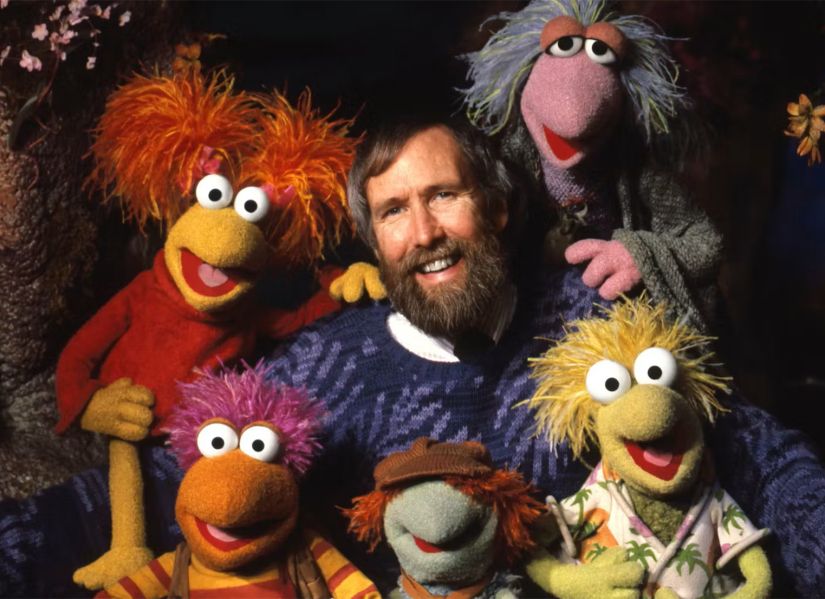
The Jim Henson Company reminds us even the synthetic can be joyous and beautiful and beloved
The creations of Jim Henson are joyous, beautiful and beloved, but QUT robotics researcher James Lachlan Dwyer argues they are also an extension of the puppeteer in the same way robots are an extension of people.

14 September 2026
Why big tech will hate the Australian tax office’s latest ruling
QUT Professor of Taxation Kerrie Sadiq unpacks the ATO’s controversial view that some software subscription payments to big tech should attract Australian royalty tax.
Read more of Why big tech will hate the Australian tax office’s latest ruling