

Dr Aaron Snoswell, QUT GenAI Lab
Artificial intelligence (AI) prophets and newsmongers are forecasting the end of the generative AI hype, with talk of an impending catastrophic “model collapse”.
But how realistic are these predictions? And what is model collapse anyway?
Discussed in 2023, but popularised more recently, “model collapse” refers to a hypothetical scenario where future AI systems get progressively dumber due to the increase of AI-generated data on the internet.
Avoiding collapse
Can’t big tech just filter out AI-generated content? Not really. Tech companies already spend a lot of time and money cleaning and filtering the data they scrape, with one industry insider recently sharing they sometimes discard as much as 90% of the data they initially collect for training models.
These efforts might get more demanding as the need to specifically remove AI-generated content increases. But more importantly, in the long term it will actually get harder and harder to distinguish AI content. This will make the filtering and removal of synthetic data a game of diminishing (financial) returns.
Ultimately, the research so far shows we just can’t completely do away with human data. After all, it’s where the “I” in AI is coming from.
Are we headed for a catastrophe?
There are hints developers are already having to work harder to source high-quality data. For instance, the documentation accompanying the GPT-4 release credited an unprecedented number of staff involved in the data-related parts of the project.
We may also be running out of new human data. Some estimates say the pool of human-generated text data might be tapped out as soon as 2026.
It’s likely why OpenAI and others are racing to shore up exclusive partnerships with industry behemoths such as Shutterstock, Associated Press and NewsCorp. They own large proprietary collections of human data that aren’t readily available on the public internet.
However, the prospects of catastrophic model collapse might be overstated. Most research so far looks at cases where synthetic data replaces human data. In practice, human and AI data are likely to accumulate in parallel, which reduces the likelihood of collapse.
The most likely future scenario will also see an ecosystem of somewhat diverse generative AI platforms being used to create and publish content, rather than one monolithic model. This also increases robustness against collapse.
It’s a good reason for regulators to promote healthy competition by limiting monopolies in the AI sector, and to fund public interest technology development.
The real concerns
There are also more subtle risks from too much AI-made content.
A flood of synthetic content might not pose an existential threat to the progress of AI development, but it does threaten the digital public good of the (human) internet.
For instance, researchers found a 16% drop in activity on the coding website StackOverflow one year after the release of ChatGPT. This suggests AI assistance may already be reducing person-to-person interactions in some online communities.
Hyperproduction from AI-powered content farms is also making it harder to find content that isn’t clickbait stuffed with advertisements.
It’s becoming impossible to reliably distinguish between human-generated and AI-generated content. One method to remedy this would be watermarking or labelling AI-generated content, as I and many others have recently highlighted, and as reflected in recent Australian government interim legislation.
There’s another risk, too. As AI-generated content becomes systematically homogeneous, we risk losing socio-cultural diversity and some groups of people could even experience cultural erasure. We urgently need cross-disciplinary research on the social and cultural challenges posed by AI systems.
Human interactions and human data are important, and we should protect them. For our own sakes, and maybe also for the sake of the possible risk of a future model collapse.
This article is republished from The Conversation under a Creative Commons license. Read the original article.
Latest stories

25 September 2026
An AI model has found a new ‘CRISPR‑like’ biological system. Here’s what it means for science
AI agents may become another tool for researchers and even transform biological research, but there are also questions around how the technology can be kept safe, writes Associate Professor Dimitri Perrin, Co-Director of the QUT Centre for Data Science.
18 September 2026
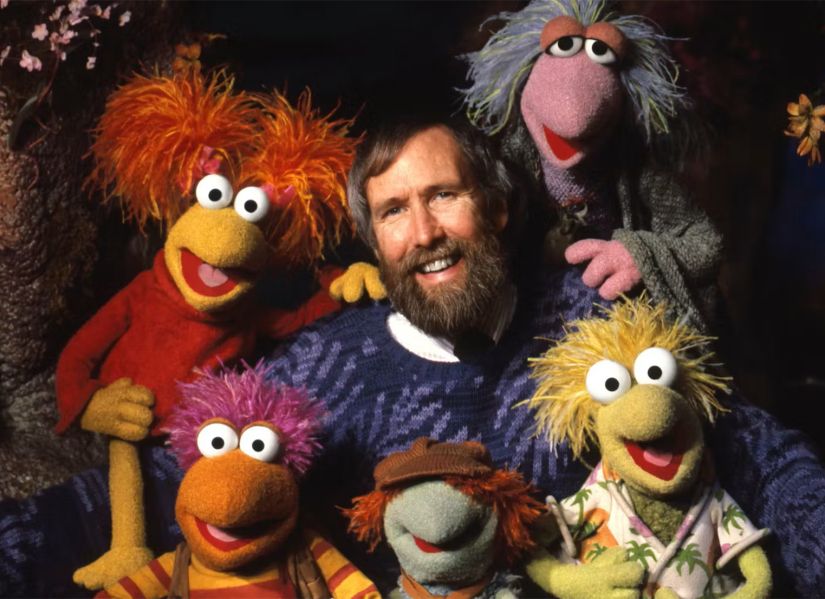
The Jim Henson Company reminds us even the synthetic can be joyous and beautiful and beloved
The creations of Jim Henson are joyous, beautiful and beloved, but QUT robotics researcher James Lachlan Dwyer argues they are also an extension of the puppeteer in the same way robots are an extension of people.

14 September 2026
Why big tech will hate the Australian tax office’s latest ruling
QUT Professor of Taxation Kerrie Sadiq unpacks the ATO’s controversial view that some software subscription payments to big tech should attract Australian royalty tax.
Read more of Why big tech will hate the Australian tax office’s latest ruling